
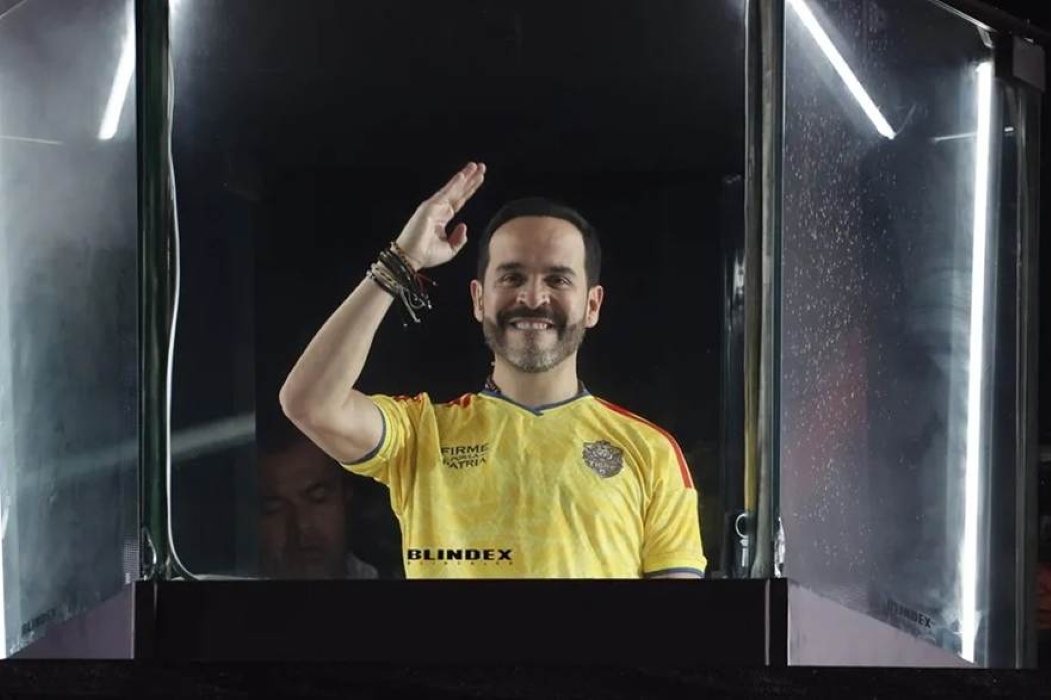
Abelardo de la Espriella’s razor-thin presidential win has pushed Colombia toward a hard-right turn, exposing public exhaustion with violence, Gustavo Petro’s stalled peace strategy, and a regional appetite for leaders who promise order while institutions are still counting the ballots.
A Victory Written in Fear
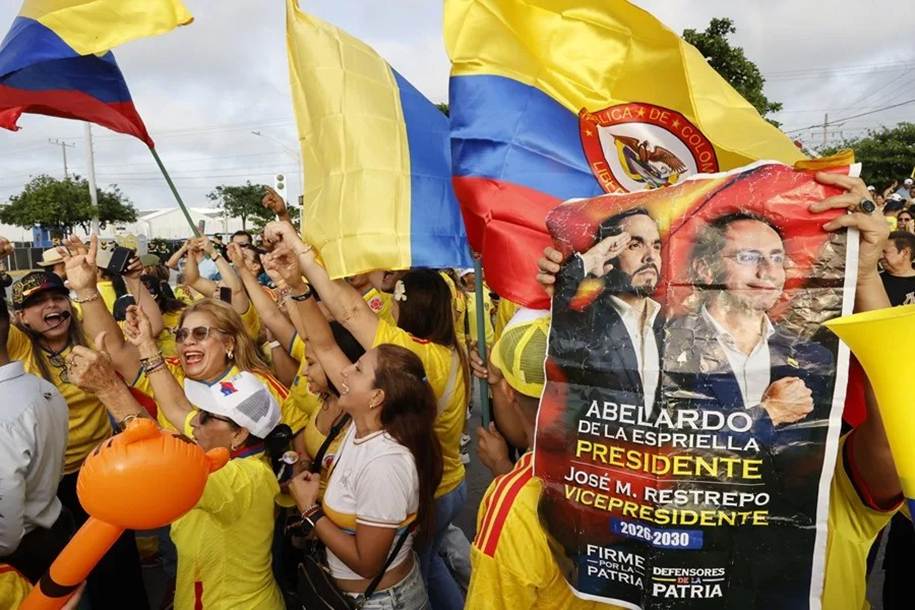
The horns came first. In Bogotá, drivers leaned on them while crowds shouted for President Gustavo Petro to leave. In Barranquilla, supporters of Abelardo de la Espriella gathered around a result that looked decisive on television and remained unsettled in law. With 99.94 percent of the preliminary count reported, the 47-year-old lawyer and businessman held 12,953,317 votes, or 49.65 percent. Leftist senator Iván Cepeda stood at 48.70 percent. The distance between them was 248,084 ballots, only 0.95 percentage points in a country carrying far older divisions.
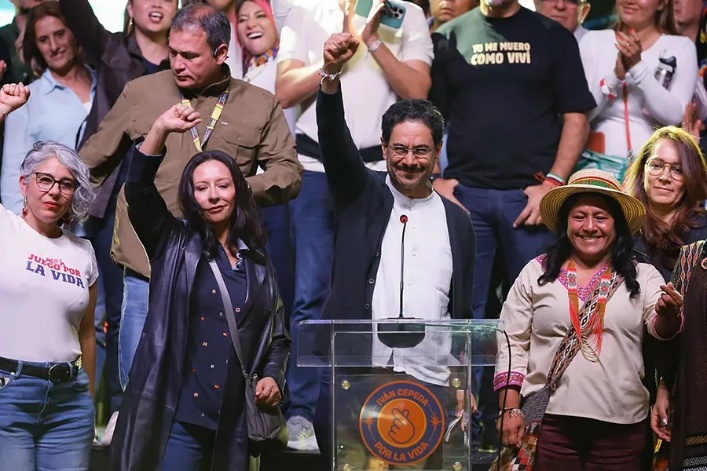
Colombia had not reached the clean ending campaign rallies prefer. Cepeda said his team would challenge results from more than 30,000 voting tables, and Petro also called for scrutiny. Colombia’s same-day pre-count informs the public but has no binding legal force. Signed polling records and the formal review by electoral commissions determine the official result. A challenge is not proof of fraud, and a preliminary win is not yet a certificate. For several tense days, political reality and legal reality will share a room.
To understand why a political novice could come this close, return to places where conflict is not history. It is the road avoided after dark, the shopkeeper folding extortion money into an envelope, the mother listening for a motorcycle outside. Ten years after the 2016 FARC accord, many communities again negotiate daily life with armed men.
The numbers are blunt. Authorities recorded 14,780 homicides in 2025, the highest total since at least 2015, while reported extortion cases reached 13,417, more than double the 2015 figure. Illegal armed organizations are estimated to have more than 27,000 members. Days before the runoff, one group of about 100 fighters began disarming under Petro’s “total peace” policy. By rough comparison, that breakthrough represented less than four-tenths of one percent of the estimated armed population. Symbolically important. Proportionally tiny.
That imbalance explains de la Espriella’s appeal better than left-versus-right shorthand. For voters facing extortion, recruitment, or territorial control, peace is judged less by signing ceremonies than by whether a child can take the bus home. Petro offered negotiation as a route out of recurring violence. De la Espriella offered punishment, speed, and visible authority. One asks citizens to tolerate a long process. The other promises that fear can change sides.
Still, the vote was no blank check. More than 26.3 million Colombians participated, and roughly 426,000 cast blank ballots. Those blank votes exceeded de la Espriella’s margin by nearly 178,000. That does not alter who led the count, but it complicates the story of a nation marching together. Nearly half chose Cepeda. Hundreds of thousands rejected both. The apparent winner may inherit the presidency, not consensus.
The Tiger Turns Politics Into Merchandise
De la Espriella built his image quickly. He founded Defensores de la Patria in July 2025, calling Colombia’s moment its “darkest hours,” and within 11 months displaced the old Uribe-aligned establishment as the loudest vehicle on the right. Nicknamed “The Tiger,” he cast his lack of public office as proof of independence. He is a dual Colombian and U.S. citizen, a Trump admirer, and a wealthy attorney shaped by the country’s most contentious legal and political circles.
The Tiger is more than a nickname. It is a product line, campaign posture, and governing theory compressed into one animal. De la Espriella has sold rum, wine, menswear, and campaign accessories. He has recorded tenor albums and cultivated an Italian-styled “dolce vita” persona while grounding his politics in Caribbean Colombia, vallenato, military salutes, and invocations of God. The silk handkerchief promises prosperity. The mega-prison promises discipline.
His program contains a deeper contradiction. De la Espriella has promised to end Petro’s negotiations with armed groups, build 10 mega-prisons, revive military pressure, expand oil and gas production, and shrink the state by as much as 40 percent. Yet Colombia’s security crisis is also a crisis of absent government. Armed groups thrive where prosecutors are scarce, roads collapse, schools fail, land titles remain disputed, and legal work pays less than coca, gold, or extortion. A government cannot withdraw from territory and credibly promise to retake it.
The Bukele comparison sharpens the point. El Salvador’s mass-incarceration strategy coincided with a dramatic homicide reduction while producing allegations of arbitrary detention and abuse. Colombia is a different battlefield. Its armed organizations move through mountains, forests, borderlands, and global trafficking routes. They govern illegal economies, not merely street corners. Prisons can contain captured people. They cannot replace rural courts, trace laundering networks, protect witnesses, or create lawful income in abandoned municipalities.
Latin America’s New Order Bargain
Foreign congratulations arrived before Colombia’s legal process finished. U.S. Secretary of State Marco Rubio spoke of cooperation on security, migration, and trade. Argentina’s Javier Milei and Ecuador’s Daniel Noboa celebrated the apparent result as a victory for order. Their speed was revealing. De la Espriella was being claimed as another piece in a transnational conservative bloc organized around crime, borders, markets, and cultural combat.
Calling this simply a rightward wave misses the harder truth. Latin American voters punish governments of different ideologies when daily life feels ungoverned. Inflation, extortion, weak services, and scandal erode loyalty quickly. Security has become a social policy because insecurity is radically unequal. Wealthier families buy guards, walls, and transportation. Poorer families depend on the state that failed to arrive.
That is why “order” travels. It promises dignity to people tired of having to arrange their lives around criminals. Yet it gives leaders a shortcut: define due process as softness, treat opponents as accomplices, and make emergency powers permanent. The fear is real. So is the temptation to harvest it.
If formal scrutiny confirms de la Espriella, he will face a Congress in which Cepeda’s coalition holds the largest bloc, but no single force commands a majority. His 0.95-point edge cannot function as a plebiscite. He will need alliances, budgets, judges, and bureaucrats, the machinery that outsider campaigns teach supporters to distrust. Roaring may have won attention. Governing Colombia will require negotiation.
Petro’s side faces its own democratic test. Electoral complaints should be examined openly where evidence warrants it. But leaders must separate verifiable irregularities from insinuation. A democracy can withstand legal challenges. It cannot easily survive the belief that every defeat is theft and every victory grants unlimited permission.
The regional lesson is not that peace has failed and force has won. It is that peace must become tangible before fear reorganizes politics. Agreements need courts, roads, land reform, jobs, schools, and protection for local leaders. Dialogue without territorial capacity leaves civilians exposed. Punishment without rights leaves them exposed in another way.
Colombia is counting twice now, first the ballots, then the cost of its exhaustion. If de la Espriella’s win survives scrutiny, the Tiger will inherit a country split almost exactly down the middle. His hardest task will be proving that order can protect a shopkeeper without erasing a suspect, defeating armed economies without abandoning rural Colombia, and sounding like something more durable than a roar.
Also Read:
Latin America Swings Right as Fear Becomes the Ballot Box