
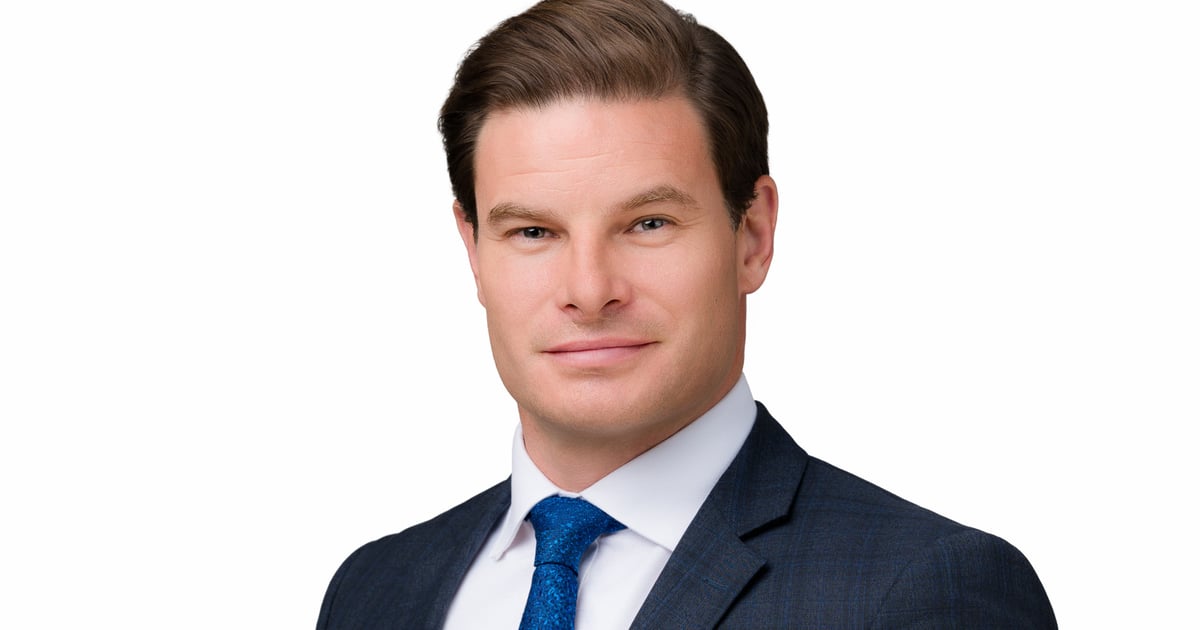
In this age of increased focus on private market exposure for private wealth clients, AlphaCore Wealth Advisory, a La Jolla, Calif.-based RIA with $8.6 billion in AUM, has been on the cutting edge for some time. The firm has put alternative investments at the core of its investment strategy, rather than treating them as a supplement to traditional asset classes. At AlphaCore, many clients’ allocations to alternatives tend to fall in the 20% to 25% range, according to the Chief Investment Strategist David Stubbs, rather than the single-digit allocations more commonly found among its peers.
AlphaCore was launched in 2015 by alternative investment specialist Dick Pfister. Last year, the firm bought Rockville, Md.-based SPC Financial, which specializes in integrating tax and estate planning into portfolio management. David Stubbs joined AlphaCore in 2025 after serving as investment strategy lead at Blackstone Private Wealth.
Wealth Management spoke to Stubbs about AlphaCore’s underlying investment thesis, its belief in the value of international allocations and the benefits and limitations of direct indexing.
This Q&A has been edited for length, style and clarity.
Wealth Management: Can you describe your firm’s typical client?
David Stubbs: We don’t really have a typical client, everything is customized, but we deal with ultra-high-net-worth entrepreneurs and families.
WM: What are some guiding principles when it comes to your investment philosophy?
DS: I think what defines our investment philosophy is placing a core of private markets and alternatives at the center of most portfolios—private equity, private real estate, private infrastructure, the use of some other liquid alternatives. Around that, we place more traditional assets—long-only equities, long-only bonds. We believe that portfolios constructed like that will be more resilient to difficult times, will see shallower troughs, and that allows us to win more by losing less.
Our philosophy is about diversifying across all asset classes, bringing good due diligence to asset allocation in the alternatives, as well as the liquid markets, to help clients achieve their goals.
WM: Can you talk me through what your allocations to the asset classes you just mentioned might be?
DS: Firstly, I want to emphasize that clients need to be comfortable with this approach. We do have some client portfolios that hold just traditional assets. But if it’s up to us, our recommendation for clients that have around $5 million, we would be talking 20% to 25% in private markets or alternatives. That rises to about 30% when you get to $10 million. Larger clients, if it’s appropriate, can have a higher rate than that.
WM: Do you allocate to international equities? Why or why not?
DS: We allocate internationally, not just in equities, but also in bonds and in private markets and alternatives. We believe that there is plenty of opportunity internationally, and we encourage clients to take that route. Again, we have several clients who prefer to remain invested solely in domestic securities and companies. But our standard recommendation would be to include some allocations internationally.
In our equities allocation, we tend not to deviate too much from the benchmarks in either country allocation factor or industry allocation. So, if you look at the MSCI World Developed benchmark, around 30% of that is international. If you look at MSCI All-Country World, around 35% of that is international. We use that as a benchmark to keep in mind.
Now, when most clients join us, they tend to have a much lower weighting than that. Investors in every country in the world exhibit home bias. They tend to have more of their investments linked to their home country. So, it’s usually a conversation about gradually expanding international exposure for clients. We will have a range of options for clients to do that, across both the public markets and private markets, and it may make sense for us to increase allocations to international in the private and alternative space rather than the public space, depending on the opportunities that we see at any one time.
WM: How often do you review your allocations and make any changes to them?
DS: I want to make it clear, we maintain a set of multi-asset models, public and private, international. And there are also three models across accreditation status, and that obviously changes the product mix.
The vast majority of client assets are not managed strictly on a model because of the customization. Less than 20% of our assets are purely managed on a model. Now, how often do we review the models? We have a quarterly process where we examine the asset allocation and the different components by product. We can change those things within the quarter if there is a significant evolution in product status—maybe a product is closed, maybe a product changes in some way—but we tend to operate with a clear quarterly cadence of updating and rebalancing our model.
WM: What was your most recent quarterly guidance? What kinds of changes did you make?
DS: We haven’t made too many changes. We tend to have pretty stable overall asset allocation. We have obviously been reviewing private market exposures because of recent events. We maintain conviction that private markets are core to investing, but depending on whether some products are closed or pro-rated, we have to take into account that we cannot place new money there.
I would say we’ve continued to lean into areas like private infrastructure vs. a couple of years ago. But in general, we are long-term investors, and we tend not to make too many changes on a quarterly basis.
WM: How do you determine which asset managers to work with and which funds to invest in?
DS: We do all our due diligence in-house. We have an eight-person research team to do so. We obviously want to look at firms’ risk management and track record. We have limits around their size because we don’t want to be too big a part of the asset base of the fund, so we need to take into account what allocations we are likely to make vis-à-vis the size of the fund.
We take into account that we don’t want too many assets with one GP. If we have two or three funds with a certain asset manager, we will probably not add any more because we want to diversify across managers.
We build great relationships with asset managers, and we are able to sometimes negotiate preferred terms for our clients. So, if there’s some way to potentially build a custom vehicle for us, maybe at a slightly lower fee, that is something we can take into account as well.
WM: Do you have any allocations to digital assets, either directly or through ETFs? What are your thoughts on that asset class?
DS: No, we don’t. We can facilitate investments into these assets on an inquiry basis, and we’ve done due diligence on certain products that we are comfortable with, should clients ask for them. But at the moment, they are not part of our standard allocation. Obviously, some of these asset classes have a short track record. There have been significant shifts in correlation between options in that asset class and other traditional asset classes, which make it challenging to understand how they would react in certain environments.
WM: Do you use direct indexing?
DS: We do use some direct indexing. We’ve used other tax-loss harvesting measures, including long-short measures. We use them really sparingly, with real focus on client education on what they are investing in, about measuring the impact on the overall portfolio volatility, depending on how the tracking error might change. And we are careful to minimize growth exposures.
WM: Do you hold any cash on hand?
DS: If you defined cash as short-term fixed-income with very low credit risk, we do have some exposure in both conservative and income portfolios. I think in this world, where interest rates have normalized after the zero-interest world of the 2010s, cash is a legitimate asset class. It’s obviously the ultimate liquid asset. So certainly, on the conservative and income side, the use of cash as an asset is reasonable. For growth portfolios, do we have a little cash in them? No, we wouldn’t.
But again, if the situation changes, and you would have a significant real rate of return, could we lean into a bit of cash? Of course, we could. It’s perfectly legitimate to think of cash as an asset class in this era.