
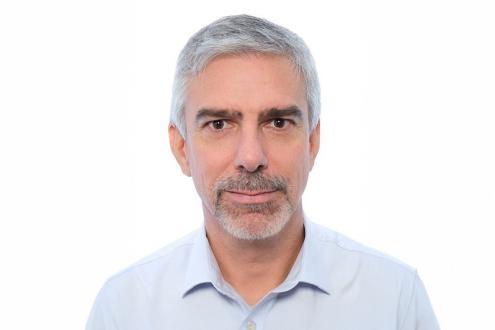
In a shifting investment landscape marked by renewed volatility, diverging returns, and a growing appetite for diversification, hedge funds are regaining attention among allocators and private clients. Filip Vandenven, Executive Director at Antarctica Asset Management, believes the case for alternatives has never been more urgent, or more misunderstood.
With more than two decades of hedge fund research and curation, Antarctica is positioning itself as a specialist platform and partner for private banks, wealth managers, and family offices seeking meaningful exposure to actively managed strategies. In a recent conversation with Hubbis, Vandenven shared his views on current market dynamics, explained how hedge funds are re-entering portfolio construction conversations, and outlined the firm’s role in enabling access across segments previously priced out of the asset class.
From Crisis to Conviction: The Hedge Fund Reawakening
The resurgence of hedge fund demand, according to Vandenven, is rooted in a structural shift that began in 2022. “After the financial crisis in 2008, investors saw little reason to look beyond equities. You could just be long the S&P and make a small fortune,” he said. “But when interest rates came back and equity returns became more volatile, the narrative changed.”
The pivotal moment, he noted, was 2022, a year when both equities and fixed income posted significant declines, while hedge funds broadly generated positive returns. “That was a wake-up call. Suddenly, investors realised hedge funds might serve a real role in portfolio construction again,” he explained. This dynamic, declining traditional returns combined with broader market dispersion, has shifted allocator behaviour across geographies. “Many institutions were under-invested in alternatives, often due to historical performance or internal resource gaps. That’s now reversing.”
Dispersion, Volatility, and the Hedge Fund Edge
At the heart of hedge funds’ renewed relevance is the post-2020 return distribution. “If you look at equities and fixed income in the 2010s, the return curves were narrow, there was little tail risk,” Vandenven said. “Since 2020, that curve has completely flattened. We’ve seen massive tails, wide dispersion, and divergent outcomes. That’s the kind of environment where hedge funds thrive.”
With increased market noise and less predictable macro conditions, hedge funds offer strategies capable of navigating complexity. “Volatility creates opportunity for the right hedge fund managers. But navigating that space requires expertise, and many allocators today are playing catch-up after years of deprioritising the asset class.”
Bridging the Access Gap for Private Clients
For ultra-high-net-worth (UHNW) clients and their advisers, hedge fund allocation is no longer a question of curiosity, it is becoming a necessity. But practical challenges remain. “The traditional 60/40 portfolio is broken,” Vandenven said. “The idea that fixed income can serve as ballast for equities no longer holds. We saw that clearly in 2022, and even this year on events like Liberation Day, equities crashed, fixed income didn’t help, but certain hedge fund strategies did.”
That said, direct access to high-quality hedge funds remains limited. “There are more than 20,000 hedge funds out there, depending on who you ask. In our view, fewer than 1,000 are truly investable,” he noted. “For the average high-net-worth (HNW) client, or even most private banks, that’s an impossible space to navigate alone.”
The Core Offering: Research, Curation, and Access
Antarctica’s model revolves around one core capability: curating hedge fund access through deep research and due diligence. “That’s been our business for 24 years,” Vandenven said. “We do the research, we perform the due diligence, and we build a selection of funds that can be accessed in different ways depending on the partner or client profile.”
Those delivery models include the traditional fund-of-funds structure, bespoke mandates, and a digital platform providing direct access to single hedge funds.
“Through our platform, we’ve been able to reduce minimum investment thresholds to USD100,000,” he explained. “That’s significantly lower than the traditional minimums of one, five, or ten million dollars per allocation.”
This platform approach opens the space to a wider range of professional investors. “We’re seeing interest from banks, digital wealth platforms, and family offices, people who want to build their own solutions but need someone to streamline the process.”
Making the Case for Fund-of-Funds Today
While platform-based access is growing, fund-of-funds still play a vital role, especially for clients with smaller allocation sizes. “If someone has USD10 million in investable assets, they might only want to put 10 percent in hedge funds,” Vandenven said. “That gives them a million dollars. At best, that might buy them exposure to one manager.”
That kind of concentration, he argued, is risky. “You’re taking a huge bet on one asset. It’s not a portfolio. A fund-of-funds gives you access to a diversified allocation with a single line item. It remains a practical solution.”
He added that some clients do opt to build their own mini portfolios on the platform, allocating to three to ten funds and effectively constructing their own fund-of-funds. “The point is flexibility. We offer the models and the tools, clients and partners choose what suits them best.”
Beyond Trophy Hunting: Constructing Real Portfolios
One recurring challenge in Asia, according to Vandenven, is a tendency towards “trophy hunting” in hedge fund selection. “Investors chase big names, funds that look good on paper or have been talked about in the market,” he said. “But holding four or five well-known names is not the same as having a portfolio.”
This approach, he warned, often creates mismatched expectations. “If you don’t understand the fund’s strategy, terms, or risk profile, you can’t predict how it will behave in a drawdown,” he said. “That was the problem in 2008, and it still happens today.”
In response, Antarctica provides not only access but education and guidance. “We work with partners, private banks, advisers, family offices, not just on product selection, but on training, positioning, and ongoing support. Our job is to make sure they and their clients go in with their eyes open.”
Democratising Alternatives, With Guardrails
Vandenven acknowledged that hedge fund access has become more democratised, but cautioned that true access requires more than just technology. “There are plenty of digital platforms offering exposure to alternatives now,” he said. “But curation matters. Just because you can offer a product doesn’t mean you should.”
Antarctica’s value, he noted, is in being a specialist. “Hedge funds require time, effort, and expertise. Most wealth managers can’t be experts across every asset class. That’s where we come in, we complement their platform with depth in one area.”
This applies to institutional clients and intermediaries as much as it does to family offices. “Some partners lean on us to help build full hedge fund programmes. Others just want access to a theme, macro, quant, long/short. We support both.”
What to Watch: Common Pitfalls in Hedge Fund Investing
Asked about the most common mistakes in hedge fund allocation, Vandenven pointed to expectation mismatches. “People often buy into funds without really understanding what they do, or what they don’t do,” he said. “When things go wrong, it’s usually not because the fund failed, but because it didn’t behave as expected.”
That’s why preparation is key.
“We help partners prepare their clients properly. That includes documentation, education, and product training. It’s not just about delivering a fund list, it’s about delivering understanding.”
Another pitfall, he noted, is overreacting to short-term trends.
“There’s a temptation to chase performance or the flavour of the month. That rarely ends well. A portfolio should be built around long-term characteristics, not headlines.”
Strategic Priorities: Curated Thematics, Not Endless Menus
Looking ahead, Antarctica’s focus is on improving the quality of solutions, not necessarily increasing quantity. “Our platform is mature, it’s been running for 13 years and has around 65 funds on it,” Vandenven said. “We could grow that to 70 or 75, but that’s not the goal.”
Instead, the priority is thematic portfolio construction. “We’re seeing more demand for structured exposures, allocations to macro funds, quant funds, or multi-strategy blends,” he said. “That allows clients to express a view or diversify meaningfully without having to pick a single manager.”
Ultimately, Vandenven believes that service remains Antarctica’s defining feature. “We’re known for being service-oriented. We’ve been doing this for 24 years, and most of our partners come to us not just for access, but because they trust how we work.”
From Outsider to Go-To Platform
As the wealth management industry seeks new sources of return, hedge funds are re-entering the conversation, this time with a greater emphasis on curation, transparency, and support. For Vandenven and Antarctica, this is familiar territory. “We’ve lived through the cycles. The difference today is the infrastructure to deliver these strategies to a wider set of investors, and the growing recognition that not all hedge funds are created equal.”
From private banks to family offices to digital wealth platforms, the firm’s solutions are designed to bridge the gap between interest and implementation, delivering curated access with institutional rigour.
“The opportunity set is there,” Vandenven concluded. “What matters now is how you access it, and how you build portfolios that are truly fit for purpose in today’s world.”