
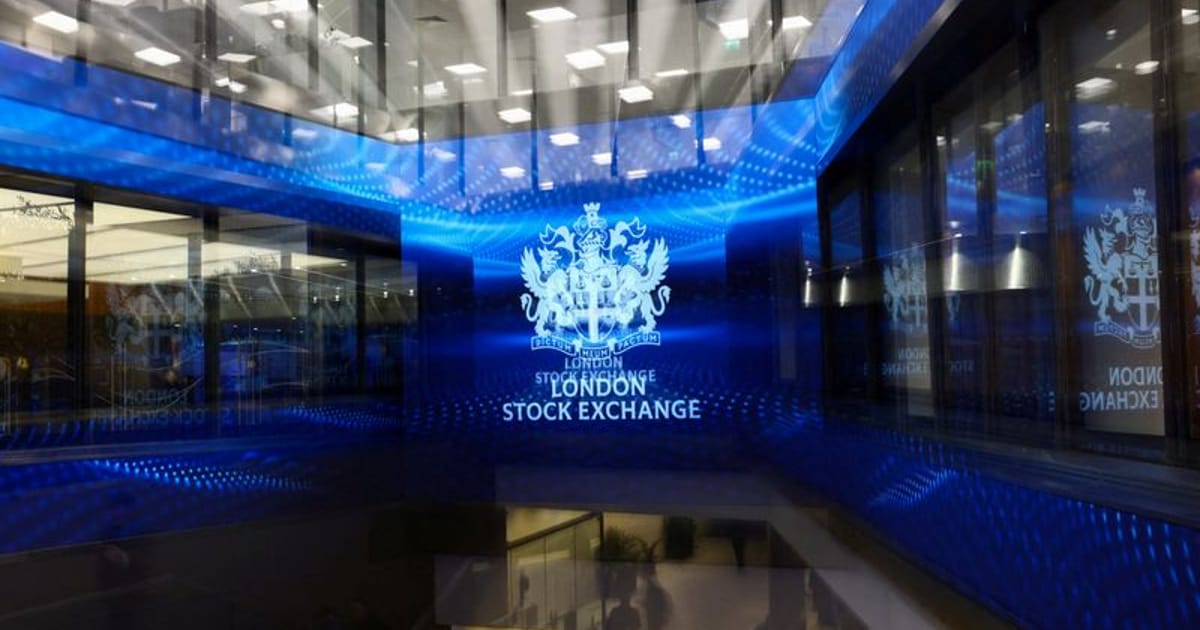
London’s FTSE indexes weighed by banks and energy stocks
FTSE Market Performance and Sector Analysis
June 26 (Reuters) – London’s FTSE indexes closed lower on Friday, weighed by declines in energy stocks and heavyweight banks, while uncertainty around AI-related shares dampened global market sentiment.
The blue-chip FTSE 100 index closed down 0.2%, while the mid-cap FTSE 250 fell 0.06%.
Sectoral Movements
Energy and Banking Stocks
• Energy stocks weighed on the FTSE 100 index, with Shell and BP down over 0.9% each, tracking a 2.3% slide in crude prices as shipping through the Strait of Hormuz resumed. [O/R]
• The banks sub-index fell 1.4%.
Other Sector Declines
• Automobile stocks lost 3.9% to lead sectoral declines, while chemical stocks lost 3%.
Gainers and Notable Performers
• On the flip side, precious metal miners rose 2.5% as gold prices increased, supported by a weaker dollar amid easing expectations of U.S. interest rate hikes following the release of inflation data. [GOL/]
• Among others, money transfer company Wise was up 9.6%, after saying active customers rose 21% to 18.9 million in fiscal 2026 and that it plans on starting a new share purchase programme.
Index Performance Overview
Weekly Movements
• The more domestically exposed FTSE mid-cap index logged a small weekly loss, while the internationally exposed FTSE 100 notched its biggest weekly gain in over a month as tensions in the Middle East eased.
Political and Economic Factors
Political Developments
• In politics, Andy Burnham is widely expected to be the new prime minister of the UK, after Keir Starmer resigned earlier this week. Investors were keen on his fiscal policy plans and who was likely to be the next finance minister.
Travel, Leisure, and Inflation Concerns
Travel and Leisure Sector Impact
• The travel and leisure sector was hit due to the Middle East conflict. Heathrow Airport lowered its 2026 passenger forecast and warned that profit could shrink this year.
Inflation and Interest Rate Outlook
• Investors are bracing for any second-round inflation pressures as they price in at least one 25-basis-point interest rate hike by the Bank of England this year, LSEG-compiled data showed.
(Reporting by Johann M Cherian and Tharuniyaa Lakshmi in Bengaluru; Editing by Shreya Biswas and Chris Reese)