
My friends and family like to tease me that I spend my vacation in (at least in their eyes) very un-relaxing ways. To me, there’s no better way to spend a week than hiking or mountain climbing; the kind where you spend a few days ascending an ice-covered mountain, roped up to your climbing companions as a safety precaution against falling through a snowbridge and into a crevasse (I’ve been in a few).
And then there are the long hikes I take alone, usually into the desert. If I can go a week without seeing more than four people, max, then I’m literally a happy camper. Most of us these days, amateurs and professional guides alike, carry an emergency beacon that lets you contact search and rescue in case the whole endeavor goes pear-shaped. And almost every emergency beacon I’ve carried or seen in somebody’s clutches in the great outdoors has been a Garmin inReach of one kind or another.
a lifeline most of us carry
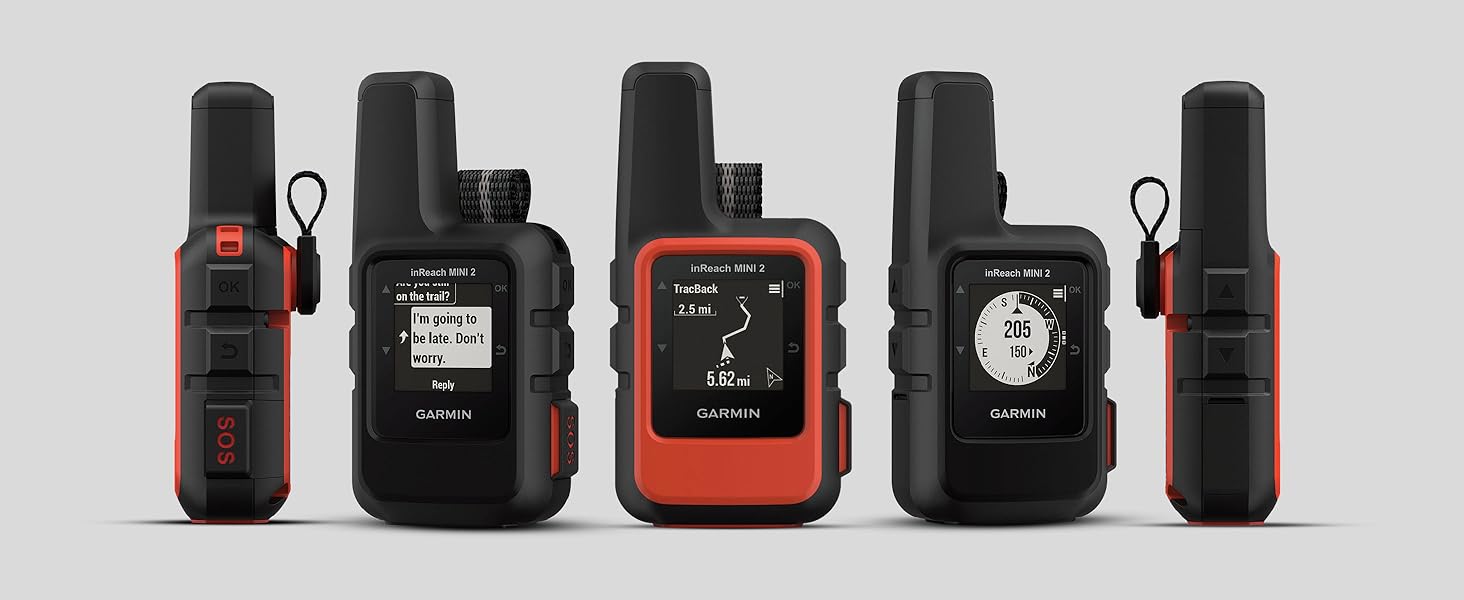
Garmin has a near lock on the emergency beacon industry with its inReach line of backcountry satellite messengers. They’re ubiquitous. I’ve highlighted the Garmin inReach Mini 2 here because it’s $100 off. Ignore the $399.99 retail price; it’s more often selling for the street price of $350. But that’s still an incredible deal. For years I’ve paid attention to when these things go on sale, and it’s not all that often. Even though Garmin has begun to slowly replace it with the inReach Mini 3, launched in December 2025, it hasn’t been discontinued yet.
You can get an inReach Mini 3 for $50 off right now at $400 if you want the latest and greatest features, such as a touchscreen, 50 percent larger battery, siren, and ability to charge your phone. Those are all nice to have, but the core functionalities remain the same in the much cheaper inReach Mini 2. Plenty have relied upon it as an emergency lifetime in the backcountry since it launched in 2022. I’ve seen them carried in the interior of Alaska where all entry and exit is via ski plane and deep in the desert of Big Bend, one of the US’ most remote national parks. They’re everywhere.
You know what I use these days, though? The Garmin inReach Messenger. It’s even more compact than the inReach Mini 2 and inReach Mini 3 because it omits the screen entirely. The reasoning goes that you’re probably carrying your smartphone within your pack anyway. The inReach Messenger links to it in a way that makes your smartphone your interface for sending and receiving emergency messages. You can still operate the inReach Messenger if your phone dies, is destroyed, or becomes lost; it’s just clunkier.
The upside is that it’s more compact (I keep mine in my pants pocket so that I’m less likely to be separated from it). The downside is that you’re semi-dependent on your smartphone’s battery. Just charge it to 100 percent before you head out on your adventure, and resist the temptation to use it much on your drive to the trailhead. With my smartphone in airplane and low power modes, and using it sparingly, I can get several days out of a full battery, so it’s not as big of a drawback as it’d seem.

Contest Alert: VICE Playlist Project
If you’re making music, VICE just launched the Playlist Project, a global song contest built around real life moments. Instead of genres, you’ll submit songs to a specific category that fits your track. Entries are open now, with cash prizes and VICE social & editorial features on the line.