
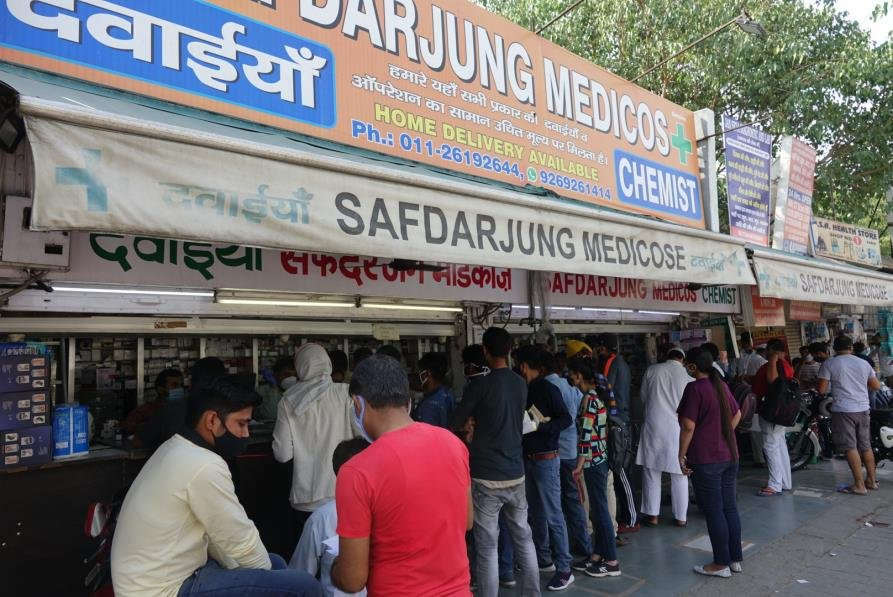

Kumar Ajit, a 52-year-old bank employee in the eastern Indian state of Bihar who cares for his 70-year-old mother with liver cancer, has had to call dozens of pharmacies over the past week. He was searching for cisplatin, a chemotherapy drug needed for her treatment.
He eventually managed to obtain the drug at a pharmacy in the capital, New Delhi, but could not secure the full amount required. “I managed to get this dose, but I don’t know how I’ll arrange the next one,” Ajit told Reuters on Tuesday.
Bhavan Kumar, head of a pharmaceutical distribution company in the southern Indian city of Hyderabad, said he receives about 10 calls a day from cancer patients asking him to find cisplatin.
Rajiv Singhal, secretary general of the All India Organisation of Chemists and Druggists (AIOCD), said the supply shortage had continued over the past two months but had worsened in the last two weeks. “Distributors across the country are complaining that they cannot obtain the drug,” he said.
Why a Key Cancer Drug Disappeared

The drugs in question are platinum-based chemotherapy agents such as cisplatin and carboplatin. These are representative chemotherapy drugs used to treat various cancers, including lung cancer, liver cancer, ovarian cancer, and bladder cancer.
The medical community estimates that at least 25 percent of cancer patients in India are prescribed platinum-based chemotherapy.
Mintu Mathew Abraham, a medical oncologist in the southern Indian state of Kerala, told Reuters that platinum-based chemotherapy drugs have served as the backbone of cancer treatment. “Without these drugs, it is difficult to continue treatment,” he said.
The problem is that the supply of platinum, the raw material, has become unstable. India relies mostly on imports for the platinum needed to produce chemotherapy drugs. Major suppliers are mining-producing countries such as South Africa.
However, recent declines in mining output, global supply shortages, and rising investment demand have combined to push platinum prices sharply higher. The prolonged conflict in the Middle East has also disrupted international logistics networks, making it even harder to secure raw materials.
According to India’s pharmaceutical industry, platinum prices have soared from about 2,000 rupees (about 32,000 won) per gram last year to as much as 5,000 rupees (about 80,000 won) recently. That is an increase of nearly 2.5 times in just one year.
Platinum is a metal of great industrial value because it does not corrode when exposed to air or water and has a high melting point. However, it is so rare that annual global production is only about one-tenth that of gold, making its price highly volatile.
Drug Prices Capped, Production Cut
A factor further worsening the supply crunch is the Indian government’s price regulation on drugs. Although raw material prices have surged, pharmaceutical companies cannot reflect production costs in consumer prices because of the government-set price cap.
The industry has been asking the government to raise the price cap by about 50 percent, but no clear response has yet emerged.
As a result, some companies have begun reducing production or halting factory operations. Naprod Life Sciences, a chemotherapy specialist company, temporarily suspended production of cisplatin and carboplatin due to raw material supply problems.
Mohan Jain, a director at Naprod Life Sciences, explained that the biggest cause of the supply shortage is the surge in platinum prices. “At the current cost structure, production itself is burdensome,” he said.
Venus Remedies, which supplies drugs to government hospitals, has also continued supply despite incurring losses, but has turned cautious about signing new contracts.
Experts view the situation as a problem that goes beyond a simple drug shortage.
Saransh Chaudhary, executive director of Venus Remedies, pointed out that when price regulation fails to keep pace with reality, the entire supply chain ultimately becomes unstable. “Companies cannot bear all of the cost increases, and the damage ultimately falls on patients,” he said.
In particular, there are few substitutes for platinum-based chemotherapy drugs. They can be replaced with other drugs, but the treatment effect may be lower or the side effects more severe.
Venkateswar Rao, a medical oncologist at Omega Hospital in India’s Andhra Pradesh state, warned that even when alternative drugs exist, they are often less effective or more toxic.