
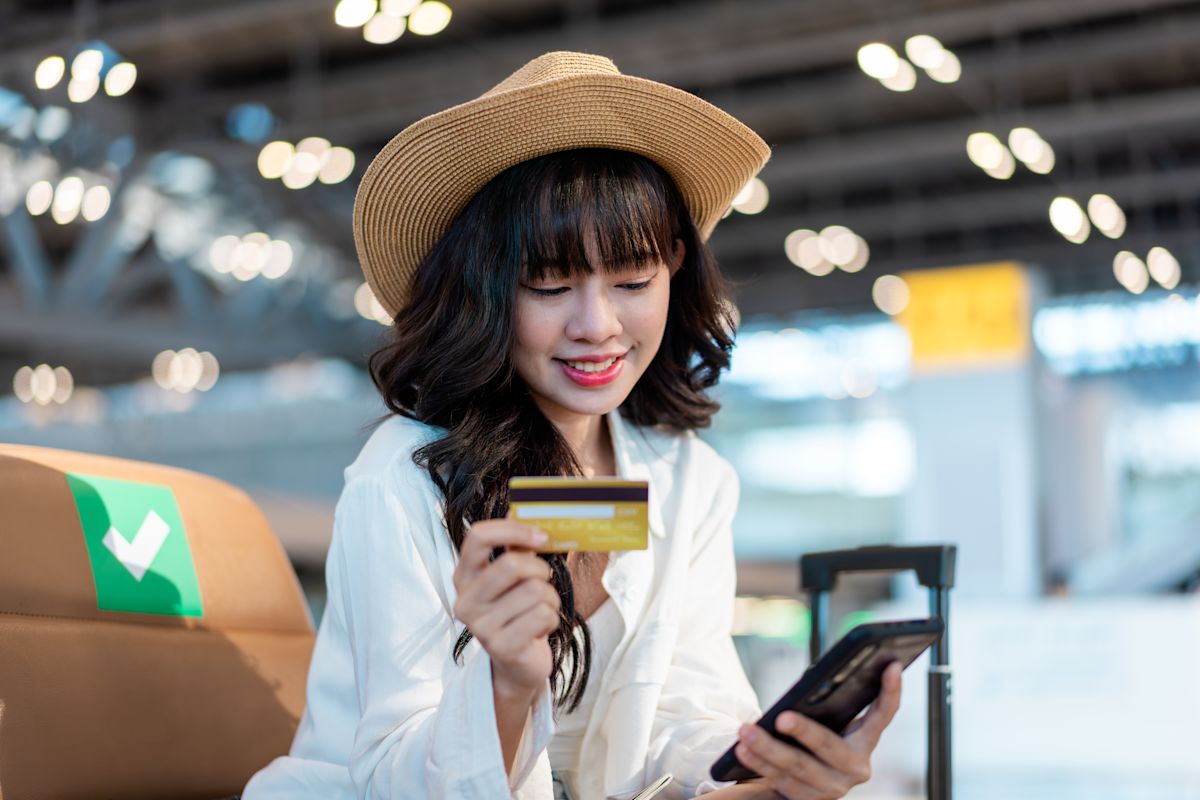
Your debit card probably works almost everywhere you travel because many debit cards run on major payment networks like Visa and Mastercard. But just because you can use your debit card while traveling doesn’t mean you should.
As a recent Motley Fool article pointed out, debit card purchases pull money directly from your checking account, so a fraudulent or disputed charge can leave you without that cash while your bank investigates. Credit card purchases, meanwhile, go against your available credit, leaving you with more breathing room if something goes wrong. That protection matters a lot when you’re traveling and more at risk of a skimmer getting hold of your card information.
Not to mention—a compromised debit card can give scammers direct access to all the money in your checking account, potentially leaving you stranded without funds.
Fortunately, using a credit card when traveling comes with a few extra bonuses. They often provide travel and purchase protections that apply abroad, as well as rental car insurance to cover collision damage.
Here are five situations where travelers should keep their debit cards in their wallets.

A woman refills at a gas station.
(Kirill Ikonnikov via Getty Images)1. Don’t use a debit card at the gas pump
Taking a road trip is one of the easiest ways to encounter a card skimmer. Criminals are known for attaching devices to payment terminals that capture card information. Gas pumps are notorious hot beds for such activity. The FBI says skimming costs consumers and financial institutions more than $1 billion a year.
So, when you’re fueling up your car, use a credit card. And if you’re particularly nervous about using a standalone pump, consider paying inside instead.

A receptionist helps a traveler with payment and registration at a hotel front desk.
(Jacob Wackerhausen via Getty Images)2. Don’t use a debit card for hotels or rental cars
This one is less about fraud and more about holds. Hotels and rental car companies commonly place temporary authorization holds on cards. Enterprise, for instance, holds a deposit of $200 to $850 on your credit card to cover incidentals like late returns and failing to refill the gas tank. If you use a debit card, that deposit can sometimes be higher.
Similarly, hotels usually pre-authorize the cost of one night’s stay as a temporary deposit in case you make room charges, call for room service or damage the property in some way.
So, you choose: put a $500 hold on your debit card and you’re temporarily missing $500 from your checking account. But put it on a credit card and you’re temporarily using $500 of your available credit. That’s a very different experience when you’re halfway through a two-week vacation and still have restaurants, taxis and souvenirs to pay for.
Credit cards can also come with travel protection and other benefits. Depending on the card, those may include rental-car damage coverage, trip-delay protection, baggage protection or other travel-related benefits. By putting all your vacation-related costs onto the card, they might be eligible for a partial refund should your plans get canceled for medical emergencies or severe weather. Check your card to see if it offers such protection for travel purchases.

Two people stand in front of the Prada store located in Venice, Italy.
(MoreISO via Getty Images)3. Don’t use a debit card for that big vacation purchase
Let’s say you’re in Italy and find a beautiful leather jacket. Or, maybe you’re in France and fall in love with a designer coat. Or, you find a handmade rug in Morocco, a piece of jewelry in Mexico or an expensive piece of art you absolutely cannot leave behind.
Your first instinct might be to use your debit card because, well, it’s your money.
But a credit card may be the smarter choice if your credit card provides purchase protection for that type of item.
Some credit cards provide purchase protection that can repair, replace or reimburse you if an eligible new purchase is stolen or accidentally damaged within a specified period. For instance, Visa says certain eligible cards provide purchase security for qualifying purchases that are stolen or damaged within a 180-day period, including purchases made abroad.
However, some cards exclude categories such as antiques, collectibles, used or pre-owned goods and other specific items. Chase, for example, says its purchase protection excludes used or pre-owned items, antiques and collectibles.
So if you’re buying a 200-year-old rug from an antique dealer in Istanbul, check your card’s benefits guide first.

A man plans his trip next to a packed suitcase in a hotel room.
(Vivian1623 via Getty Images)4. Don’t use a debit card for online purchases while traveling
Travel often means shopping online. You might book a last-minute train ticket, reserve an excursion, order something you forgot to pack or buy a souvenir from a store you found on Instagram.
That’s another situation where a credit card can provide a useful buffer from a phishing attack. The browser security company SafeToOpen found that 31% of all phishing attacks happen during online checkouts.
If someone gets your debit card information, fraudulent transactions can come directly out of your checking account. Yes, you can dispute the charges and eventually get your money back, but you’re out of your cash in the meantime.

A senior couple withdraws money from an ATM while traveling.
(Raul Ortin via Getty Images)5. Don’t withdrawal cash using your debit card at a freestanding or outdoor ATMs
We’ve all been there. You need cash, and you spot an ATM on a random street corner. Convenient, right?
Maybe. But standalone ATMs can be more vulnerable to tampering, and criminals can install skimming devices to capture your card information or PIN. According to the FBI, some thieves even place cameras near freestanding ATMs to record your PIN entry.
Instead, use an ATM attached to an established bank, ideally inside the bank or another secure location. Avoid machines that look damaged, old or otherwise suspicious.
And when withdrawing money abroad, pay attention to the currency-conversion screen. If the ATM asks whether you want to be charged in U.S. dollars or the local currency, choosing the local currency will generally give you a better exchange rate than accepting the ATM’s conversion.

Two women sit at home planning their trip, comparing flight options on a laptop while one holds a credit card.
(AleksandarGeorgiev via Getty Images)Your debit card still belongs in your suitcase
Despite the risks, leaving your debit card at home is not the solution when traveling.
It’s useful to keep your debit card handy for when you need to withdrawal cash from reputable bank ATMs. You just don’t want it to be your only payment method when you’re traveling.
Instead, bring a credit card with no foreign transaction fees if you have one—ideally one with travel and purchase protections. Also keep a backup card somewhere separate from your wallet.
Follow Unimaginably Good Travel for more off-the-beaten-path adventures.
How this was made: AI assisted with this article’s structure, formatting and metadata. All research, fact-checking, writing and editing was done by Megan DeMatteo, an independent writer and editor who, like many solo creators, handles the full workload of a traditional newsroom team.