
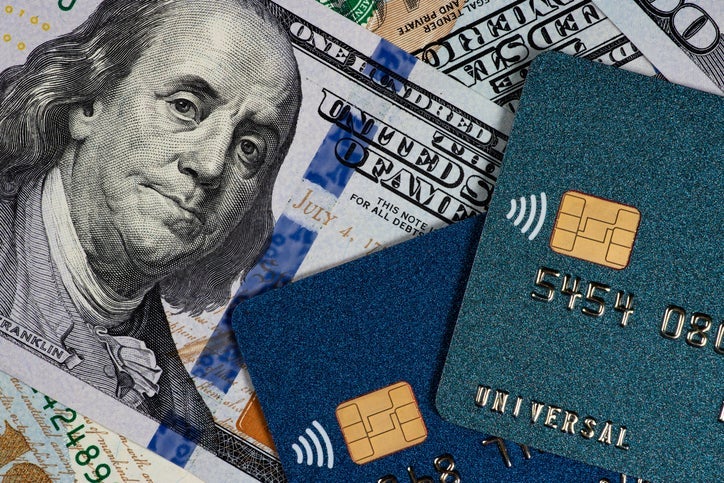
New Jersey consumers shoulder the steepest average credit card balance nationwide at $9,733. LendingTree released this finding in August after examining credit reports from over 400,000 users during the first quarter of 2026.
WalletHub published different numbers in March 2026, showing the Garden State with an average of $8,803 in credit card debt — fifth in the nation. TransUnion pegged the state at $7,139. Experian reported $7,464 in a June analysis.
Why the gap? Each study uses its own method. They examine different time windows and measure the figures in distinct ways. Americans’ total credit card balance hit $1.263 trillion in the second quarter of 2026, climbing from $1.242 trillion in the first three months, the Federal Reserve Bank of New York found.
Higher incomes in the state trigger larger credit lines from card issuers, experts say. “It’s not really a coincidence that the states with the highest credit card debt tend to be also the highest-income states, because a credit card issuer is more likely to give a big credit line to somebody making $150,000 a year than to one making $50,000,” said Matt Schulz, chief consumer finance analyst at LendingTree, according to North Jersey.com
Post-pandemic inflation and climbing interest rates pushed more households toward credit cards for everyday expenses. Inflation soared in 2022 to a 40-year peak across the country. Wages lagged behind. People turned to plastic for gas, utilities, and clothing, said Chip Lupo, an analyst at WalletHub.
“Credit card data often reflects the earliest signs of financial pressure because it is the most flexible form of consumer borrowing,” said Ahmed Albrolisy, who teaches finance and economics at the Rutgers Business School in Newark. “One way to think about this is that credit cards act as the shock absorber of household finances.”
Late payments and debt loads have swelled in recent years. Credit card companies responded by tightening their lending standards, said Ted Rossman, an analyst at Bankrate. Delinquencies peaked in 2023 — except for the record-high during the Great Recession — but have started to dip in recent years.
Financial analysts suggest using 0% balance transfer cards or working with nonprofit credit counselors to manage debt. Many balance transfer promotions last up to 24 months. This gives consumers “a tremendous tailwind for your debt payoff efforts,” Rossman said.
“It is important for people to understand that they do have more power over managing their credit card debt than they might think they do,” Schulz said.