
Leveraging Private Company Status for Loans
Providing Bailouts to His Other Companies
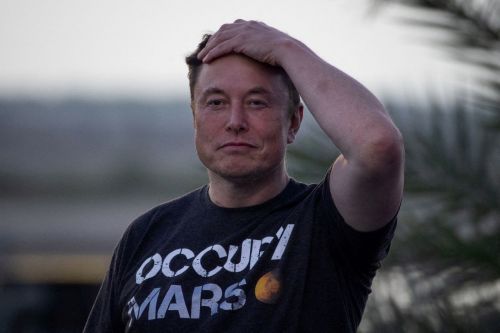
It has been revealed that Elon Musk, CEO of SpaceX, has personally borrowed hundreds of billions of won from the company and provided funds to his other companies.

On April 24 (local time), The New York Times (NYT) reported that, based on internal company documents and testimonies from insiders, Musk borrowed a total of $500 million (approximately KRW 738.8 billion) from SpaceX over three separate occasions between 2018 and 2020.
The interest rate was sometimes below 1% and at other times set at around 3%. Considering that the prime rate at commercial banks at that time was about 5%, the borrowing conditions were much more favorable. The collateral was SpaceX stock, and the repayment period was 10 years. According to internal documents, this loan was executed specifically for the CEO. The approving party was not disclosed. It also remains unclear how the money was used. However, it was confirmed that Musk repaid the loan principal and $14 million (about KRW 20.685 billion) in interest at the end of 2021.
In addition to personal loans, Musk also borrowed money from SpaceX when his other companies ran out of cash. Tesla (the electric vehicle manufacturer), SolarCity (a solar energy company in which Musk is a major shareholder), and xAI (an artificial intelligence venture) all borrowed money from SpaceX.
During the 2008 financial crisis, when Tesla faced risk, it borrowed $20 million (about KRW 29.55 billion) from SpaceX. In 2015, when SolarCity was warned of a high risk of default, SpaceX provided $250 million (about KRW 369.375 billion) by purchasing SolarCity’s corporate bonds. Most recently, SpaceX acquired xAI.
The NYT described these actions as ‘unprecedented even in the world of private companies,’ stating, “When Musk needed $100 million, instead of calling a bank, he turned to SpaceX. Over the past 20 years, he has effectively used SpaceX as a piggy bank.” Lipton Ann Mi, a professor at the University of Colorado Boulder campus, also said, “These are transactions with conflicts of interest,” and pointed out, “This is why it is risky to invest in someone who manages multiple companies.”
This is not the first time Musk has supported one of his companies through another. Recently, foreign media reported that SpaceX purchased 1,279 units of Tesla’s high-priced pickup truck, the Cybertruck, to help boost sales performance. However, it appears that this was only possible because SpaceX was a private company. Since SpaceX is set to go public in June, it is expected to be difficult to use such methods in the future.
Hot Picks Today
!["Overseas Travel Is Out, Let's Earn Daily Wages with Short-Term Jobs"... Rising Living Costs Drive Japanese Seniors to Part-Time Work [Sunday Japan Culture]](https://cwcontent.asiae.co.kr/asiaresize/93/2026042215265936333_1776839219.png)
Meanwhile, SpaceX, the U.S. private space company currently preparing for an initial public offering (IPO), is estimated by the market to have a corporate value of between $1.75 trillion and $2 trillion (approximately KRW 2,584 trillion to KRW 2,953 trillion). If the listing is successful, it is expected to be the largest IPO in history.
This content was produced with the assistance of AI translation services.
© The Asia Business Daily(www.asiae.co.kr). All rights reserved.