
It made an application to the RIF in recent weeks, vice president Simon Delander confirmed.
Rua hopes to fast-track consent for the project; it is still waiting to hear from Infrastructure Minister Chris Bishop whether it can use the one-window consenting process.
Roughly $150m remains unspoken for in the RIF; ring-fenced and approved funding now tops $1.06b.

Officials declined to confirm what terms the WMS and Taiko loans will be made on, and whether they will be concessionary.
Both companies are in the early stages of their commercial development and have plans to strip mine critical minerals on the West Coast for export.
The announced investments are concurrent with New Zealand’s bilateral negotiations with the United States to strike a deal to co-operate in the production and trade of critical minerals, an effort to counterbalance China’s extensive control in this area.
The US has struck dozens of such deals with other countries.
Critical minerals are a loose and recently designated group of minerals and metals, important for a slew of new technologies, particularly in the strategically important sectors, energy and defence.
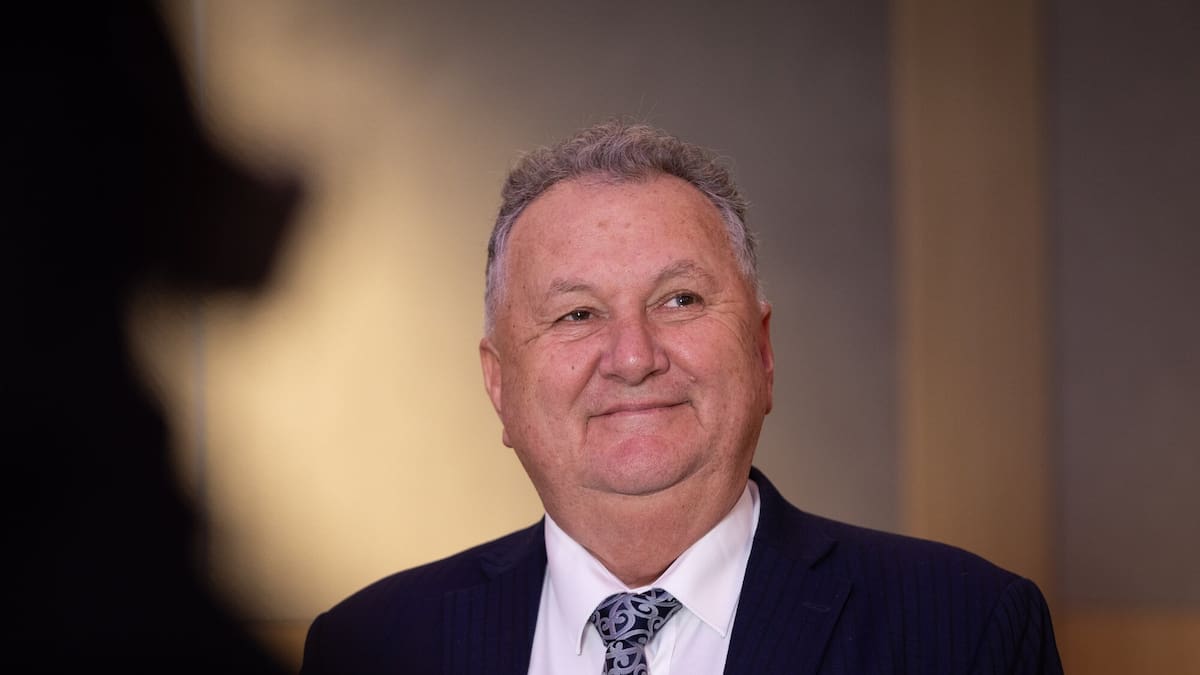
A spokeswoman for Resources and Regional Development Minister Shane Jones confirmed that the Westland and Taiko loan agreements contain no limits on the companies’ ability to sell minerals to China or elsewhere.
She said the proposed framework for an agreement with the US remains under negotiation and “would be subject to further Cabinet consideration”.

WMS spokeswoman Kate Lynch said executives were not immediately available to discuss the announcement.
In a press release, managing director Ray Mudgway welcomed the public funding, and said it reflected a growing recognition of the importance of regional industrial development and the value of processing New Zealand’s minerals at home.
WMS’ proposed plant is not approved to be considered for consent under the Fast-Track Act.
Lynch said no decision has been made for how consents will be sought.
So far, the company’s mining efforts appear to have been uneconomic.
Several months ago, it shuttered its only mine, a small, surface operation south of Westport.
At the time, managing director Ray Mudgway cited weak prices for its titanium and mineral sands, which were exported by sea through Westport.
The company has further mining plans for a site near Hokitika.
Both WMS and Taiko said that separation plants will allow them to sell their commodities for much higher prices.
WMS, controlled by mining investor Duncan Hardie, aims to produce ilmenite, rutile, zircon, garnet, and rare earth-bearing concentrates, as well as construction sand.
Taiko CEO Robert Brand was not available for comment.
Taiko’s publicly funded loan will be applied to a $40m wet separation plant, part of the company’s planned surface mine nearby.
Last month, the company formally applied for fast-track consents for the mine and related processing facilities.
It aims to mine heavy minerals including ilmenite, garnet, and zircon.
On Monday, Taiko also announced an effort to raise up to $10m to fund day-to-day operations, largely through private placement by wholesale investors.
The company is seeking private placement of $5m, with board discretion to accept oversubscriptions of up to $2m.
Eligible, existing investors will also be offered share purchase under a plan capped at $3m.
The share issue price for both the placement and the share purchase plan is 25c.
An NZX announcement noted that the working capital would fund completion of fast-track consenting and Overseas Investment Office approval.
The placement is expected to be completed on July 7.
Taiko plans to raise further capital for the West Coast mining project later this year. It’s expected to need further funds of at least $50m.
- Stay ahead with the latest market moves, corporate updates, and economic insights by subscribing to our Business newsletter – your essential weekly round-up of all the business news you need.