
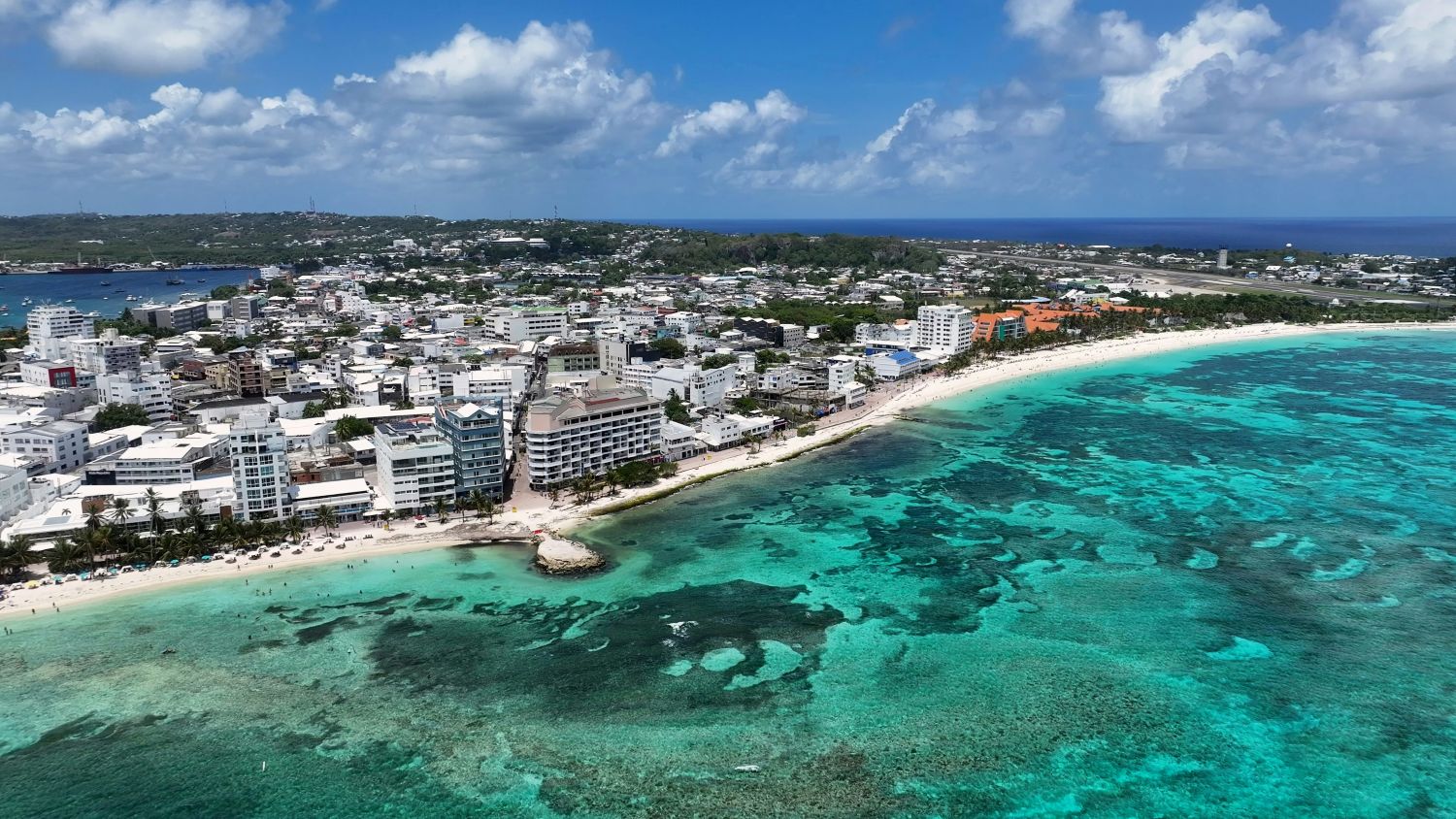
C is for Caribbean, as in Latin America and the Caribbean, or LAC. For most investors, that’s about as much attention as it gets.
Even for LatAm investors, the 16 small island markets, from Jamaica to French-speaking Martinique, are often an afterthought. High interest rates, a lack of scaled investment opportunities and mounting climate threats have kept private capital on the sidelines.
Intentional Asset Management’s John Morris and Tirtha Patel are seeking to raise $100 million for the CaribGROW fund to finance upgrades to more robust food systems in the region.
“There’s been no equity going into the region, and therefore initiatives don’t turn into businesses,” Morris, the former head of Merrill Lynch’s Latin America private banking and wealth management strategy, says on the latest episode of ImpactAlpha’s Agents of Impact podcast.
CaribGROW takes minority stakes in portfolio companies, allowing existing owners to retain control; investors receive a preferred return before profits are shared.
Import Substitution
Caribbean nations import roughly $6 billion in food each year, despite having the productive capacity to supply more of their own demand. That mismatch is the foundation for CaribGROW, the debut fund of Intentional Asset Management, a unit of 17 Asset Management.
The fund aims to provide equity capital to Caribbean-based food companies that reduce imports with local production or boost value-added exports, including through hydroponics, aquaponics and vertical farming.
The fund has already warehoused its first deal, an investment in a Jamaican producer of premium coffee and spring water sourced from sustainably run farms in the country. The team is in discussions with large US and international food companies that could serve as potential acquirers of portfolio companies.
Food security
John Morris traces his Caribbean focus to a visit to the Bahamas 25 years ago, when three of his daughters attended the Island School, a semester-long sustainability program for high school students. “That started my impact journey,” Morris tells ImpactAlpha. There, he learned about the region’s circular economy potential through the program’s immersive nature-focused programming.
At the time, Morris was leading Merrill Lynch’s Latin America private banking and wealth management strategy — a role where he saw how investors routinely overlooked the Caribbean when designing regional ‘LAC’ investment strategies. “All the investment banking deals were done in Latin America,” he says. “The Caribbean got very little attention.”
In the years that followed, as Morris moved into fund management and ecosystem-building roles in the impact space, the Caribbean’s food economy emerged as a natural next focus.
The region, he says “is an incredible victim of extraction and post-colonial behavior. It’s an incredible center of human talent. And it is a laboratory of 16 different countries that can help us understand soils, weather and food systems in a way that we don’t have anywhere else in the world.”
CaribGROW is targeting a first close of $20 million.
Capital gap
Fragmentation across Caribbean islands, which speak different languages and use different currencies, combined with persistently high interest rates, has historically left the region’s emerging cohort of mid-sized companies with few equity financing options.
“We have identified a serious lack in the capital stack of equity capital,” says Morris. “We’re coming in to change that landscape and to back opportunities that can operate at a regional scale, not just within a single country,”
The fundraising environment remains challenging. In 2024, one of the region’s most established private equity investors, Portland Private Equity, canceled its third Caribbean-focused fund after raising roughly $100 million toward a $330 million target. Portland had raised more than $400 million across its first two funds, making the reversal a stark signal of how difficult capital formation has become in the region.
CaribGROW is structured to help fill that gap. The fund takes minority equity stakes in portfolio companies, allowing existing owners to retain control while investors receive a preferred return before profits are shared. The team is already in discussions with large US and international food companies that could serve as potential acquirers.
It also hopes to blend in, so to speak, with the existing ecosystems of grants and debt, high-priced though it may be. Morris and Patel say they are seeing interest from Caribbean banks and family offices, as well as development finance institutions that could be partners in Caribbean food deals.
“We’re an ingredient to blend,” says Morris. “If someone wants to come and work with us on something, we can blend with them, but we’re the equity ingredient.”