
Business leaders’ hopes for a lighter tax burden in the upcoming national budget were effectively dashed yesterday (29 April) as the government rejected pleas for tax cuts for now. Instead, it assured removal of the systemic obstacles that have long stifled the ease of doing business.
The message from the government came during a pre-budget consultation jointly organised by the National Board of Revenue (NBR) and the Federation of Bangladesh Chambers of Commerce and Industry (FBCCI).
With the national budget set to be unveiled in June, business leaders raised a range of demands at a high-level meeting with government representatives, calling for tax reductions and the removal of various barriers to doing business to support trade and commerce under current conditions, while urging the government to take concrete steps to address these challenges.

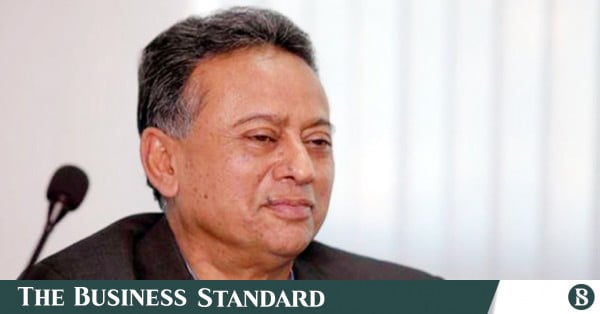
Responding to the demands, Finance Minister Amir Khosru Mahmud Chowdhury said, “We would like to provide relief in tax and VAT in these hard times, but we may not be able to do so in this budget. However, we will remove barriers to business.”
He urged businesses to identify specific problems, adding, “Inform us about corruption at ports and all the obstacles to doing business. We will remove these within the next three months.”
Highlighting the broader economic strain, the minister called on businesses to support the government in navigating the current crisis. “We are going through a difficult time, and everyone must understand that,” he said, asking for cooperation at least for this budget cycle.
At the event, NBR Chairman Abdur Rahman Khan also cautioned that tax and VAT decisions may not meet business expectations, though he echoed assurances that efforts would be made to simplify doing business.
Businesses press for tax reforms
Leading business figures from various sectors outlined a range of challenges in their remarks at the meeting, highlighting the obstacles they face across industries.
The FBCCI called for “special priority” to create a business-friendly tax system by eliminating harassment and complexities in tax collection.
The apex business body demanded an increase in the tax-free income threshold for individuals, a reduction in corporate tax rates, and the abolition of the mandatory minimum tax on company turnover – which firms must pay even when incurring losses.
It also proposed a gradual withdrawal of advance income tax (AIT) and advance tax (AT) at the import stage, while suggesting measures to expand the overall tax base. In total, the FBCCI submitted 165 written proposals to the government ahead of the budget, which is expected to be announced in June by the BNP-led administration.
In his written statement, FBCCI Administrator Abdur Rahim Khan said reducing the cost of doing business, attracting and protecting investment, improving port capacity, ensuring balanced currency and tariff policies, lowering logistics costs, and strengthening governance and transparency in infrastructure – including power and energy – were essential.
Small industries under pressure
Business leaders also warned that small industries are under severe strain. Obaidur Rahman, president of the Bangladesh Aluminium Manufacturers Association, urged the government to step in.
“Our industries are shutting down. Please save these industries,” he said.
Calling for a shift in tax policy, he added, “Increase direct taxes. Send officers to district and upazila levels – significant income tax can be collected from there. But we are pleading to save small industries.”
Anwar-Ul Alam Chowdhury Parvez, president of the Bangladesh Chamber of Industries, presented data showing slowed growth across sectors due to global conflicts, energy shortages and other pressures. He argued that instead of raising taxes, the focus should be on widening the tax net.
“Businesses are questioning what benefits they receive in return for paying taxes,” he said, adding that many also report harassment during tax collection.
Allegations of harassment
Imran Hossain, secretary general of the Bangladesh Restaurant Owners’ Association, alleged that bureaucratic complexities are turning businesses into “systematic thieves”.
“Enforcement actions disproportionately target those who pay VAT and taxes, while non-compliant businesses often go unchecked,” he said.
He proposed lowering VAT rates and introducing a unified tax system, adding that enforcement drives against VAT-compliant restaurants had intensified immediately after discussions with the NBR.
“Administrative pressure and field-level harassment have made it increasingly difficult to run businesses. On one hand, there is pressure of increased VAT, and on the other, irregular enforcement drives. If this continues, we will have no option but to shut down our businesses,” he warned.
Expressing frustration over the lack of a level playing field, he said, “Yes, I admit it – we are forced into dishonesty because the system does not treat everyone equally. How do we get out of this? This bureaucratic structure will never allow it.”
He also criticised both bureaucrats and politicians, alleging that officials fail to establish effective systems while in office, only to acknowledge problems after retirement.
Other business leaders echoed concerns, calling for lower VAT and tax rates, reduced harassment by field officials, and stronger governance in the banking and financial sectors. They warned that without reform, it would be difficult to build a stable economic foundation.
The FBCCI also proposed strengthening the central bank as an independent regulator to ensure discipline in the banking sector, and reducing government borrowing from banks to avoid crowding out private sector credit.
However, the finance minister at the event said, “The shortfall in the banking sector is not something this government can resolve easily.”
Highlighting the impact on businesses, he acknowledged that “due to problems in the banking sector, businesses are unable to repay their liabilities.”
He added that he had informed the International Monetary Fund that businesses are facing a serious capital shortfall. Explaining the reasons, he said, “Because of currency depreciation and inflation, there has been a 50% erosion of capital.”
Equal incentives for emerging export sectors
The minister also pledged to extend incentives similar to those enjoyed by the ready-made garment (RMG) sector to other promising export industries.
Currently, the RMG sector benefits from duty-free import of raw materials and back-to-back letters of credit against export orders – measures widely credited with driving its growth. The sector accounts for around 85% of Bangladesh’s total exports.
Addressing concerns about misuse, he said, “If 10 out of 100 people misuse facilities, does that mean the remaining 90 should be deprived? We will open up facilities for promising sectors.”
He acknowledged allegations that businesses operating under bonded warehouse facilities face harassment from customs officials, adding that cooperation from the private sector would be needed to address the issue.
War costs and budget pressures
The minister said the current government has inherited significant liabilities, including outstanding payments of Tk40,000 crore in the power sector.
He added that the government had spent nearly $4 billion (around Tk48,000 crore) due to the Middle East conflict.
In light of these pressures, Bangladesh has requested a two-year cushion from the IMF to stabilise the economy. “We have told the IMF that we need a two-year cushion. From the third year, the economy will take off,” he said.
Case for a larger budget
Responding to criticism from economists over the government’s plan to maintain a large budget, the finance minister argued that increased spending is necessary to stimulate growth.
“To generate growth in a low-level economy, improve citizen services, create demand and reduce poverty, we must invest in the economy,” he said, adding that development spending would need to increase.
He acknowledged concerns over misuse of funds, noting that large budgets become problematic if money is siphoned abroad. “But if spending is of quality and yields returns, then such investment is justified,” he said.
Commerce Minister Khandakar Abdul Muktadir stressed the need to balance business interests with state revenue. “We must look at both business and the national exchequer,” he said. “How will the economy progress if the tax-to-GDP ratio does not increase?”