

Signs of weakening consumer demand, rising mortgage-payment burdens and elevated equity valuations are strengthening the case for defensive investment strategies. Inflation-protected bonds may offer attractive long-term returns as investors navigate economic uncertainty and geopolitical risks.
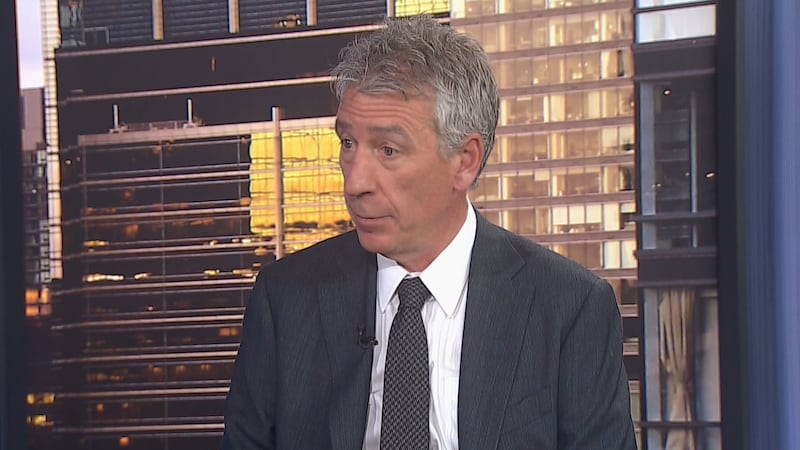
BNN Bloomberg spoke with David LePoidevin, senior portfolio manager at Canaccord Genuity Corp., about the impact of Middle East developments on oil prices, Canada’s latest retail sales data, risks in the housing and banking sectors, and why Treasury Inflation-Protected Securities remain his highest-conviction investment idea.
Key Takeaways
- Core Canadian retail sales data suggests consumer spending remains weak once gasoline prices and vehicle sales are excluded.
- Mortgage renewals are creating a significant financial burden for households, with many borrowers facing payment increases of 20 to 50 per cent.
- The Canadian economy continues to lag the United States due in part to Canada’s shorter mortgage-reset cycle.
- Canadian bank valuations are historically elevated despite growing concerns about credit quality and housing-market weakness.
- Treasury Inflation-Protected Securities offer real yields of roughly 2.7 per cent plus inflation and could provide both income and downside protection if equities weaken.
Read the full transcript below:
LINDSAY: The U.S. and Iran have delayed talks for a permanent peace deal after fighting intensified in southern Lebanon. The two countries were set to meet in Switzerland today, but Iran says a ceasefire in Lebanon must be part of the deal agreed to earlier this week. Now we hear that Israel and Hezbollah have agreed to a ceasefire, effective 4 p.m. local time. So, here to talk about that and more is David LePoidevin, senior portfolio manager at Canaccord Genuity Corp., and he joins us in studio. Welcome.
DAVID: Nice to be here.
LINDSAY: So, there are a lot of developments. This whole conflict, I feel like, has been minute by minute. We’re seeing that today, of course, with the news of a ceasefire between Israel and Hezbollah. I wonder how much that really factors into getting the Strait of Hormuz reopened. What are your thoughts on what we’re seeing today and the price of oil as it reacts to all this news?
DAVID: Well, another day, another news cycle dominated by the Strait. As you said, in Lebanon, Hezbollah, hopefully a deal with Israel. So, I mean, that’s all good news. I think, at the end of the day, there is a desire by all sides to get everything going, and there’s pressure from around the world. Not only that, Donald Trump himself has midterms coming up. So, the longer we go with elevated oil prices, the tougher that is. Trump’s popularity has taken a hit. There is a high correlation between oil prices and political popularity. So, we’ll have to see. I’m looking forward to the day when we don’t have to see this as the headline.
LINDSAY: Yeah, I can’t remember. It feels like it’s been happening for way longer than it has because it really has taken hold of the market.
DAVID: Somebody counted there were 29 times that Donald Trump declared the war was over.
LINDSAY: Twenty-nine. I mean, that was what we were talking about earlier this week when he was talking about a peace deal being signed today. It’s like, okay, well, we’ve heard this before, right? The stop and start, the pause and the go, and the news headlines that always come out.
DAVID: The boy crying wolf.
LINDSAY: What does that do to the oil market in particular, do you think?
DAVID: I think the oil market is pretty smart, and it’s pricing in all the news. So, it’s doubtful we get back to the lows in the $50s and $60s. There has been a supply crunch. It’ll take a while to build back. Secondly, all these strategic reserves around the world have been drawn down. It’s doubtful that before the midterms the U.S. would really ramp that up, but they are at dangerously low levels if there’s a conflict. So, you’re looking at a higher base than you would have before, which is not that bad for Canada.
LINDSAY: Oh, wow, yeah. I mean, I guess that’s true. In the meantime, Canadian energy companies are profiting off this.
DAVID: Absolutely.
LINDSAY: Yeah, you said you feel all sides want a deal here to get the Strait of Hormuz reopened, but obviously there are some big sticking points, some real concessions, particularly when it comes to uranium, for example, for Iran. So, what other vulnerabilities do you think could continue to delay the Strait of Hormuz actually reopening?
DAVID: Listen, that’s an excellent question, and it’s above my pay grade.
LINDSAY: You’re not in the negotiating room.
DAVID: I’m not in the negotiating room. I mean, there are all kinds of fertilizers and critical things that are needed. So, there’s not just oil pressure. That’s the one that makes the headlines.
LINDSAY: Okay, let’s move on then. We’ll talk about Canada releasing its latest retail sales numbers. Sales up about 0.5 per cent, I believe, for the month of April. What are your thoughts on that? Was that kind of in line with what you were expecting?
DAVID: Well, I was expecting it, but the number is actually shockingly weak. You’ve got to remember that’s a price point. So, if you look at a particular family and they buy the same number of units of everything, but all of a sudden filling up their Honda CR-V goes from $70 to $110, their retail sales went up, but their units of consumption didn’t. So, we look at the core, without the volatile gasoline prices and without motor vehicle sales. The number was minus 0.7 per cent. This is all encompassing of the mortgage rollover. We’re in the midst of the biggest mortgage rollover in the history of Canada. These mortgage payments are going up between 20 and 50 per cent from where they were. This is a drain.
So, on one hand, it’s positive. I saw the price at the pump around $1.50 a litre. It’s nice to get that back in the Toronto area. That will help. The interesting thing about retail sales is it jumped on gas, but then it could hurt other areas. In other words, if you’re paying $40 more to fill up your car, you may not go out for dinner, so you might feel it elsewhere. We actually saw food consumption down. They’re filling up their car, but they’re not eating. It has to come from somewhere.
LINDSAY: Make a decision sometimes, right? Prices are higher. We did see advance estimates for the month of May showing retail sales could be up one per cent. Is there maybe some optimism on the horizon, or maybe not?
DAVID: Well, the Canadian economy is muddling along. Was it a technical recession? We haven’t quite caught it, but we’re kind of growing at zero. So, we get a negative number, then a positive number.
There’s a real divergence, by the way, between Canada and the United States. This is a function of our own system. The United States has 30-year mortgage rates, so despite the fact that interest rates have risen higher, if you’re in your home, you still have that 3.5 per cent mortgage. In Canada, we talk about long-term mortgages, but we’ve got that five-year rollover. Even if you’re variable, your new contract is coming up and your mortgage payments are going to be higher. That’s a unique situation to Canada. So, I would say the macro picture is that the Canadian economy is weaker than the United States and likely will be for quite a while.
LINDSAY: Do you still like sectors or companies in Canada? What do you like right now?
DAVID: You know what? It is getting harder and harder. A year and a half ago, you could buy gold stocks that were so hated. You were buying them for 20 cents on the dollar based on the gold in the ground. Three or four years ago, you could buy Cenovus below $10 a share. Canada was really cheap.
We are looking at a market in Canada that is priced really, really high. In our No. 1 sector, the banking sector, we have never in the history of Canada seen this high a price-to-book value, this high a price-to-earnings ratio and this low a dividend yield.
Which is very ironic because we’re also looking at a credit cycle now. You saw a little bit of the credit-cycle problems in a lot of these mortgage funds that are being frozen. You saw it in goeasy, which is way down the food chain in terms of credit quality. But when does it show up in EQB, for example? When does it show up in National Bank? Both Canadian Western Bank and National Bank have exposure to Brampton.
Again, you might say house prices in Canada are down 10 per cent. In parts of Canada they’re down 30 or 40 per cent. I’ve seen some examples in Brampton where a property that sold for $1.6 million traded at $800,000. That’s when people stop paying their mortgage. If you owe more than your house is worth, eventually you can’t seem to find the money.
LINDSAY: Yeah, you do like Treasury Inflation-Protected Securities, though.
DAVID: Yes.
LINDSAY: Why is that?
DAVID: That’s our highest-conviction trade. Now you’re getting me excited.
My start in this business was in bond trading at the old Pemberton Securities in the 1980s. If you just look at history, you can buy a Treasury inflation bond today at 2.7 per cent plus inflation. Inflation has been consistently above target, but if we go back to 1950, inflation has averaged 3.52 per cent, not two per cent.
We’ve seen inflation low, and we’ve seen it recently at nine per cent, but the average is higher. The average Treasury yield since 1950 is 4.52 per cent, which is almost spot on to where Treasuries are yielding today. So, when people talk about higher interest rates, we’re actually right on average.
Average Treasury yield 4.5 per cent, average inflation 3.5 per cent. You’re able to buy a Treasury inflation bond at 2.75 per cent. So, not only, based on inflation, are you earning close to a six per cent risk-free U.S. government yield, but the last time you were able to take advantage of Treasury inflation bonds at this high a yield was in 1999-2000.
That was also the last time stocks were so exciting and people were making so much money. Maybe they should have taken some money off the table and looked at some of these things.
We did very well for our clients in 1999-2000 through the tech bubble burst because we owned a lot of these kinds of bonds. We used to own the Canadian version, called Real Return Bonds, but they’ve stopped issuing those.
The Bank of Canada said this is too risky. We don’t want to issue bonds linked to inflation because what if inflation goes to nine per cent? We’re on the hook to pay nine per cent plus.
So, anyway, it’s a very exciting opportunity. Not only can you make five or six per cent, but as a hedge against stocks, if the stock market cracks, you’ve got potential to make a lot of money in the bond market, which is exciting because bonds have been a terrible place to be.
LINDSAY: Yeah.
DAVID: The six-year return of most bond mutual funds is zero.
LINDSAY: Interesting time to be there. We’ve got to wrap it up right now. David LePoidevin, I do appreciate you coming into the studio and joining us. Thank you so much.
—
This BNN Bloomberg summary and transcript of the June 19, 2026 interview with David LePoidevin are published with the assistance of AI. Original research, interview questions and added context was created by BNN Bloomberg journalists. An editor also reviewed this material before it was published to ensure its accuracy and adherence with BNN Bloomberg editorial policies and standards.