
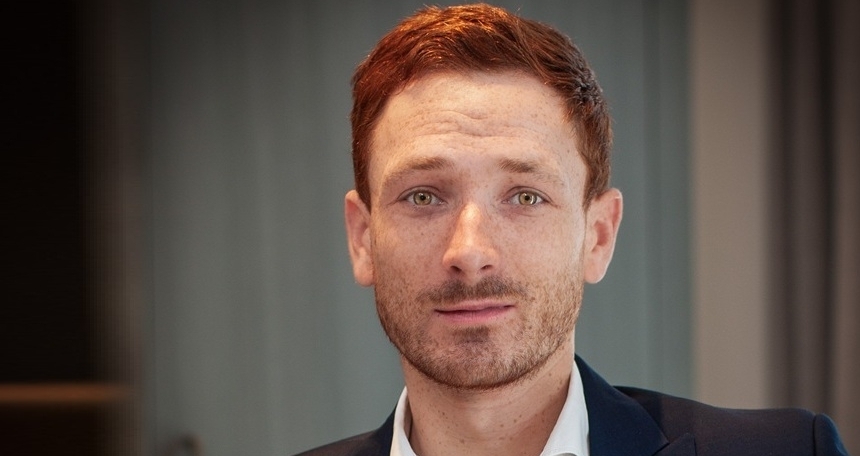
“Returns over the next few years are likely to be steady rather than spectacular, driven primarily by cashflow rather than capital appreciation. Success will depend less on rising values and more on underwriting discipline, asset quality and execution”
– Joe Freedman – ASK Partners
UK real estate has entered a different phase of the cycle. After two years of higher interest rates, persistent inflation and geopolitical instability, the era of easy gains driven by cheap debt and yield compression is over.
Conflicts in Ukraine and the Middle East, including rising tensions involving Iran, have added renewed volatility to global energy markets. Higher oil and gas prices feed directly into construction costs, financing conditions and business confidence across Europe.
For property markets already adjusting to higher borrowing costs, this has made development harder to underwrite and increased the importance of assets with dependable income.
Rising energy and materials costs have already pushed many development schemes into marginal viability, reinforcing the shift toward income-producing assets and disciplined capital deployment.
Put simply, this is now an income market.
Returns over the next few years are likely to be steady rather than spectacular, driven primarily by cashflow rather than capital appreciation. Success will depend less on rising values and more on underwriting discipline, asset quality and execution.
From a lender’s perspective, this shift is already visible in the transactions reaching completion. Enquiry levels remain healthy, but the bar is higher. Lenders are scrutinising capex assumptions, stress-testing income and focusing closely on sponsor credibility. The deals that proceed are built around visible cashflow, sensible leverage and clear asset management strategies.
Opportunity still exists, but it is increasingly selective.
Prime offices: the divide widens
Offices are increasingly a tale of two markets.
Secondary stock continues to struggle with vacancy and obsolescence. By contrast, prime ESG-compliant buildings in strong locations remain in demand, particularly where amenity, sustainability and transport connectivity align.
The opportunity lies less in speculative development and more in disciplined repositioning, clearly costed refurbishments with credible reversion potential. Secondary assets without a viable upgrade path will remain challenged.
Residential and build-to-rent: structural support
Residential continues to benefit from structural undersupply. Housebuilding remains weak, the private landlord base is shrinking, and affordability constraints are keeping more households in rental accommodation.
Rental growth has moderated from recent peaks, but occupancy remains high and demand resilient. For capital providers, the appeal is straightforward: recurring income, defensive characteristics and long-term demographic support.
Institutional build-to-rent remains attractive but operationally intensive and capital-heavy. Recent decisions by high-profile entrants – including John Lewis stepping back from its build-to-rent ambitions – highlight that scale alone does not guarantee execution. Success depends on operational expertise, funding discipline and realistic delivery assumptions.
Where those elements are in place, particularly in suburban single-family formats with longer tenancies and lower turnover, the income profile remains compelling.
Retail: income doing the heavy lifting
Retail has already undergone significant repricing, with much of the rental reset occurring during the pandemic.
What remains is an income-led story. Dominant schemes with strong tenant covenants can deliver stable returns without requiring aggressive rental growth. As ever, selectivity is critical: location, tenant mix and active management will determine outcomes.
Retail no longer needs to surprise on growth to perform, it simply needs to sustain income.
Industrial and logistics: from growth to core
Industrial is no longer the automatic outperformer it was during the e-commerce surge. Rental growth is moderating, and vacancy has increased in secondary stock.
However, the structural drivers remain intact: supply-chain resilience, last-mile distribution and demand for modern, efficient space. The sector is increasingly best viewed as a core income allocation rather than a tactical growth trade.
Modern, well-specified logistics assets continue to attract demand, while older stock faces rising obsolescence risk. Underwriting must reflect that divide.
Hotels and leisure: operational flexibility
Hotels and leisure benefit from a key advantage: flexibility. The ability to reprice daily provides a degree of inflation protection that traditional leases cannot. Demand has normalised post-pandemic, and the sector offers attractive income returns where operator strength and lease structures are robust.
For lenders, clarity around capex and operational expertise remains decisive. Where those fundamentals are in place, the sector can deliver resilient cashflow.
Precision, not pessimism
The UK real estate market is not entering a new boom. But neither is it broken. Returns will increasingly be earned through income, asset management and disciplined leverage. That is not a negative; it is a normalisation.
For lenders actively deploying capital in this environment, the focus is clear: visible cashflow, realistic structures and credible execution. The era of easy gains from cheap debt has passed. But for investors prepared to prioritise income, quality and discipline, UK real estate still offers steady opportunities.
As a specialist, independent property lender, ASK Partners offers investors the opportunity to take advantage of bespoke and flexible real estate finance solutions across these sectors, lending in excess of £2bn over the last 10 years.