
In 2017, Chinese property developer Hui Ka Yan was enjoying one of the most spectacular wealth surges in modern history.
Shares of his company, China Evergrande Group, were soaring. The real estate empire he founded two decades earlier was building enormous residential developments across China, borrowing billions of dollars, and selling apartments at a breathtaking pace. At the height of the boom, Celebrity Net Worth estimated Hui’s net worth at $45 billion, making him the richest person in China and, for a time, the richest person in all of Asia.
Less than a decade later, that $45 billion fortune is effectively gone.
And now Hui may spend the rest of his life behind bars.
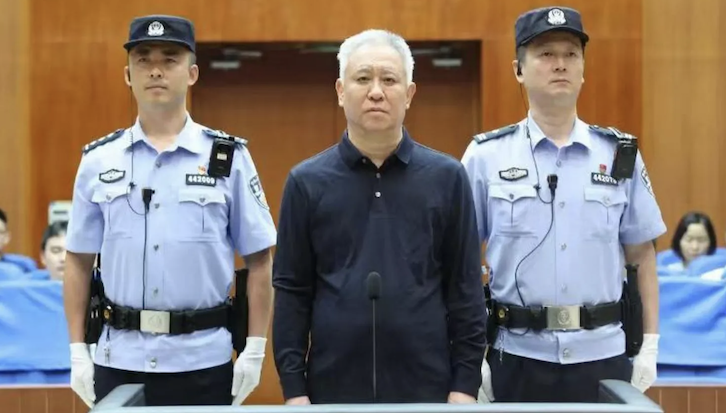
On Thursday, August 20, 2026, a court in Shenzhen sentenced the 67-year-old Evergrande founder to life in prison after he pleaded guilty to eight criminal charges stemming from the spectacular collapse of his company.
The court also ordered all of Hui’s personal property confiscated. Celebrity Net Worth now estimates Hui Ka Yan’s net worth at $0.
It is difficult to imagine a more complete reversal of fortune.

Shenzhen Intermediate People’s Court/Handout
From Rural Poverty To $45 Billion
Hui’s rise was extraordinary even by the standards of China’s billionaire boom.
Born Xu Jiayin in rural Henan Province in 1958, Hui lost his mother when he was an infant and was largely raised by his grandmother. After studying metallurgy, he spent around a decade working at a steel factory before heading south during China’s economic transformation.
In 1996, he founded Evergrande in Guangzhou with fewer than 20 employees.
The timing could hardly have been better. China was urbanizing at an astonishing pace, millions of families wanted to own apartments, and banks and investors were willing to provide property developers with huge amounts of capital.
Evergrande’s formula was simple but extraordinarily aggressive: borrow money, acquire land, build quickly, sell apartments, then use the proceeds and additional borrowing to start even more projects.
By 2009, Evergrande was large enough to go public in Hong Kong. Hui maintained a controlling stake, so every major increase in the company’s stock price added billions of dollars to his paper fortune.
Then came 2017.
Evergrande’s shares exploded higher, and Hui’s net worth surged to roughly $45 billion, according to CNW’s historical estimate.
For comparison, his fortune at that point put him in the same financial universe as some of the most famous billionaires on the planet. He was richer than Jack Ma for a period and had overtaken many of the tycoons who had dominated China’s rich lists for years.
And unlike some paper billionaires, Hui had also extracted enormous amounts of actual cash from Evergrande.
Between Evergrande’s 2009 IPO and the beginning of its financial crisis, Hui collected billions of dollars in dividends from the company.
He lived accordingly.
Hui was associated with luxury mansions in Hong Kong, private jets and a 197-foot superyacht named “Event.” Evergrande itself expanded into seemingly everything: bottled water, healthcare, tourism, theme parks, professional soccer and, eventually, electric cars.
At one point, Evergrande wasn’t merely a real estate developer. It looked like an empire.
There Was One Major Problem: Debt
Evergrande’s rise depended on enormous amounts of borrowed money.
At the end of 2009, the company had liabilities of roughly $8 billion.
By 2020, that figure had ballooned to more than $300 billion.
Evergrande had become the world’s most indebted property developer.
The system worked as long as property sales kept rising and Evergrande could continually refinance its debts. The company also relied heavily on China’s system of selling apartments before they were finished. Buyers would hand over money for homes that might not be completed for years, giving developers cash they could use elsewhere.
Evergrande pushed that model to an extraordinary scale.
Then Chinese regulators attempted to rein in the country’s heavily indebted property sector.
Suddenly, Evergrande could no longer borrow and refinance with the same freedom.
The machine seized up.
A $45 Billion Fortune Evaporates
Hui’s wealth disappeared almost as quickly as it had been created.
From its peak, Evergrande’s stock eventually lost essentially all of its value.
CNW estimated Hui’s fortune at around $45 billion at its 2017 peak. As Evergrande’s problems intensified, his net worth fell by tens of billions of dollars.
By 2021, Evergrande was struggling to make debt payments. Construction stopped on projects. Suppliers went unpaid. Homebuyers who had already paid for apartments were left wondering whether their homes would ever be finished.
That December, Evergrande defaulted on offshore debt.
Hui began selling personal assets and was reportedly pressured to use his own wealth to help support the company. Mansions, aircraft and other assets came under scrutiny from creditors.
The decline continued.
By 2023, Hui’s fortune had fallen from $45 billion to a small fraction of that amount. He was detained by Chinese authorities that year as investigations into Evergrande intensified.
In January 2024, a Hong Kong court ordered Evergrande liquidated after restructuring efforts repeatedly failed.
In 2025, Evergrande’s shares were formally delisted from the Hong Kong Stock Exchange.
By then, the company that had once made Hui the richest man in China had effectively ceased to exist in anything resembling its former form.
$78 Billion In Inflated Revenue
Evergrande’s collapse eventually became more than a story about reckless borrowing.
Chinese regulators alleged massive financial misconduct.
Authorities determined that Evergrande’s principal mainland subsidiary had improperly recognized revenue in advance, causing the company to overstate revenue during 2019 and 2020 by a combined 564 billion yuan, equivalent to roughly $78 billion.
The allegedly inflated financial statements were then used as Evergrande raised money from investors.
In 2024, Hui was personally fined approximately $6.6 million and banned from China’s securities market for life.
But securities penalties were only the beginning.
Hui ultimately faced criminal charges including fundraising fraud, illegally accepting public deposits, misuse and embezzlement of funds, securities fraud, illegal lending and bribery.
In April 2026, he pleaded guilty.
Four months later, the sentence arrived.
Life in prison.
And All Of His Property Was Confiscated
The Shenzhen Intermediate People’s Court didn’t merely imprison Hui.
It ordered all of his personal property confiscated.
Evergrande and its primary property subsidiary were also hit with combined fines totaling 15.82 billion yuan, or roughly $2.35 billion.
Hui wasn’t the only member of his family caught up in the case. His two sons were among the other defendants sentenced to prison. Dozens of additional people connected to Evergrande were convicted, including former senior executives.
The confiscation order also creates an extraordinary endpoint for Hui’s personal wealth story.
At his peak, CNW estimated Hui Ka Yan’s net worth at $45 billion.
Today, with his Evergrande equity effectively worthless, many of his known assets already seized or targeted by creditors, and a Chinese court ordering the confiscation of everything he personally owns, Celebrity Net Worth estimates Hui Ka Yan’s current net worth at $0.
There may still be a long legal battle over assets held offshore or through family members. Evergrande’s liquidators have already spent years attempting to trace billions of dollars in dividends and other assets connected to Hui and his former wife.
But whatever eventually gets recovered will be fought over by governments, liquidators and creditors. It isn’t a fortune Hui gets to keep.
In 2017, Hui Ka Yan stood atop China’s billionaire class with $45 billion.
Nine years later, his company is gone, his fortune is gone, his property is being confiscated, and he has been sentenced to spend the rest of his life in prison.