
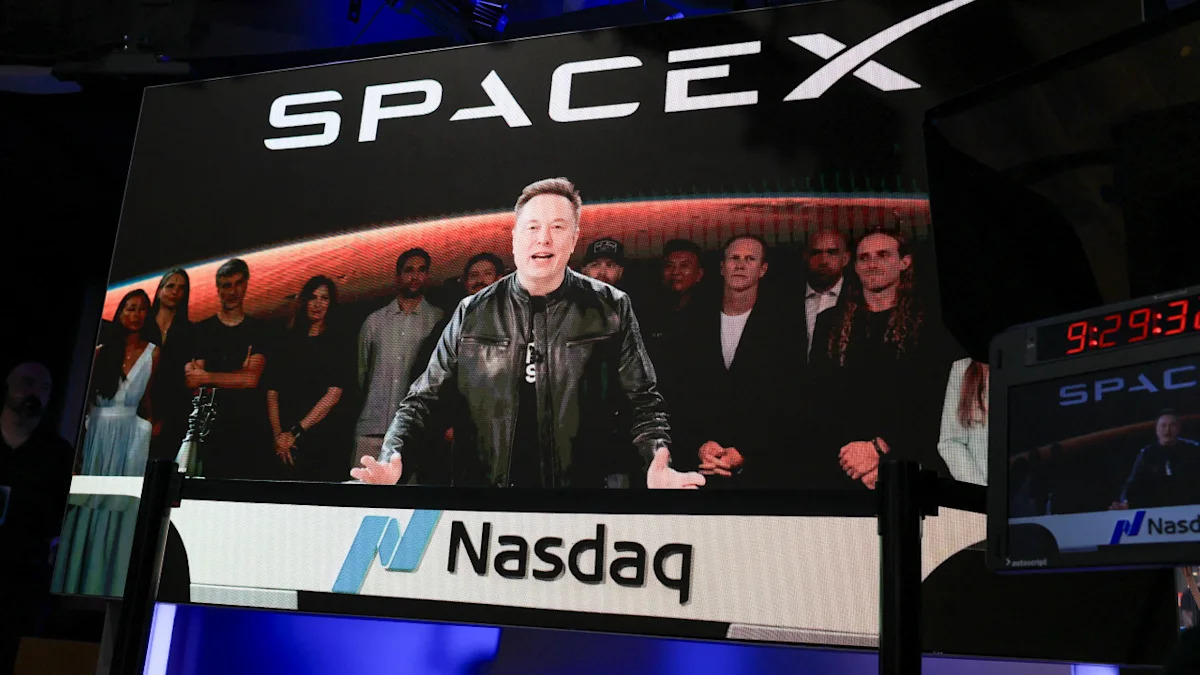

SpaceX launched last month with a record-setting IPO of $135 per share. At one point during its third day of trading, the company briefly surpassed (1) Amazon and Microsoft in market capitalization to become the fourth-largest publicly traded company.
That is the case no longer, as traders are busy scrubbing a swath of the rocket maker’s stock price.
Must Read
Just over a month following a historic public offering, SpaceX doesn’t have the same allure it once did on Wall Street. As of Friday afternoon, Elon Musk’s rocket and AI company was trading at $125 per share, down 43% in value from its record high of $225. SpaceX shares slid below its original listing price for the first time (2) on July 15.
The company has shed just over $1 trillion in market capitalization, having peaked at $2.7 trillion on June 16.
SpaceX is up against short-sellers as well. They’re piling on and betting against the company, CNBC reported (3), taking on about one-third of its scarce, publicly available shares.
Space X’s stock price woes were magnified after it pulled the plug on the 13th test flight for its Starship rocket on July 16, citing an engine ignition failure. Development of the 400-foot tall reusable rocket is a key plank in Musk’s ambition to drastically lower the cost of space travel.
“Next launch attempt hopefully in a few days,” the Tesla CEO wrote on X (4), the social media platform he owns. He added that “early next week” will be the next available launch timing. SpaceX shares fell 6% during Friday morning trading.
SpaceX stock swings
Fewer than 5% of SpaceX’s shares are publicly available to be purchased and sold, a limited amount that nevertheless attracted retail and institutional investors given the enormous hype around the company’s IPO.
SpaceX equity prices, though, could fall even further. The rocket firm implemented staggered lock-up agreements that bars employees and early investors from selling their shares for a certain period of time, according to its filings (5) with the Securities and Exchange Commission. The vast majority of shares, or 95%, are subject to these lockup agreements that strictly limited publicly-available shares, at least at the outset.