
(Kitco News) – Gold is attracting renewed investor interest as prices climbed above $4,250 an ounce on Wednesday, marking a seven-week high. While the precious metal still faces short-term headwinds from monetary policy uncertainty, one fund manager argues that the powerful forces underpinning gold’s secular bull market remain firmly in place.
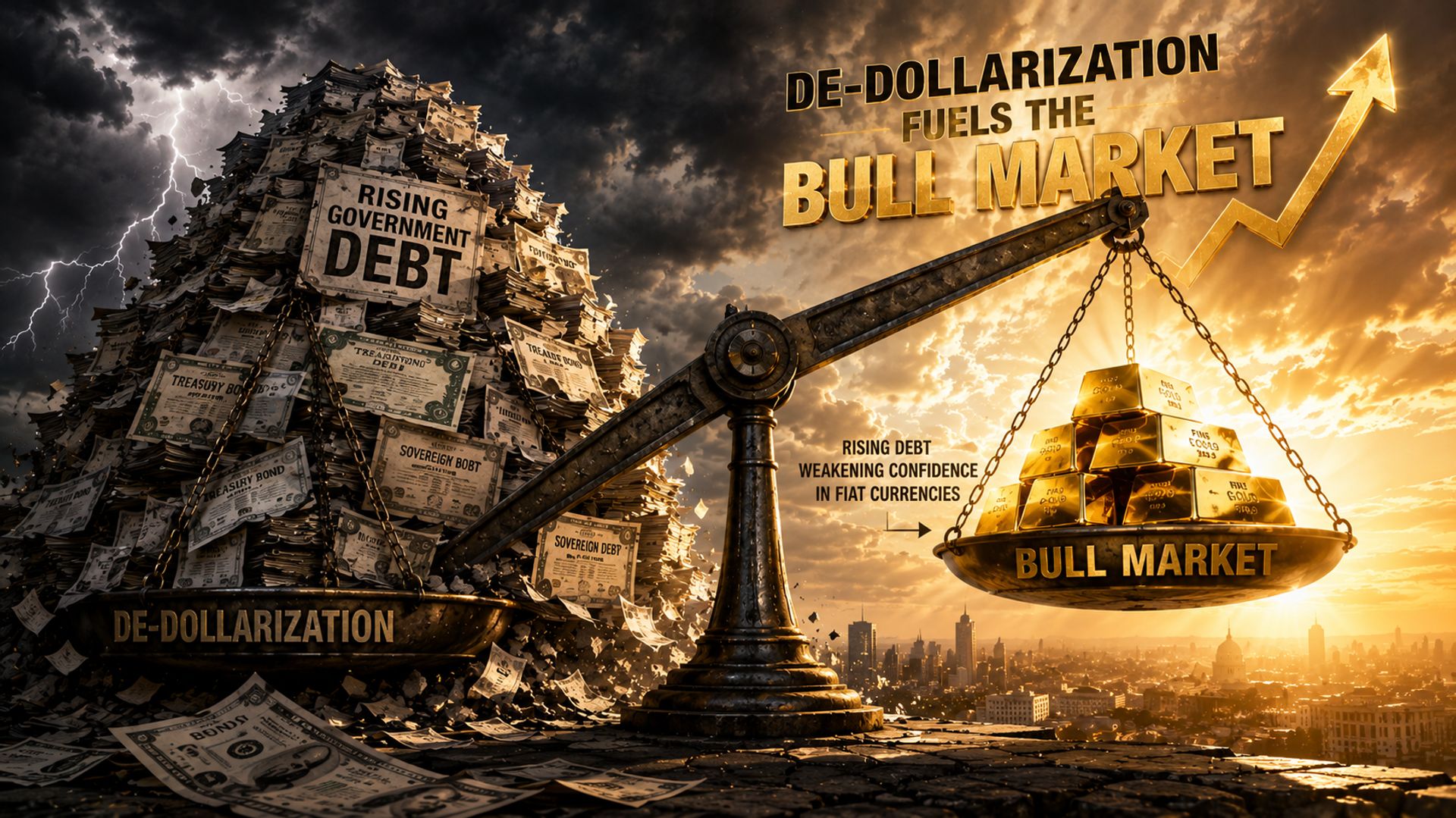
In an interview with Kitco News, Chris Mancini, co-portfolio manager of the Gabelli Gold Fund (GOLDX), said investors continue to view gold as a cyclical asset, treating its record highs earlier this year as the peak of the current cycle. However, he argued that gold‘s long-term advance is being driven by structural factors, including persistent geopolitical uncertainty, rising government debt, central bank diversification away from the U.S. dollar and eroding confidence in fiat currencies.
“The market’s trading it like a cyclical commodity even though it’s not,” Mancini said, noting that unlike industrial metals such as copper or iron ore, gold’s value is not tied to economic consumption but to its role as a monetary asset.
Not only is Mancini bullish on gold, but he also sees significant potential for mining equities
Because investors continue to price gold miners as though gold’s rally is temporary, Mancini believes the sector remains deeply undervalued despite record cash generation. He said that if investors expect gold prices to remain near current levels—or continue climbing—then mining equities offer significantly greater upside than owning bullion alone.
“I think in this environment, if you want exposure to gold because you think it’s going to go up, then you should own the miners instead of the physical metal,” he said.
Mancini noted that major producers are generating record profits with all-in sustaining costs around $2,000 an ounce while gold prices remain above $4,000. Those margins, he said, have fundamentally changed how investors should evaluate mining companies. Whereas relatively small cost overruns once had a meaningful impact on earnings, today’s elevated gold prices provide miners with significantly larger cash flow cushions.
He added that many senior producers are trading at roughly 10 to 11 times earnings despite generating historically strong free cash flow, valuations he considers inexpensive given the current gold price environment.
According to Mancini, the disconnect stems from investors continuing to value gold miners as though the industry is approaching the top of a traditional commodity cycle. He compared current valuations to those typically assigned to base-metal producers such as copper miners during periods of peak demand, when markets anticipate declining prices and shrinking margins.
“I just think the market needs to stop pricing the gold stocks like they’re at a peak multiple,” he said.
Instead, he argued that investors need confidence that gold’s rally has not run its course. Gold prices do not necessarily have to surge to new record highs for mining stocks to outperform, he said. Rather, the market simply needs to recognize that current price levels are sustainable and that gold is likely to continue trending higher over time.
Although Mancini remains constructive on gold’s long-term outlook, he acknowledged that the metal could experience additional short-term volatility depending on monetary policy expectations.
He said the biggest near-term risk would be a resurgence in inflation driven by higher oil prices, which could force the Federal Reserve to consider another interest-rate hike. However, he expects that risk to diminish if energy prices moderate.
“I think everything that drove the gold price up to $5,000 is still in play,” he said.
Among those drivers, Mancini pointed to continued central bank diversification away from the U.S. dollar, expanding government debt burdens and the broader trend toward de-dollarization.
“I think those trends are all going in the right direction,” he said. “I think we do go back to $5,000.”
Mancini added that while another Fed rate hike could delay gold’s advance, it would not derail the longer-term trend because tighter monetary policy would also weigh on economic growth.
He also dismissed concerns that higher energy costs would materially damage mining profitability unless accompanied by a sharp decline in gold prices. Even if oil prices were to rise, he said the impact on miners’ margins would likely be modest given their current profitability.
“The real story for gold is the direction of the gold price and whether the market comes to the conclusion that these companies shouldn’t be trading at peak multiples,” he said.
Ultimately, Mancini said that investors are making a fundamental mistake by viewing gold through the same lens as industrial commodities.
Unlike copper or iron ore, gold is primarily a monetary asset whose value is driven by macroeconomic and geopolitical forces rather than industrial demand. That distinction, he said, means the precious metal’s long-term trajectory should be viewed as a secular trend rather than a cyclical one.
He added that one of the most important themes supporting gold is the growing recognition that physical bullion represents an asset with no counterparty risk.
“Gold is an asset which is nobody’s liability, and it’s not replicable,” he said. “People have seen why that’s so important relative to what’s going on with other fiat currencies.”
Given ongoing concerns surrounding sovereign debt, persistent geopolitical tensions and declining confidence in paper currencies, Mancini said he sees little chance that the structural forces supporting gold will reverse anytime soon.
“I think it’s almost impossible for that trend to reverse,” he said.
Disclaimer: The views expressed in this article are those of the author and may not reflect those of Kitco Metals Inc. The author has made every effort to ensure accuracy of information provided; however, neither Kitco Metals Inc. nor the author can guarantee such accuracy. This article is strictly for informational purposes only. It is not a solicitation to make any exchange in commodities, securities or other financial instruments. Kitco Metals Inc. and the author of this article do not accept culpability for losses and/ or damages arising from the use of this publication.