

By Juliana Chloe A. Gonzales
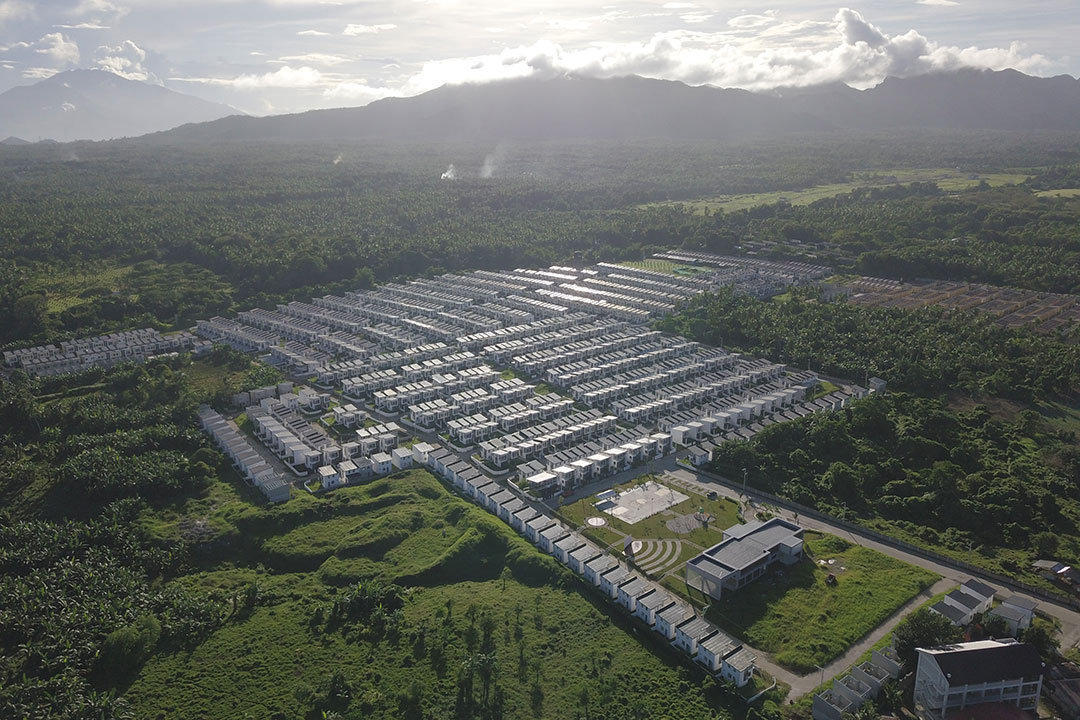
PROPERTY market analysts said the government’s decision to raise the Home Development Mutual Fund (Pag-IBIG Fund) housing loan ceiling to P10 million is expected to expand the pool of homebuyers in the mid-market residential segment, although sustained growth will depend on developer pricing, transport infrastructure, and integrated urban development.
Joe Curran, chief executive officer of Savills Philippines, said the higher loan ceiling is primarily a financing reform rather than a “pricing catalyst.”
“It meaningfully expands the pool of qualified buyers who can access homes previously financed almost exclusively through commercial banks, particularly within the P5-million to P10-million price range,” Mr. Curran said in a Viber message.
He said the primary beneficiaries are expected to be buyers in the upper end of the mid-market and the emerging premium affordable segment, particularly in well-located developments in Metro Manila, the Cavite-Laguna-Batangas-Rizal-Quezon (Calabarzon) region, and Central Luzon.
Claro Cordero, Jr., research director at Cushman & Wakefield Philippines, said the higher loan ceiling could also help reduce the ready-for-occupancy (RFO) condominium oversupply in Metro Manila.
“The policy enlarges the effective buyer pool. It does not, however, guarantee market improvement. That outcome rests entirely on developer pricing discipline. Those who align pricing to genuine borrower capacity will move inventory decisively; those who absorb the expanded ceiling into margins will stall,” Mr. Cordero said in an e-mail to BusinessWorld.
INFRASTRUCTURE TO SHAPE LONG-TERM DEMAND
While the higher Pag-IBIG loan ceiling could improve housing affordability, the analysts said transport infrastructure and integrated urban planning will determine whether demand can be sustained.
President Ferdinand R. Marcos, Jr. said in his State of the Nation Address (SONA) that more than 500,000 housing units have been built under the Pambansang Pabahay para sa Pilipino (4PH) Program.
Mr. Curran said long-term success will depend on integrated urban developments where transport connectivity, employment opportunities, and utilities are developed alongside residential projects.
Mr. Cordero said the P517.45 billion allocated for the program represents a “material recalibration” of public sector execution. However, he said the fiscal integrity of the Pag-IBIG Fund and prudent credit underwriting should be maintained to preserve the program’s long-term sustainability.
Major transport projects are also expected to reshape residential demand.
Mr. Curran said the North-South Commuter Railway (NSCR) and Metro Rail Transit (MRT) Line 7 will create “a network of interconnected urban nodes.”
He identified Valenzuela and Bulacan as emerging hubs for transit-oriented development.
Mr. Cordero described the rail expansion as a multi-decade shift in where land value will be created, citing Malolos, Bulacan, as a primary institutional anchor and San Jose del Monte as a key decongestion area.
He added that the extension of the South Luzon Expressway Toll Road 4 (SLEX-TR4) into Quezon could create investment opportunities because land values in the province have yet to reflect improved connectivity with the Calabarzon industrial belt.
ECONOMIC CORRIDOR, ECOZONES
The Luzon Economic Corridor is also expected to drive demand for high-specification industrial facilities and data centers.
Mr. Curran said the Philippines has structural advantages for artificial intelligence (AI) and cloud computing infrastructure, although future demand will depend on reliable power supply, resilient telecommunications networks, and streamlined permitting.
Mr. Cordero said the corridor represents the emergence of a new premium industrial asset class.
“Institutional demand for high-specification industrial space and hyperscale-capable data center facilities along this corridor is projected to substantially outpace conventional absorption over the near-to-medium term,” he said.
On proposed economic zones in Palawan, Misamis Oriental, and Dumaguete, Negros Oriental, both analysts said these would complement rather than compete with the Calabarzon region.
“Calabarzon continues to benefit from decades of accumulated investment, mature supply chains, skilled labor, established industrial estates, international port access and proximity to Metro Manila, all of which create significant competitive advantages. Instead, we see these new ecozones serving increasingly specialized roles,” Mr. Curran said.
He said Dumaguete could attract knowledge-based industries supported by educational institutions, while Palawan could develop opportunities linked to sustainable industries, tourism-related manufacturing, and marine resources, subject to stringent environmental safeguards.
Mr. Cordero said Dumaguete and Palawan offer environmental and utility conditions increasingly sought by pharmaceutical manufacturers seeking to diversify production risk away from the congested Luzon core.
He added that Misamis Oriental has a defensible locational advantage for halal investments because of its proximity to Mindanao’s agricultural sector and halal-certified supply base.