
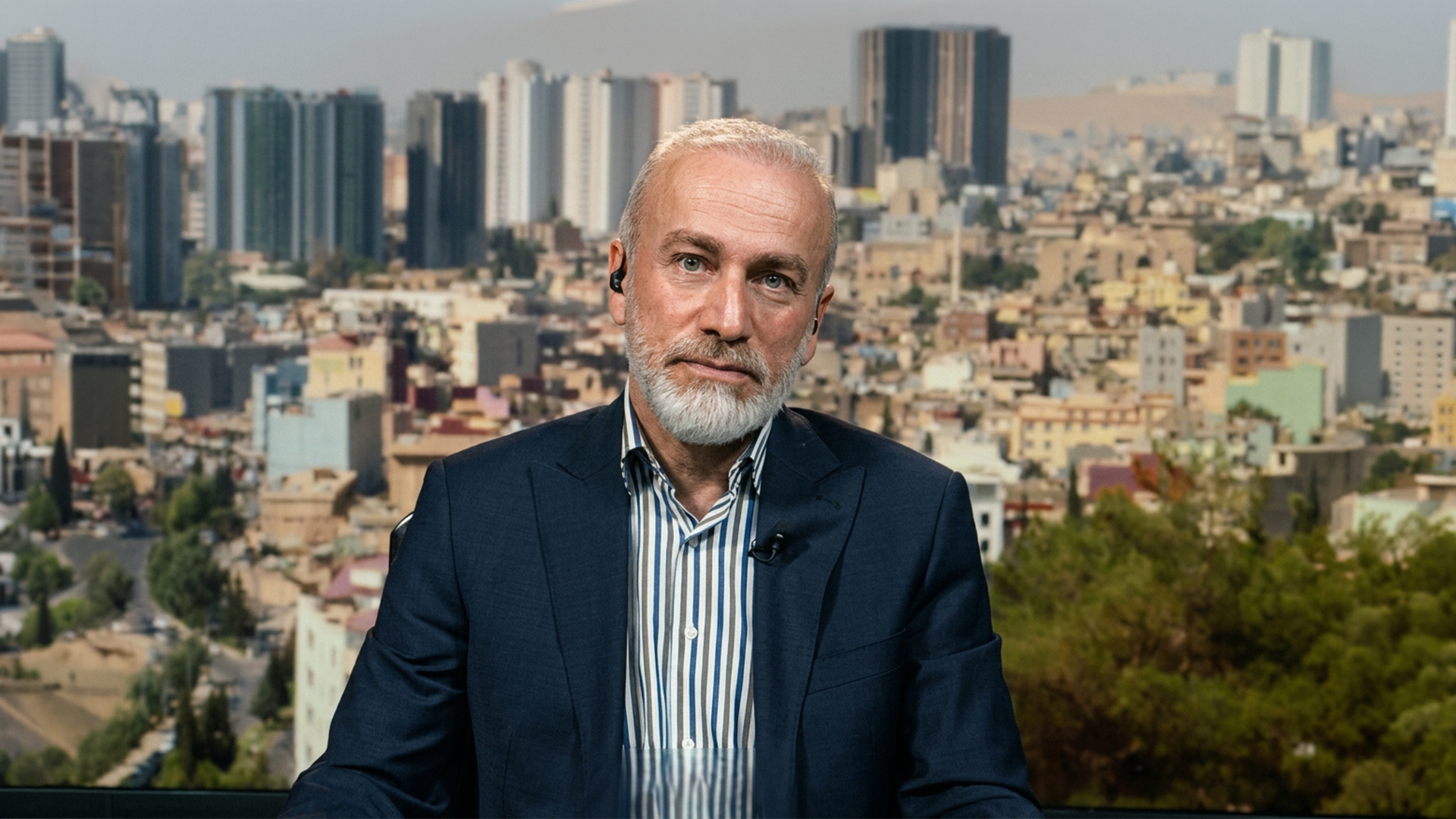
Finance Committee member Jamal Kochar says Iraq’s liquidity crisis, declining revenues, and rising domestic debt reflect decades of governance failures, as Baghdad advances new fiscal reforms to stabilize public finances.
ERBIL (Kurdistan24) – Iraq’s latest financial difficulties are not the result of a shortage of natural wealth, but of decades of political mismanagement, according to Jamal Kochar, a member of the Iraqi Parliament’s Finance Committee, who argues that the country’s economic vulnerabilities reflect deep-rooted governance failures rather than limited resources.
Speaking to Kurdistan24 on Monday, Kochar described Iraq as a country endowed with exceptional economic potential that has struggled to translate its assets into sustainable prosperity.
In his assessment, abundant reserves of oil, natural gas, minerals, fertile agricultural land, water resources, and maritime access should have provided a strong foundation for long-term development.
Instead, he said, chronic corruption, political patronage, and ineffective administration have prevented those advantages from benefiting the broader population.
Kochar’s remarks come as Iraq confronts mounting fiscal pressure marked by shrinking liquidity, weakening state revenues, and a growing reliance on domestic borrowing to finance government spending.
He identified those three challenges as the country’s most immediate economic concerns, warning that policymakers have few alternatives available to close widening budget gaps.
At the center of his criticism is Iraq’s system of political power-sharing, which he argued has placed partisan interests ahead of professional administration.
According to Kochar, appointments to senior positions are frequently driven by political affiliation rather than merit, weakening state institutions and undermining effective management of public resources.
He also accused entrenched corruption of draining national wealth, arguing that public funds have been diverted through systemic mismanagement while significant resources have left the country.
In his view, governance failures, not resource scarcity, remain the principal obstacle to Iraq’s economic stability.
The parliamentarian also pointed to Iraq’s continued dependence on hydrocarbon exports as a structural weakness.
Citing figures discussed by Finance Minister Falih al-Sari, Kochar said current government revenues have fallen to between $1 billion and $2 billion.
He further noted that Iraq has been unable to export natural gas since early February, while oil income has been constrained by lower export volumes, with shipments limited to crude exported through the Kurdistan Region and a smaller volume transported by tanker through Syria, totaling less than one million barrels per day.
That dependence, he suggested, leaves Iraq particularly exposed to regional disruptions.
Kochar questioned the country’s geopolitical calculations amid heightened tensions across the Middle East, arguing that regional instability could impose significant economic costs on Iraq.
Referring to concerns surrounding the Strait of Hormuz, he warned that any prolonged disruption affecting Iraqi energy exports would force Baghdad into difficult fiscal decisions at a time when public finances are already under strain.
He also addressed the reform agenda of Prime Minister Ali al-Zaidi, cautioning that it remains too early to judge whether the new government can deliver lasting structural change.
According to Kochar, a decisive test will come later this year as Baghdad pursues efforts to consolidate all weapons under state authority while seeking to attract major American and British companies. Whether those initiatives succeed, he said, could provide a clearer indication of the government’s ability to implement meaningful reforms.
Another source of concern is Iraq’s expanding domestic debt burden.
Kochar said the government has increasingly relied on internal borrowing to finance public-sector salaries because foreign borrowing requires parliamentary approval under existing legislation.
He estimated outstanding obligations at 66 trillion Iraqi dinars owed to the Central Bank of Iraq, approximately 106 trillion dinars owed to other domestic banks, and an additional 33 trillion dinars owed to contractors and investors.
Those liabilities, he warned, could become even more difficult to manage if regional disruptions further constrain state revenues.
Against that backdrop, the federal government is preparing a package of legislative and fiscal measures aimed at strengthening public finances.
Kochar told Kurdistan24 that the Ministry of Finance has drafted five bills intended to diversify state revenue, restructure the national budget, and support broader fiscal reform.
The proposals are expected to underpin a redesigned General Budget Law that replaces the traditional budget structure with a new three-part framework, initially to be tested within the Ministry of Electricity and in Salahuddin and Diwaniyah provinces.
Among the government’s proposals is an “oil-for-projects” financing model under which infrastructure development would be linked to energy exports.
Kochar said Iraq also plans to establish an investment fund, with the United Arab Emirates and Qatar reportedly pledging $100 billion in support.
He added that Baghdad has reached an agreement with the United States involving oil supplies in exchange for infrastructure projects in the oil and electricity sectors, while discussions are continuing with Germany and France regarding similar cooperation.
The proposed legislation would also include reforms affecting investment, agricultural land management, the sale of state-owned properties, and mechanisms to facilitate the transfer of public-sector employees into the private sector.
Separately, Baghdad has requested that OPEC raise Iraq’s production quota to five million barrels per day, arguing that higher output would help ease mounting fiscal pressures.
For Kochar, however, new legislation alone will not resolve Iraq’s economic challenges.
His assessment suggests that lasting financial stability will depend not only on increasing revenues or attracting investment, but also on strengthening institutions, improving governance, reducing political patronage, and restoring confidence in the state’s ability to manage one of the region’s richest resource bases responsibly.
|
Summary
Jamal Kochar says Iraq’s financial crisis reflects governance failures despite vast natural wealth. The Finance Committee member warns of rising domestic debt, falling revenues and oil dependence as Baghdad advances new fiscal reforms to stabilize public finances and diversify state income.
|
Esra Anwar, Kurdistan24’s journalist and news writer, contributed to this report.