
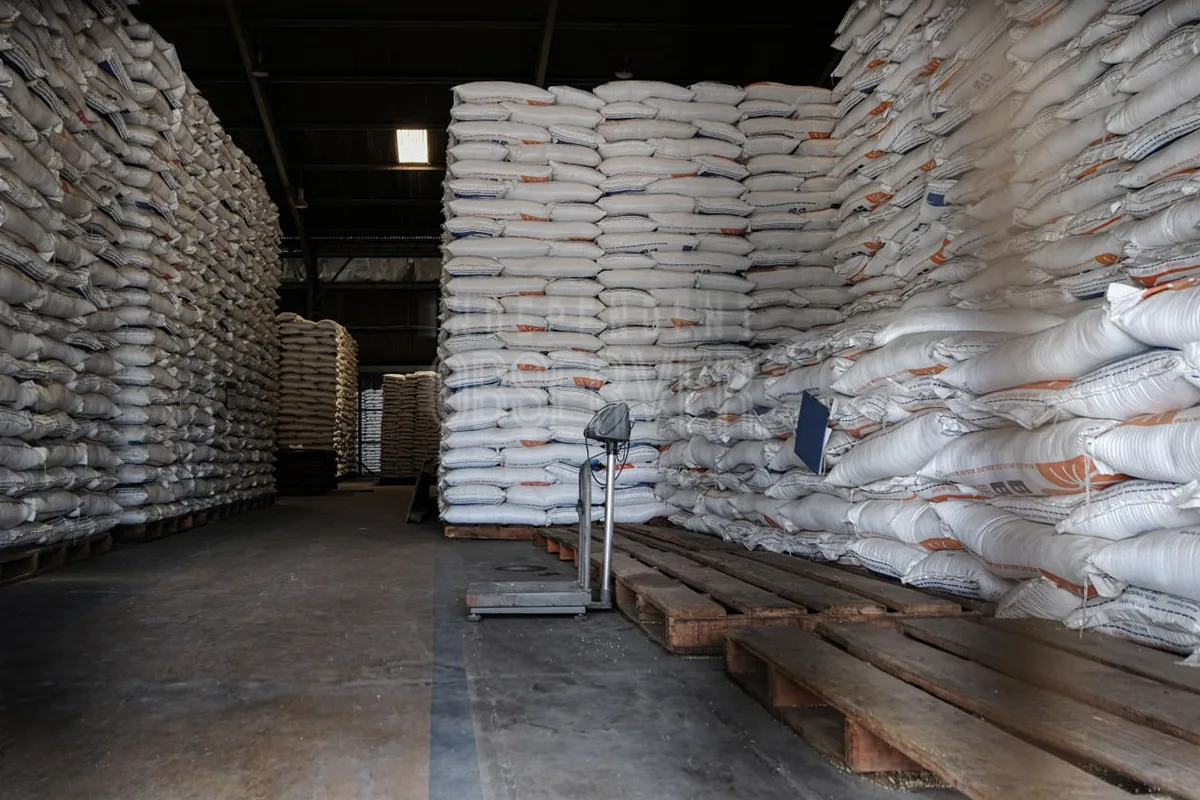
Karawang, IO – Andi Amran Sulaiman, the head of the National Food Agency (Bapanas) and Minister of Agriculture, detailed the indications of Indonesia’s food self-sufficiency attained during President Prabowo Subianto’s administration. On April 23, 2026, the remarks were presented during an interactive discussion with observers, academics, and members of the press at the Perum Bulog Filial Warehouse in Karawang, West Java.
In his presentation, Amran stated that imports of major staple food items for consumption account for only about 5% of overall domestic demand. This figure is well within the Food and Agriculture Organization’s (FAO) requirements for food self-sufficiency.
“What is food self-sufficiency? It refers to 11 key commodities. The portion marked in red represents imports, which total approximately 3.5 million tons. Meanwhile, our total production stands at 73 million tons. If we divide 3.5 million by 73 million, the result is 4.8 percent. If imports are compared to total consumption needs of 68 million tons, the figure is just over 5 percent. Based on the FAO consensus, food self-sufficiency is defined as having imports of no more than 10 percent, and we are at 5 percent,” Amran explained.
He further detailed that the 3.5 million tons of imports consist of three strategic commodities: soybeans (2.6 million tons), garlic (600,000 tons), and ruminant meat (350,000 tons). Meanwhile, the annual consumption requirement for the 11 staple commodities reaches 68.7 million tons, resulting in an import ratio of approximately 5.1 percent.
The 11 staple commodities include rice, feed corn, cayenne pepper, large chili, poultry meat, eggs, shallots, sugar, soybeans, garlic, and beef/buffalo meat. Domestic production of these commodities reaches up to 73.7 million tons annually.
Read More: Semen Merah Putih: Going Global Through Innovation
“Therefore, food self-sufficiency, food security, and food independence have been achieved simultaneously as of today. In accordance with Presidential Regulation No. 125 of 2022, there are 11 key food commodities, with rice accounting for the largest share of consumption,” Amran added.
Out of the total 68.7 million tons of consumption across the 11 commodities, rice contributes 45.2 percent, equivalent to 31.1 million tons. For this reason, the government is committed to ensuring a robust national rice supply, as reflected in the record-breaking levels of Government Rice Reserves (CBP).
“Why is food self-sufficiency often associated with rice? Because in the Indonesian diet, rice can make up 60, 70, even 80 percent of intake. That is why food is often equated with rice, due to its dominant share,” he explained.
“In short, under President Prabowo’s leadership, the top priority is food security. Second, the protein supply is secure. The human body need carbohydrates and protein, and both needs are now fulfilled,” Andi Amran Sulaiman concluded. (eka)