
WealthBriefing recently spoke to the founder of an equities multi-manager fund and investment business about a particular approach taken towards areas such as the fees that it charges.
One way that a hedge funds business makes an impact in the battle
for investors’ attention is returns after fees – even more
important in a sector that has traditionally been relatively
expensive.
Even though the old “2 and 20” model is not what it was (2 per
cent annual management fee and 20 per cent performance fee) this
is still a business that can charge more than, say, a
conventional long-only fund, never mind an exchange-traded fund.
According to Hedge Fund
Research, the average hedge fund manager charges an annual
management fee of 1.3 per cent and a performance haircut of 16 to
17 per cent.
Zenith
Alpha Management, a multi-manager fund managing equities
overseen by Eschler Asset Management, an
alternatives multi-manager, reckons that it has an edge on
the way it makes a living. There are no management fees, and
no performance fee is levied until the net return to investors is
at least 10 per cent.
“We inverted the normal relationship. Investors are assured of
getting strong returns before managers get paid,” Theron de Ris
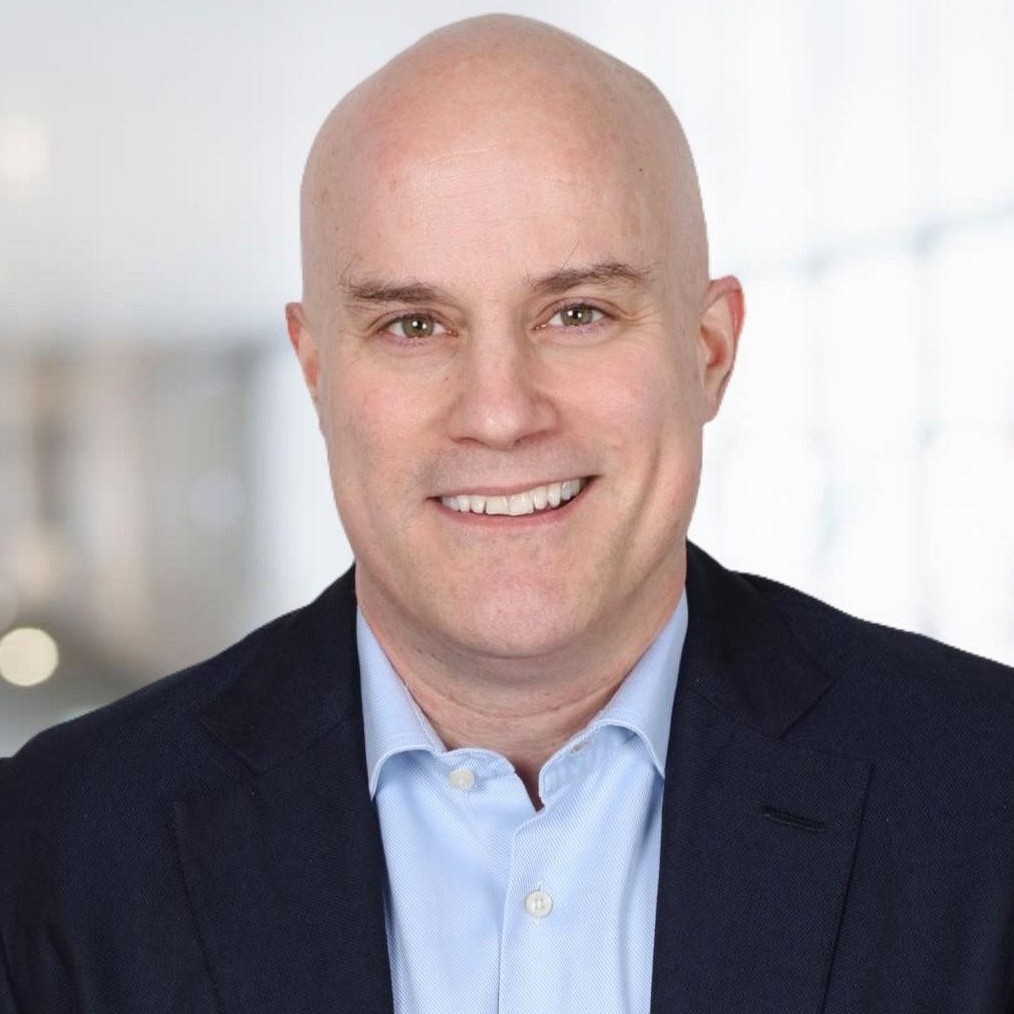
(main picture), Eschler’s founder, told this news service in a
call.
The fee model is “probably unique,” he continued. “I don’t
think anyone else is really doing this and it is unusual to have
such a high return hurdle, with high watermark.” Zenith”s
single “catch-up performance fee” will compensate managers based
on their return contribution, he said. “Managers delivering the
goods will receive outsized benefit.”
Hurdle rates tend to be less common than the high watermark
approach to setting fees. Industry surveys suggest that only
around one-quarter of hedge funds employ hurdles, typically set
at about 5 per cent annually or linked to a cash benchmark such
as SOFR. (High watermarks make sure that a fund manager can only
earn a performance (incentive) fee after recovering any previous
losses and generating a new peak in the fund’s NAV. An argument
for this approach is that it stops investors from paying
performance fees twice on the same gains.)
According to an investor letter seen by WealthBriefing,
Zenith has chalked up a return of 14.4 per cent inception-to-date
through May 2026.
“Zenith is trying to moderately reduce volatility without
degrading the return,” de Ris said. “It is going for compelling
returns with a Sharpe ratio of at least one,” he said. (The ratio
describes the additional level of return provided by each
additional unit of risk.)
The approach, of giving diversified access to a range of proven
investors, is designed to be attractive to investors. It is well
understood by many investors that emerging hedge fund managers
typically outperform larger established ones, but sourcing and
researching these managers takes a lot of work.
Equities
Zenith features managers with equities strategies. “We are not
offering exotic Alpha like insurance-linked securities or
timber,” de Ris said. He also stressed that for now, Zenith is
not a seeding vehicle for startup managers, although in time it
may be open to deploying capital earlier in a manager’s life.
Because the hurdle rate is so high, the four managers within
Zenith (Christian Putz, Edward Lam, Oliver Mihaljevic and Theron
de Ris) can only absorb relatively small amounts of capital in a
way that makes it possible to get over the hurdle rate. Total
capacity on the founders’ share class of Zenith is $25 million,
and about half of that has been taken up. Zenith’s founder share
class for the fund is aimed at sophisticated investors, wealth
managers and family offices.
“There is no particular constraint in terms of underlying
liquidity,” de Ris said, pointing out that the Zenith managers
only invest in listed equities. Around six to eight managers
inside the founders share class amounts to a “sweet
spot.” At some point Zenith might consider launching an
institutional share class, allocating sleeves of capital within
one pool, and the ability to absorb more capacity, he said.
“This would allow us to write larger tickets,” he said.
WealthBriefing spoke to de Ris at a time
when market volatility and geopolitical angst have
made the risk-mitigation aspects of holding a variety of
hedge fund strategies and managers appealing to parts of the
wealth sector.
As explained by Barclays in its 2026 outlook
on hedge funds, throughout the 2010s, hedge fund industry growth
stagnated, as annualised returns were only about 4 per cent, and
funds were only able to achieve Alpha of around 50 basis points.
Considering the fees charged, 50 bps did not impress investors.
Flows remained scarce (there were about $30 billion per year of
outflows from 2016 to 2023). However, the last two years have
represented a “turnaround,” Barclays said in the report,
published in February. The industry surpassed $5 trillion in
assets under management after recording its first back-to-back
years of double-digit returns since the 2009-2010 post-financial
crisis rebound – culminating in an average of 11.2 per cent in
2025, with positive contributions across every strategy. And more
favourable conditions have boosted funds’ Alpha delivery to more
than 300 bps annually.
Structure and growth potential
The Zenith fund is a BVI-approved fund and self-managed by its
directors. As and when it expands to having 20 clients and assets
of more than $100 million, it will formally appoint Eschler as
the UK Alternative Investment Fund Manager, de Ris said.
De Ris created Eschler in 2010; prior to that he was a senior
research analyst at Indus Capital Partners. And before that, he
worked at Morgan Stanley in Milan and London. He started his
career at Goldman Sachs in Frankfurt and London in the mid-1990s.
Other senior figures are John Pryce-Robertson, chief operating
officer and CCO; Richard Rothwell, non-executive advisor who
founded Stoneware Capital in 2006 and former chair of the board
of CFA UK; and Ivan Ivanov, risk consultant, formerly
with Millennium Capital Partners, GAM UK and Rokos Family Office.
“Zenith came about by listening to our ecosystem. Investors and
advisors asked for diversified exposure to our talented managers;
and our managers asked for capital Zenith’s purpose is thus
two-fold, to deliver attractive net returns to shareholders
without typical multi-manager fees and to accelerate talented
up-and-coming managers seeking capital to grow,” de Ris
said.
De Ris talked about lessons he learned from the legendary US
investor Warren Buffett.
“On our way to the Berkshire Hathaway shareholders meeting on May
5 [2026], our taxi driver, whose day job for [more than] 20
years, was running IT at a Berkshire subsidiary (Omaha-based
Oriental Trading), told us a story. After Carlyle had run the
business into the ground and the new creditors planned to move
the headquarters to California and fire 3,000 workers, Warren
Buffett stepped in and bought the business. Standing in front of
a huge auditorium of employees, Buffett started by saying there
was no way he was going to let the PE firms destroy an Omaha
business in his own backyard. His key message to the assembled
crowd was, `If you all continue to run the business as a
family-owned business, you’ll never hear from me’. Then, pointing
at the CEO of Oriental Trading on stage with him, he said, `and
if that doesn’t happen, you’ll hear from me’.”
“Berkshire leaves the managers of its subsidiaries alone to run
their businesses, only intervening if necessary. This idea of
empowering employees and managers to get on with business, while
also holding them accountable, is central to Berkshire’s
culture,” de Ris continued. “At Zenith, each manager will have
total discretion over investment decisions. We are going to bet
on individuals we know, work with and trust and not impose
constraints on how they manage money. This hands-off approach
will, however, be complemented by centralised compliance
oversight and full transparency.”