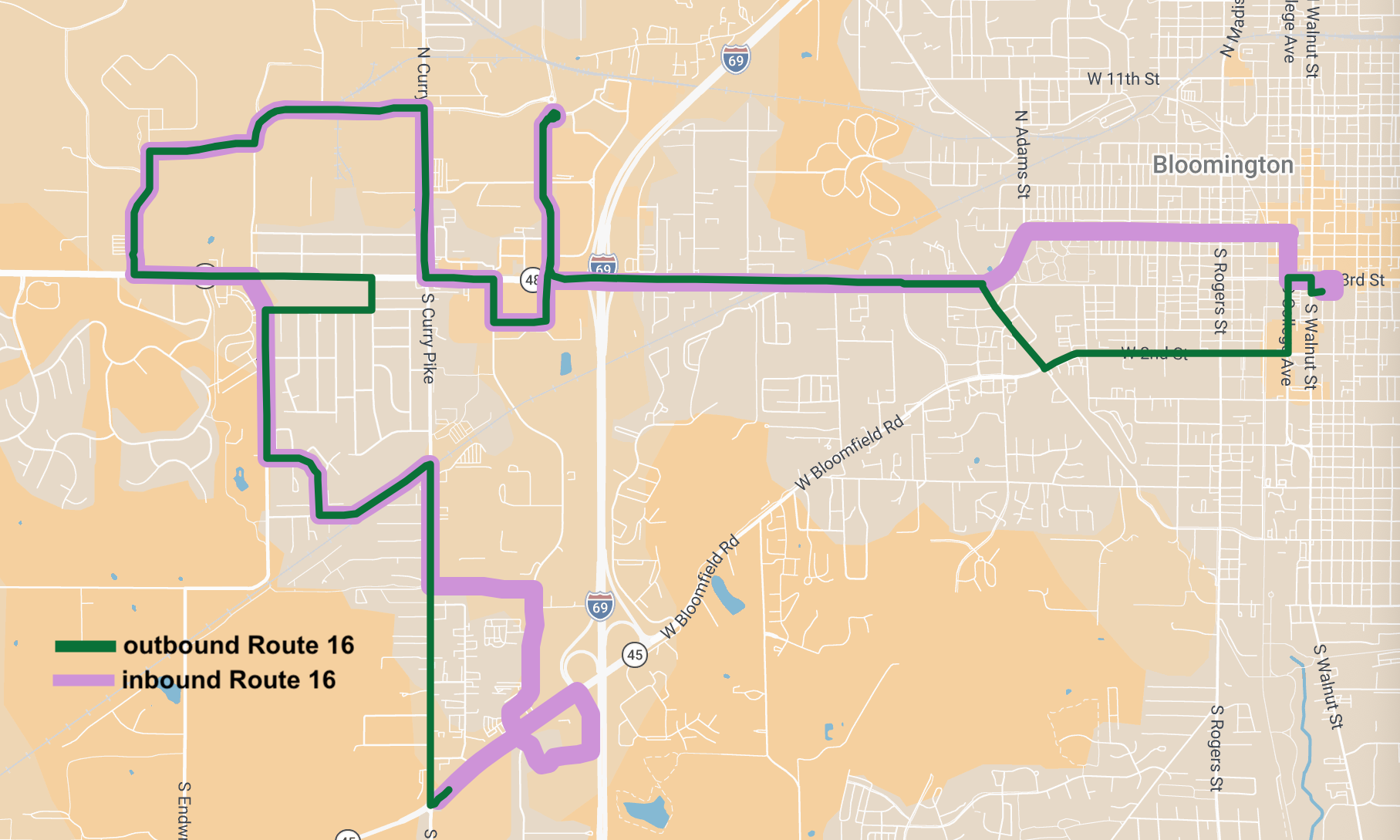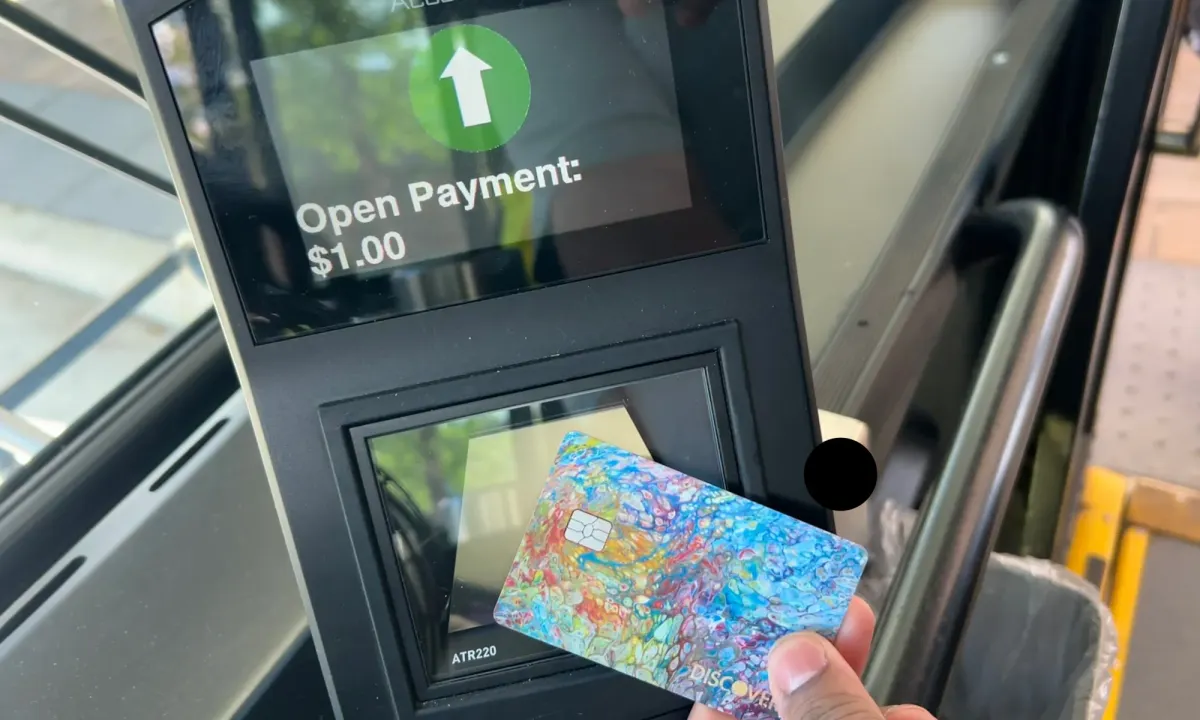
Bloomington Transit has launched tap-to-pay with credit cards as a fare payment option, along with a redesigned Route 16, combining former Routes 3 West and 13 for west side service. A Monday test ride showed light midday ridership but on-time performance after a late start.
Bloomington Transit’s summer service updates included a redesigned Route 16, which combines the previously existing Route 3 West and Route 13 to provide improved service to the west side. The B Square tested out this new route on Monday (June 15), two weeks after service launched on June 1.
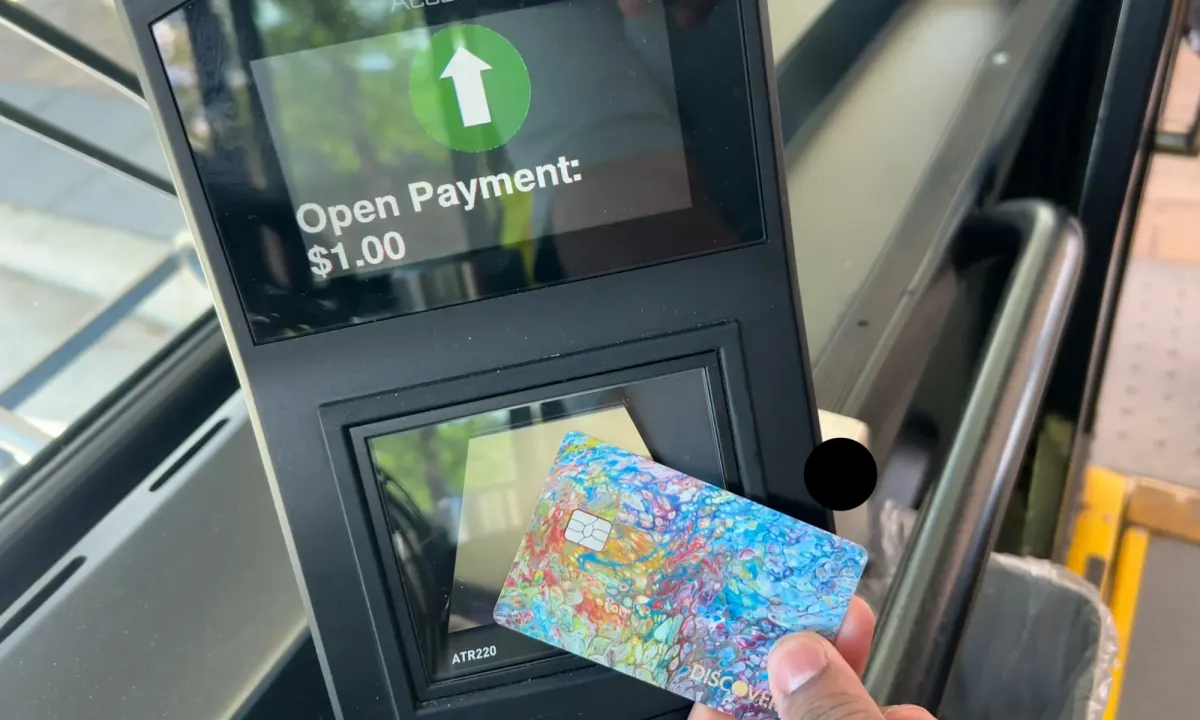
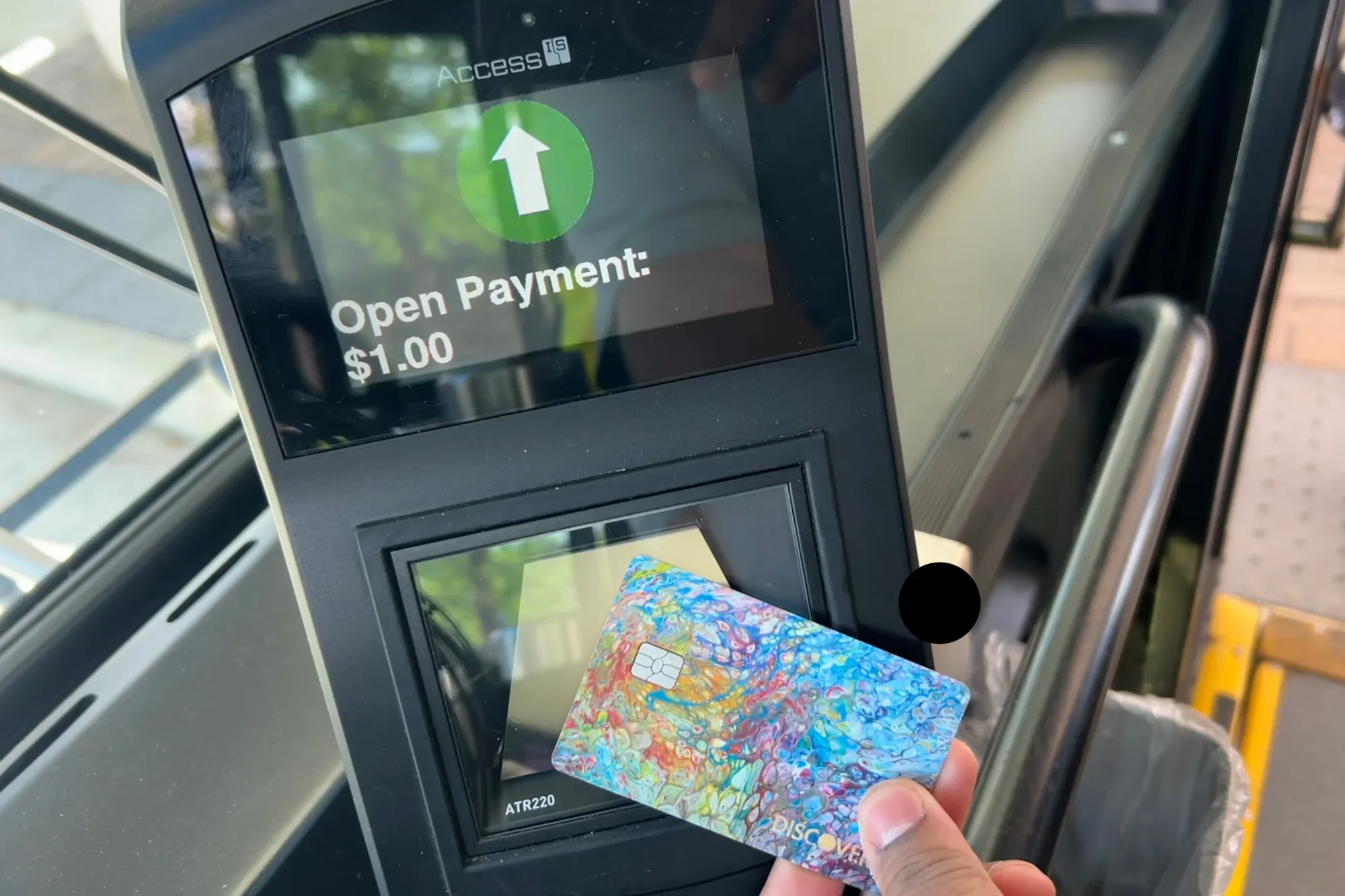
The expedition included a surprise as well—as BT has now launched open payments on its fare collection system.
Open payment means the ability to pay a fare on a BT bus using a credit card, debit card, or smart payment device that has tap-to-pay enabled. This includes smartphones as well, giving customers the ability to pay using Apple Pay or Google Pay, making the experience of using a BT bus much smoother.
It lowers a barrier to potential new users who don’t carry cash to pay the $1 fare, or have the Umo app installed on their smartphone with a payment system set up.
“Open payments are yet another step Bloomington Transit is taking to make the bus riding experience as simple and easy as possible. For those new to the transit system, it’s one less thing to worry about when getting on board. BT has been working to get open payments for years and we are proud to be one of the first agencies to offer it in Indiana,” said Shelley Strimaitis, planning and special projects manager at BT.
One caveat is that the farebox system for BT doesn’t track rides by credit card like it does for Umo, so there’s no fare capping applied. Umo users are guaranteed never to pay more than $30 per month or $3 per day, because the fare is capped. Fare capping is one way of offering discounted rides for heavy users.
The ability to tap and pay with a credit card certainly got The B Square’s Route 16 test ride off to a smooth start, though that first impression was tempered a bit when the bus didn’t pull away from the Downtown Transit Center until 12:13 p.m., three minutes behind schedule. However, the Monday midday bus was empty enough for the driver to quickly make up the time, with not much boarding or de-boarding activity inside downtown Bloomington.
The midday summer timing might help explain the light ridership: During the circuitous trip west from downtown along Third Street, into Gates Drive, past Ivy Tech, to Walmart via Woodside Drive, and back, the bus never carried more than six passengers at a time.
Most of the passengers were going to the stores in strip malls along the route, and on the way back, that’s where many passengers got on as well. Ivy Tech—service to which was one big impetus for creating the now defunct Route 13 that Route 16 has replaced—was neither the destination nor the origin for any passenger for the trip.
At the intersection of 3rd Street and Patterson Street along the Route 16 route, there was one vestige of Route 3, which was the other route that was merged into Route 16. The bus stop signage at 3rd and Patterson was still for Route 3.
The bus arrived back at the Downtown Transit Center just after 1:25 p.m., comfortably within its 90-minute scheduled full round-trip time.
On the whole, Route 16 offers westside Bloomingtonians reliable and frequent connectivity to downtown. Notably, Route 13 was supported by a funding agreement with Monroe County, and that funding now partially supports Route 16.
By the end of the summer, after hundreds more rides by Bloomington residents, the numbers should start to show whether the new route has been adopted widely enough to justify the investment.