
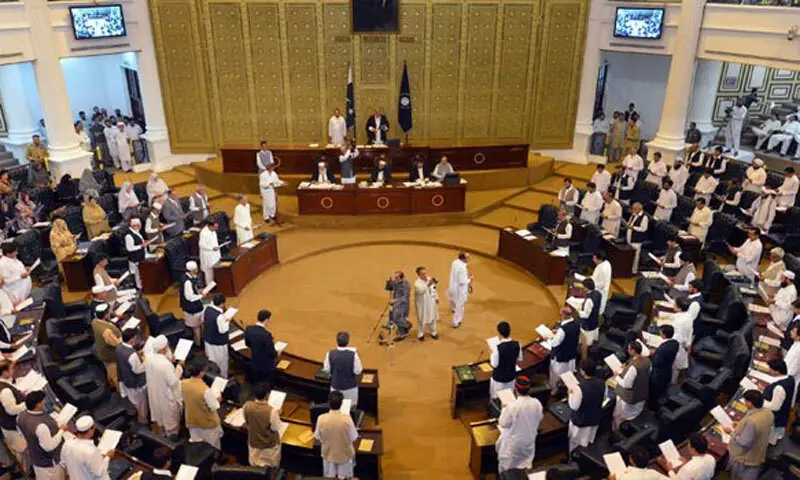
The KP Assembly has re-passed amendments to the public financial management law after the governor returned the bill with objections. The changes remove the Controller General Accounts’ role from accounting and expenditure authorisation in the province.
PESHAWAR: A political and constitutional controversy has intensified in Khyber Pakhtunkhwa after the provincial assembly re-passed amendments to the Public Financial Management (PFM) law, effectively removing key powers of the Controller General of Accounts (CGA) despite objections from the governor.
The amendments, originally passed on March 26, were returned by Governor Faisal Karim Kundi, who raised concerns over their constitutional validity. However, the assembly approved the bill again during its latest session, pushing it forward without incorporating the governor’s reservations.
Under the revised law, multiple provisions defining and outlining the role of the CGA have been deleted. These include responsibilities related to accounting, financial oversight, and authorisation of expenditure from the provincial consolidated fund. The changes shift these powers almost entirely to the provincial finance department.
Opposition lawmakers criticised the move, warning that it undermines constitutional checks and balances. PPP MPA Ahmad Karim Kundi argued that such legislation should not be rushed and cautioned that it could face legal challenges outside the assembly.
The governor, in his earlier communication, had termed the amendments a “fundamental reconfiguration” of the financial governance framework. He noted that removing the CGA’s role disrupts an accountability structure rooted in the Constitution and alters the established system of financial oversight.
He also highlighted the distinction between withdrawal of funds and authorisation of expenditure, arguing that merging these functions under the provincial executive could violate constitutional provisions governing financial management.
Despite these concerns, the provincial leadership defended the move, with Speaker Babar Saleem Swati stating that the bill had been under consideration for over a year and that relevant stakeholders had been engaged.
Officials familiar with the matter suggest the changes aim to centralise financial control within the provincial government, though critics argue this could weaken transparency and institutional accountability.
The development is expected to trigger further debate, with legal experts pointing to potential constitutional challenges over the restructuring of financial authority in the province.