
International Women’s Day always offers a valuable moment to pause and reflect on how far the industry has come in terms of gender equality. and how far it still has to go.
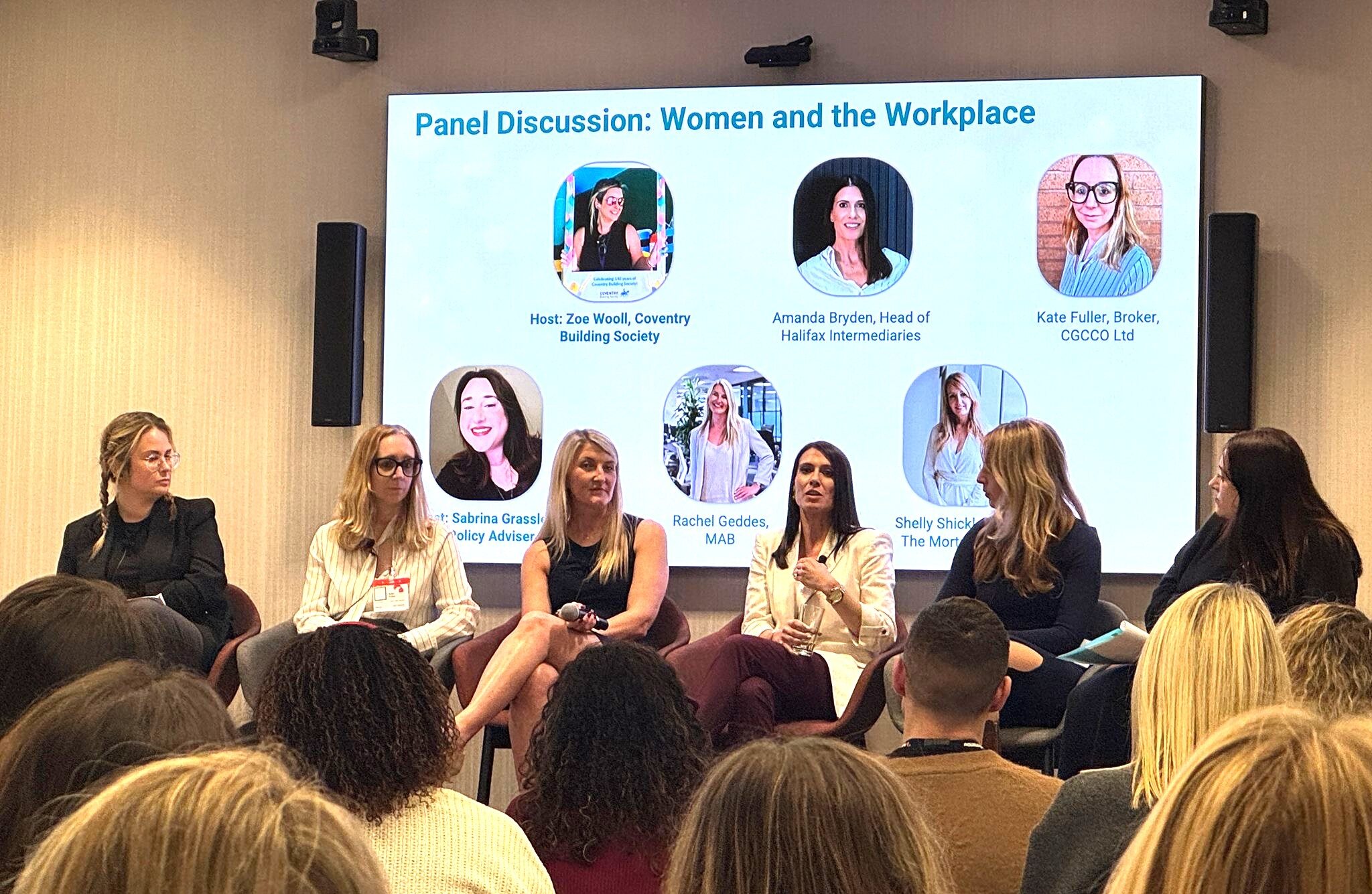
At a recent Working in Mortgages EDI Group session, chaired by Sabrina Grassler, senior policy adviser at the Association of Mortgage Intermediaries (AMI) and Zoe Wooll, business development manager (BDM) at Coventry Building Society, a panel of senior leaders shared their perspectives on the evolving role of women in financial services.
Joining the discussion were Shelley Walker, co-founder of The Mortgage Mum Specialist Finance, Amanda Bryden, head of Halifax Intermediaries at Lloyds Banking Group, Kate Fuller, adviser and business principal at Mortgage Advice Bureau Crawley, and Rachel Geddes, strategic lender relationship director at Mortgage Advice Bureau.
The conversation ranged from workplace culture and leadership to resilience, health and the realities of balancing professional and personal responsibilities.
What emerged was an honest discussion about progress, pressure and the importance of creating environments where people feel able to thrive.
For Walker the starting point for greater inclusion is simple: know your team.
Before entering the mortgage sector, Walker spent two decades in local government, where the workforce was around 75% female.
Today she works at The Mortgage Mum, a business that is entirely female.
Her experience highlighted how seemingly small decisions can make a big difference to workplace culture.
She said: “If your team are parents, for example, scheduling meetings at 8am can create unnecessary pressure.
“Needing to do the school run does not limit a person’s ability or talent, and arranging meetings for 9am does not negatively impact your business.”
Walker also reflected on the culture shock she experienced when first attending mortgage industry events.
She added: “The first time I walked into a mortgage event it felt like stepping into a football stadium.
“But even in the seven years I’ve been in the sector, things have changed a lot.”
One thing she said values in The Mortgage Mum’s own events is the range of conversations that take place.
Alongside business discussions about sales and performance, there is also space to talk about wellbeing, childcare and life outside work.
Those conversations, she said, are part of building a healthier, more open professional culture.
Bryden spoke about the role leaders can play in helping women progress.
Too often, she said, people underestimate their own abilities, and a few words of encouragement from a senior leader can be transformative.
She noted: “I make a point of telling people when they’ve done something impressive.
“Sometimes I’ll say: ‘You’ve done really well there. Have you thought about the next stage of your career? I’d love to support you.’”
A simple conversation like this can provide the recognition and encouragement which may be turning point for a colleague.
Bryden acknowledged that leaders often juggle many demands but emphasised that creating time to help other progress and to reflect on their development, is a valuable and rewarding element of the job.
A key theme throughout the discussion was the importance of psychological safety.
Grassler asked the panel why many people still feel uncomfortable sharing personal experiences or speaking openly in professional environments.
Bryden suggested that context matters: “When a conversation is recorded and shared widely, people can worry about how their words might be interpreted in the future.
“If we want honest conversations, people first need to feel safe in their immediate environment, and have confidence in the professionalism of the wider industry.”
Fuller agreed, adding that everyone has a responsibility to be mindful of how they speak about others.
“Gossip makes people wary of speaking honestly,” she said.
“And the more senior or visible you become, the higher the stakes if something you say is misinterpreted.”
Creating respectful environments, she suggested, is a collective responsibility we all share.
Resilience was another major theme.
Walker acknowledged that developing a thick skin is sometimes necessary, particularly in the age of social media.
She explained: “There will always be critics. But sometimes you just have to reframe the situation and move forward.”
Bryden offered a different perspective, sharing how a health issue forced her to reconsider her approach to work.
“For a long time I have considered myself incredibly resilient”. she said.
“Then I faced a physical health issue I simply couldn’t push past. I kept pushing myself when what I needed was to allow myself to recover.”
Fuller emphasised the importance of creating space to reflect.
She added: “It’s too easy to keep running at full speed and become consumed by the work. But if you never stop, you don’t have the opportunity to look after yourself physically and mentally.”
Progress in the industry
Geddes highlighted how much the industry has changed over the past two decades.
“Twenty five years ago there were very few women in senior positions to look up to,” she said.
“Today there are many more role models and cheerleaders.”
She pointed out that boardrooms have also evolved: “If you walked into many of them fifteen years ago, there might not have been a single woman at the table. That has improved.”
However, the panel agreed that progress should not lead to complacency, and there is still a long way to go.
Bryden pointed out that while gender balance may appear equal in some organisations, disparities often remain in areas such as pay, bonuses and board representation.
One of the biggest structural changes in the mortgage industry in recent years has of course been the rise of flexible and remote working.
Fuller pointed out that even 10 years ago, full time office attendance was expected and pretty much non-negotiable for most people
She noted: “Post-Covid, the change to flexible working has opened the door for many more women and made the workplace far more accessible.”
While flexible working can blur the boundaries between work and home life, the panel agreed that overall it has been a positive development for inclusion.
Another issue many women continue to face is impostor syndrome. Grassler pointed out that research suggests that around three quarters of women in executive roles experience it at some point in their careers.
Fuller suggested that many people simply learn to manage it: “You remind yourself every day that you deserve to be here. Daily gratitude and affirmation rituals can help.”
Bryden added that reflection can be a powerful tool: “At the end of each day, take a moment to think about what you have achieved.
“And ask yourself: how uncomfortable am I at work? Because some discomfort is necessary to propel you forward in your career.”
Geddes encouraged attendees to celebrate small wins along the way.
She noted: “Whether it’s speaking at an event or having a productive conversation with your manager, recognise that you are growing.”
Walker also reminded the audience that impostor syndrome can sometimes reflect personal circumstances: “If you’re going through something difficult in your life, it can affect how you feel about yourself. Acknowledge that and remember: this too shall pass.”
Looking ahead: hopes for greater equality
When asked for one wish for the future, each panellist highlighted a different priority.
Bryden pointed to the need for true parity in pay, bonuses and senior leadership representation.
Fuller hoped for broader societal change, particularly around the distribution of domestic responsibilities.
She said: “Women are still more likely to carry the mental load at home as well as at work. I would love to see that shared equally.”
Geddes argued that while the industry is embracing artificial intelligence (AI), it still underestimates the importance of emotional intelligence.
She said: “Women make financial decisions for their families every day using emotional insight. That skill deserves far more recognition.”
Walker offered perhaps the most ambitious aspiration of all: “I would love to see a day when there is genuinely no distinction between the sexes in conversations like this. When we simply talk about colleagues and talent, not men and women.”
While the panel covered a wide range of experiences, several clear themes emerged:
Encourage talent – a simple conversation can change someone’s career trajectory.
Create psychological safety – people speak openly when they know they will be respected.
Recognise progress but stay ambitious – the industry has come a long way, but equality is still a work in progress.
Look after yourself and others – resilience matters, but so does recognising when to pause and reflect.
The panel agreed that International Women’s Day not only stands as a day of celebration, but serves as a reminder that inclusion is about everyday behaviours, leadership choices and the willingness to support one another.