
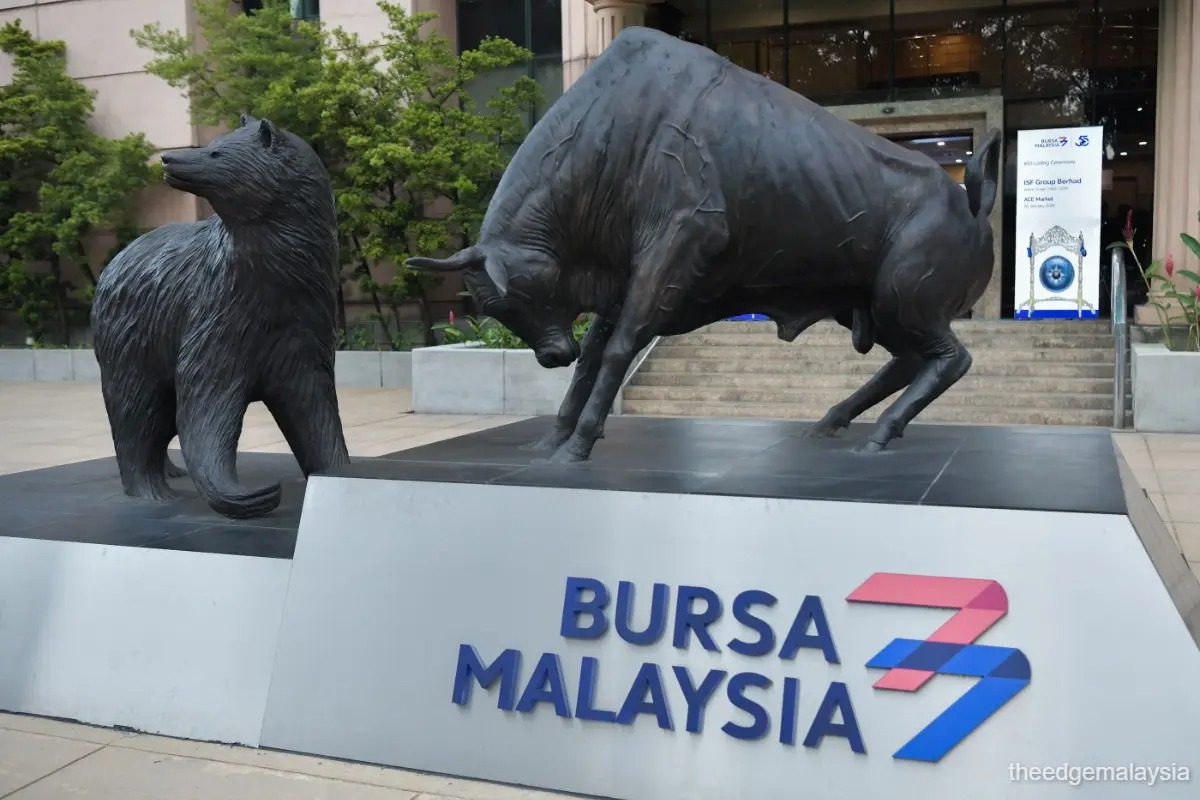
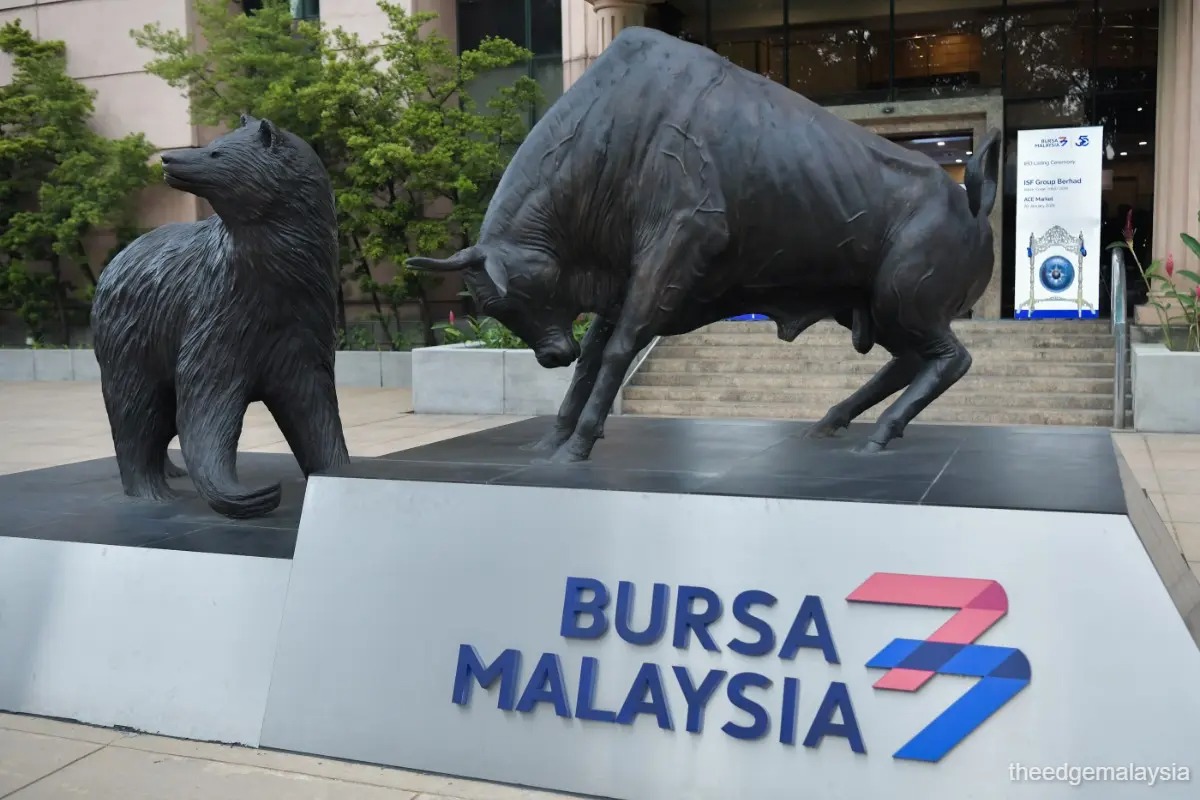
KUALA LUMPUR (July 10): Malaysian stocks rose on Friday to their highest in nearly three weeks, brushing off domestic political risks and external geopolitical uncertainties.
Investors bought into plantation and other cyclical stocks while energy shares fell with crude oil prices barely reacting to news of renewed conflict in the Middle East. Malaysia is gearing up for a busy weekend with Johor kicking off the next election cycle, outcome of which may impact the federal coalition government led by Prime Minister Datuk Seri Anwar Ibrahim. The next state-level election would be Negeri Sembilan on August 4.
The benchmark FBM KLCI added 13.85 points or 0.8% to end at 1,691.49 points with 25 of 30 stocks in the gauge posting gains. Construction firm Sunway Bhd (KL:SUNWAY) climbed 3.3% to RM5.20 while Press Metal Aluminium Holdings Bhd (KL:PMETAL), Southeast Asia’s biggest aluminium smelter, rose nearly 2% to RM7.70.
“Investor sentiment improved as concerns over escalating geopolitical tensions eased after oil prices stabilised towards the end of a volatile week,” said Mohd Sedek Jantan, the director of investment strategy and country economist at personal financial advisory firm IPPFA Sdn Bhd.
There was also early sign of foreign funds flowing back into Malaysian equities, supported by the country’s resilient macroeconomic fundamentals, stable monetary policy and relatively attractive market valuations, he noted.
Asian stock markets were also mostly positive as South Korea’s Kospi closed 2.5% higher and Nikkei 225 of Japan also gained amid a revival in interest for artificial intelligence and semiconductor stocks.Brent, the global benchmark for crude oil, slipped below US$76 even as the US and Iran resumed exchanging strikes that had disrupted shipping activity in the Strait of Hormuz. US Treasury yields have risen to multi-week highs but are now flat.
While US President Donald Trump have proclaimed that the ceasefire is over, investors remain sceptical of a material escalation of hostilities, said Mark Dowding, chief investment officer for fixed income at RBC BlueBay Asset Management.
“Investors have concluded that there seems very limited appetite for the US administration to be dragged back into a regional quagmire,” he said. “Consequently, this narrative has helped to dampen volatility.”
Going forward, however, geopolitics is unlikely to be the only driver of markets as the focus next week shifts firmly back to fundamentals as the second-quarter earnings season begins in the US, said Daniela Hathorn, senior market analyst at Capital.com.
“Investors will be looking for confirmation that AI-related investment continues to translate into robust earnings growth and resilient margins, particularly among the large technology companies that have driven much of this year’s rally,” she added.