
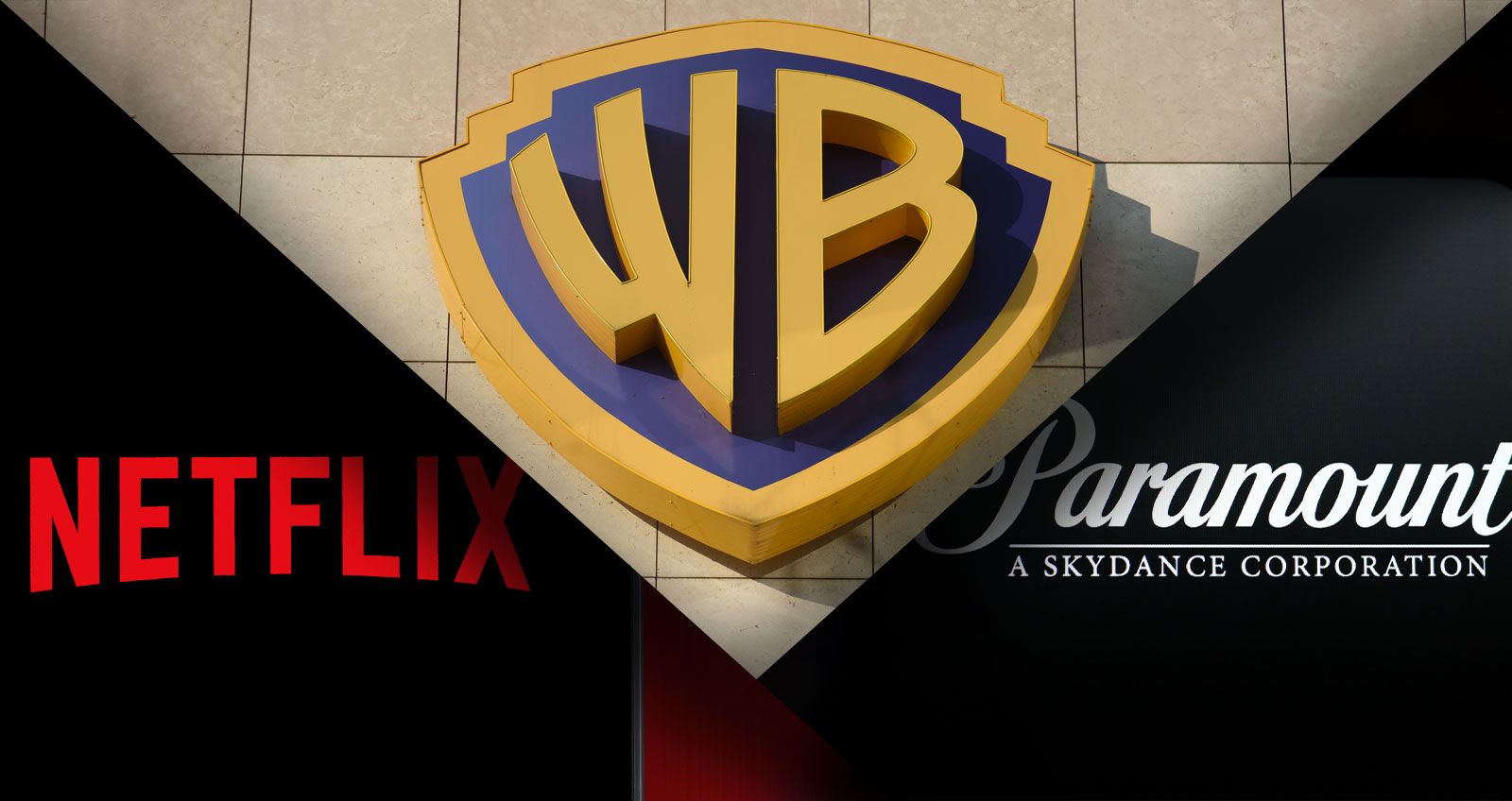
Paramount Skydance outbid Netflix to acquire Warner Bros. Discovery.
(L-R) © Diego/stock.adobe.com; © Aleksander Kalka—NurPhoto/Getty Images; © Thomas Fuller—SOPA Images/Shutterstock.com; Photo composite Encyclopædia Britannica, Inc.
Paramount Skydance (PSKY) prevailed in its bid for Warner Bros. Discovery (WBD) after Warner’s board of directors determined that Paramount’s $31-a-share all-cash proposal for the entire company was superior to Netflix’s (NFLX) December 2025 agreement to acquire Warner’s studio and streaming divisions. Netflix subsequently declined to raise its offer, and Warner shareholders approved the deal in April 2026.
Netflix had agreed in December 2025 to acquire Warner’s studio and streaming divisions in a cash-and-stock deal valued at about $72 billion, or roughly $82.7 billion including Warner’s debt. Netflix later revised the proposal to an all-cash deal. On February 26, 2026, Netflix said it wouldn’t match Paramount’s higher bid.
Why Warner drew bidders
Warner Bros. Discovery owns some of the best-known names in entertainment, including the Warner Bros. film studio and HBO. Its catalog includes decades of movies and television programs, from classic films to streaming series.
The company also controls major production facilities. Its main lot in Burbank, California, covers more than 110 acres and includes 31 soundstages and 11 exterior sets. Warner operates another large studio complex outside London that sits on about 200 acres. Those facilities support film and television production for global audiences.
In addition to its studios and streaming services, Warner owns cable networks such as CNN, HGTV, TNT Sports, and Discovery that reach millions of households. In acquiring Warner, Paramount would gain those networks along with the film studio, HBO, and the company’s production facilities, significantly expanding its footprint in film and television.
How the bidding unfolded
In October 2025, Warner said it was reviewing offers from potential buyers while continuing to pursue plans to separate its cable networks from its studio and streaming businesses. The announcement followed several unsolicited bids from Paramount.
In November, Warner confirmed that Netflix, Comcast (CMCSA), and Paramount had submitted formal proposals. The following month, Warner entered exclusive negotiations with Netflix on a cash-and-stock offer valued at about $72 billion, or roughly $82.7 billion including Warner’s debt. The agreement covered Warner’s studio and streaming operations but excluded its cable networks.
In January 2026, Netflix revised the transaction to an all-cash offer at the same price a share.
Paramount then launched a hostile bid for the entire company, offering $30 a share and appealing directly to shareholders. Warner’s board rejected the bid and reaffirmed its support for the Netflix agreement. In February, Paramount raised its offer to $31 a share. Warner’s board determined that the revised proposal constituted a “superior proposal” under its merger agreement with Netflix.
On February 26, 2026, Netflix said it wouldn’t match the revised bid, effectively ending its pursuit of Warner and leaving Paramount’s acquisition subject to regulatory approval.
In April 2026, Warner shareholders approved Paramount’s $31-a-share acquisition of the company, valuing the deal at about $81 billion, or roughly $111 billion including debt.
Next steps and industry questions
Following shareholder approval, Paramount’s agreement to acquire Warner remains subject to regulatory approval in the U.S. and other jurisdictions. Officials are expected to examine how combining two major studios and several cable networks could affect competition in film production, television distribution, and streaming.
Unlike Netflix’s earlier proposal, which focused on Warner’s studio and streaming businesses, Paramount’s bid encompasses the entire company. That broader scope could draw closer scrutiny from antitrust officials, particularly given the consolidation of film studios, streaming services, and cable networks under one corporate parent.
Should the deal close, Paramount faces the task of integrating Warner’s studios, streaming services, and cable networks while maintaining ongoing film and television production. The combination would reshape the competitive landscape, creating a larger rival to Walt Disney (DIS), Netflix, and Amazon.com (AMZN) at a time when the industry is still adjusting to streaming-driven shifts in viewing habits.
The outcome also raises broader questions:
- How much further can Hollywood consolidate before regulators push back?
- What would a combined Paramount–Warner mean for theatrical releases versus streaming debuts?
- How might independent studios and theater chains respond to a more concentrated market?
The answers will shape not only the future of the two companies but also the direction of the entertainment business.