
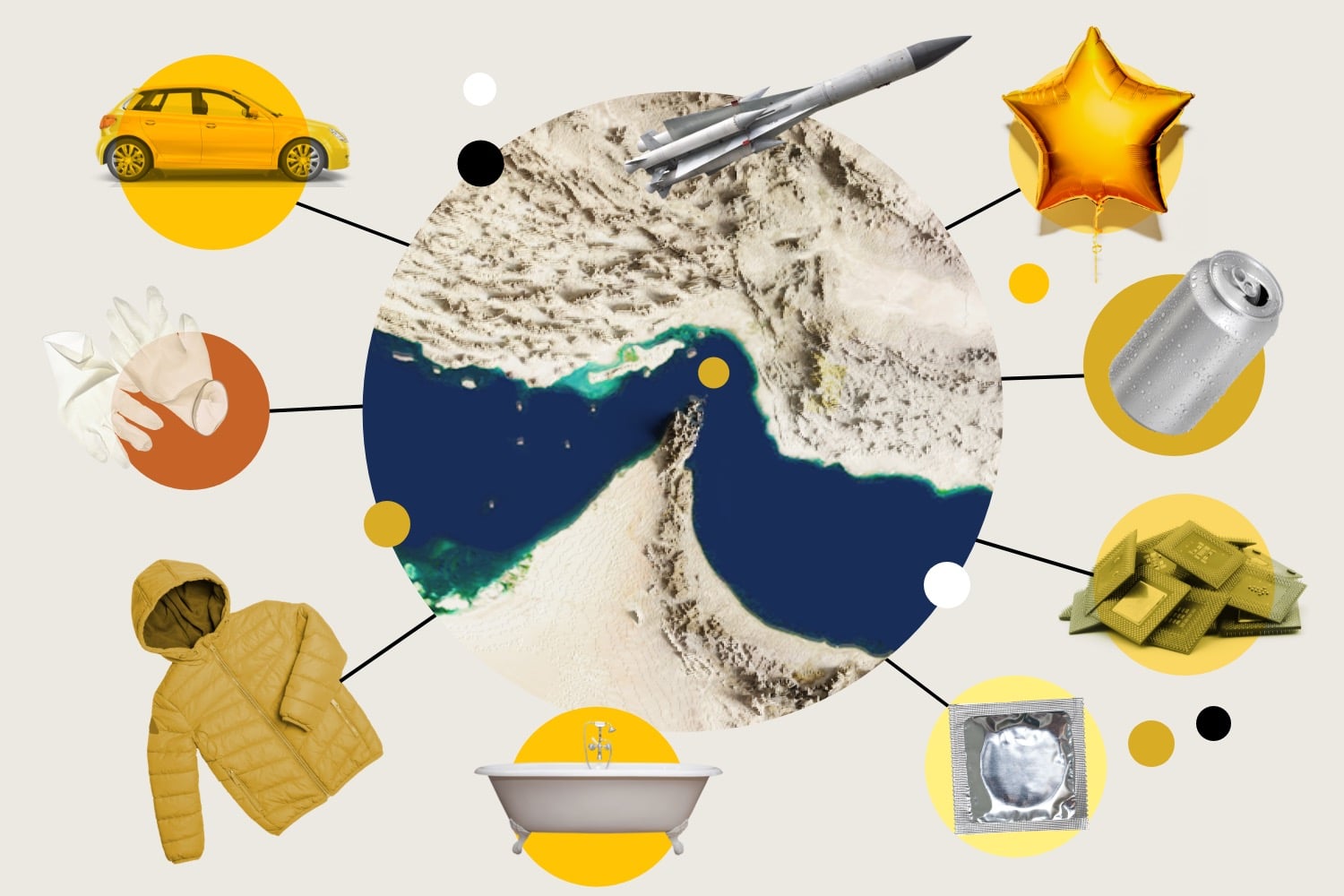
The closure of the Strait of Hormuz has laid bare the world’s economic dependence on the narrow waterway leading out of the Persian Gulf. Nearly three months into the Iran war, it is well known that around one-fifth of the world’s liquefied natural gas (LNG) and petroleum products normally passes through the strait.
Rising energy prices might be just the first harbinger of a truly global crisis, though. Despite a U.S.-Iran cease-fire, the ongoing Hormuz blockade is straining supplies of the other critical yet overlooked ingredients of the world economy that are downstream from fossil fuels, including sulfur, helium, nitrogen, aluminum, and plastics.
The closure of the Strait of Hormuz has laid bare the world’s economic dependence on the narrow waterway leading out of the Persian Gulf. Nearly three months into the Iran war, it is well known that around one-fifth of the world’s liquefied natural gas (LNG) and petroleum products normally passes through the strait.
Rising energy prices might be just the first harbinger of a truly global crisis, though. Despite a U.S.-Iran cease-fire, the ongoing Hormuz blockade is straining supplies of the other critical yet overlooked ingredients of the world economy that are downstream from fossil fuels, including sulfur, helium, nitrogen, aluminum, and plastics.
Trace those shortages further down supply chains, and it becomes clear that few commodities are insulated from the Iran war. From diet soda to the semiconductor industry and beyond, the impact of the conflict will likely be felt around the world long after the strait reopens.
This post is part of FP’s ongoing coverage. Read more here.