
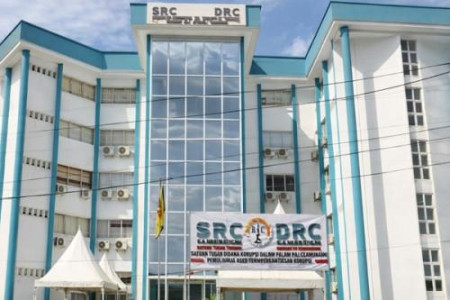
Cameroon’s Debt Recovery Corporation (SRC), the state-owned company responsible for recovering debts on behalf of the government and certain public institutions, remains under financial pressure.
According to financial statements approved by the company’s general meeting on June 23, 2026, SRC posted a net loss of CFA1.97 billion for the 2025 financial year. Total assets stood at CFA9.9 billion.
The result reinforces concerns highlighted by the Audit Chamber of the Supreme Court in its review of SRC’s operations between 2018 and 2022. The 2025 loss alone amounts to nearly 93% of the cumulative CFA2.1 billion deficit recorded during the five-year audit period. The comparison is particularly striking given that the final year covered by the audit, 2022, had already ended with a loss of about CFA1 billion.
Meeting in Yaoundé under the chairmanship of Edoua Gilbert Didier, the general meeting approved carrying the entire 2025 loss forward. In its final communiqué, it also expressed “regret over the persistent obstacles affecting the execution” of SRC’s debt recovery mandate.
The statement leaves a key question unanswered: What specific institutional, legal, or administrative barriers continue to prevent the company from carrying out its mission effectively?
High Costs Continue to Weigh on Performance
The Audit Chamber had already identified a structurally weak financial position. Between 2018 and 2022, SRC reported losses in three of the five years reviewed. Auditors attributed much of the poor performance to personnel costs, which consumed most of the company’s operating income.
During that period, staff expenses represented an average of 86% of net banking income, the indicator used in the audit to measure operating revenue. In some years, personnel costs even exceeded revenue. In 2020, during the COVID-19 pandemic, staff costs reached CFA1.4 billion, compared with net banking income of CFA1.3 billion, for a ratio of 112%. The same pattern emerged in 2022, when personnel costs totaled CFA1.86 billion against CFA1.82 billion in net banking income, or 102%.
That cost structure leaves the company particularly vulnerable because its revenue depends largely on commissions earned from successfully recovered debts. When recoveries slow or encounter obstacles, operating costs remain high, placing additional pressure on the company’s finances.
The Audit Chamber also pointed to an imbalance in SRC’s workforce. As of March 31, 2024, the company employed 168 people, but only 18—about 10.7% of the workforce—were directly involved in debt recovery activities. For an organization whose primary mission is to recover public-sector debts, the staffing structure raises questions about productivity, operational efficiency, and whether human resources are aligned with the company’s core business.
A Debt Collector Struggling With Its Own Finances
The 2025 loss is more than an isolated financial setback. It highlights a deeper contradiction: SRC plays a strategic role in Cameroon’s public finance system, yet its organizational structure, cost base, and the obstacles cited by its own shareholders continue to limit its effectiveness.
The agency is supposed to help strengthen public finances by recovering overdue and often difficult claims on behalf of the state. But both the 2018–2022 audit and the latest financial results suggest it has struggled to generate enough revenue to cover its operating costs.
The general meeting’s reference to “persistent obstacles” also raises broader questions. Are delays caused by public-sector debtors, lengthy court proceedings, administrative bottlenecks, poorly documented files, or weaknesses within SRC itself? Without further clarification, the statement underscores the scale of the challenge more than it explains it.
For the government, the issue extends beyond SRC’s financial performance. It reflects the broader challenge of collecting public revenues at a time when strengthening domestic revenue mobilization has become a fiscal priority. A debt recovery agency burdened by losses, high operating costs, and limited frontline recovery staff risks becoming a weak link rather than an effective tool for improving public finances.
The 2025 accounts suggest that the shortcomings identified by the Audit Chamber have yet to be addressed in any meaningful way. The question is no longer simply why SRC is losing money, but whether it can be reorganized around its core mission: recovering public debts efficiently, directing more resources toward operational activities, and restoring the credibility of a public institution created to generate revenue for the state—not accumulate losses.
Amina Malloum