
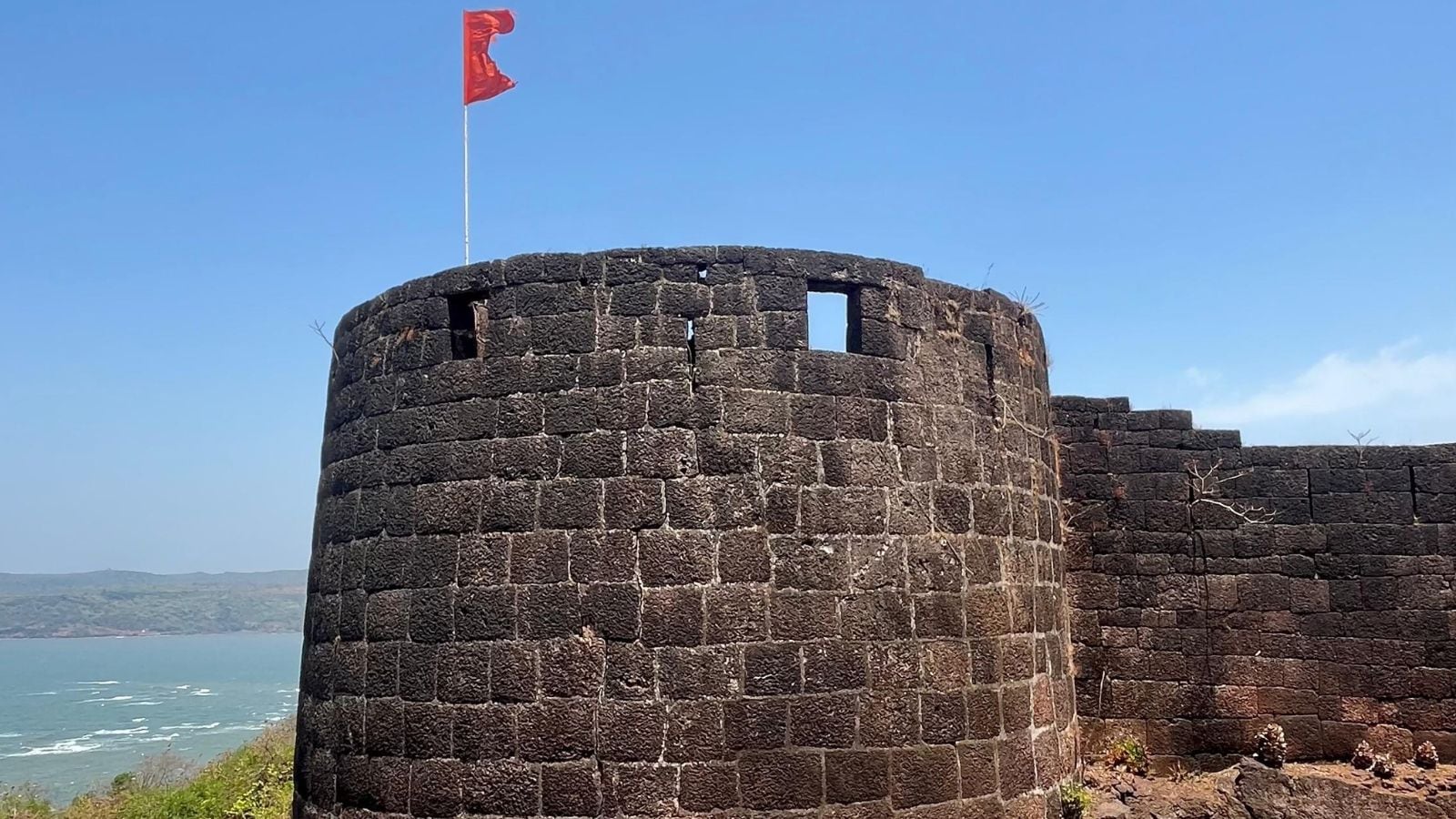
What began as a viral video of tourists being detained at Maharashtra’s historic Gopalgad Fort in Anjanvel, Guhagar taluka of Ratnagiri district, for allegedly picking two mangoes has brought renewed attention to a decades-old question: how did a Maratha-era fort come to be treated as private premises and classified as evacuee property?
The issue has unfolded into a legal battle over ownership of the fort, its status as a protected monument and efforts to acquire it.
The controversy prompted Maharashtra Minister for Cultural Affairs Ashish Shelar on Tuesday to seek a detailed report within a fortnight from the Ratnagiri District Collector on the fort’s ownership and legal status. He directed officials to examine records, auction proceedings, the classification of the premises as evacuee property and historical documents dating back to the Maratha period.

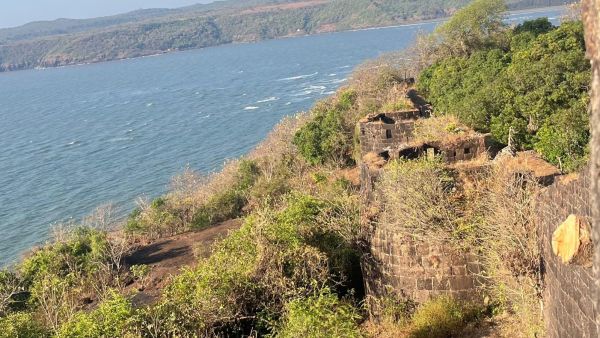 Garge said cognisance of the issue was taken at a high-level meeting chaired by the cultural affairs minister on Tuesday, where a “positive discussion” on acquiring the fort area after due compensation took place. (Express Photo)
A Maratha-era fort with a strategic past
According to the Maharashtra State Gazetteer’s Ratnagiri district volume, the fort at Anjanvel was built by the Bijapur rulers in the 16th century owing to its strategic location overlooking the mouth of the Dabhol creek and the trade route on the river Vashishti, which runs till Chiplun.
The seven-acre fort stands on the southern shore of the creek entrance, nearly 800 metres from Anjanvel, surrounded by the sea on three sides and a partly filled ditch on the fourth. Its stone-and-mortar walls are about 20 feet high and eight feet thick, the Gazetteer states.
It states that the fort was strengthened by Chhatrapati Shivaji Maharaj in 1660 after he captured it from the Adilshahi (Bijapur) rulers. In 1699, Siddi Khairat Khan of Janjira captured it and added the lower fortification, known as Padkot.
The fort remained under the Siddis for 45 years until Tulaji Angre Sarkhel recaptured it for the Marathas in December 1744, renamed it Gopalgad and added the upper fortification, called Balekot. The fort passed to the Peshwas in 1755 and came under British control in May 1818 after the fall of Peshwa rule and remained so until Independence.
It is the post-Independence ownership history of the fort area, however, that lies at the heart of the present dispute over its status as private property, evacuee land and a protected monument.
Story continues below this ad
How Gopalgad became private and evacuee property
Akshay Pawar, an activist and a native of Guhagar, claimed that after the British moved their military camp from Anjanvel to Dapoli, they vacated the fort. Thereafter, a few families came into possession of the premises and later migrated to Pakistan during Partition.
He alleged that the authorities failed to mention “fort” on the Record of Rights (7/12 extract as popularly known in Maharashtra) and in the 1960s revenue officials wrongly listed the seven-acre premises as “barren land”.
Pawar said this led to part of the premises being auctioned as evacuee property, assets left behind by those who migrated to Pakistan during Partition in 1947, for nearly Rs 300 in the 1960s to Anjanvel resident Yunus Hussain Maniyar, who developed it into a mango farm.
Tejas Garge, director of the State Directorate of Archaeology and Museums, told The Indian Express that several forts on the west coast in the Konkan region were held by Siddis and were given to “vatandars”, which included Muslim persons.
“The owners of the land on which Gopalgad stands decided to go to Pakistan after Partition. The lands were vested in the government and became evacuee properties. The revenue department at the relevant time had a policy to auction evacuee properties to increase revenue, which seemed to have been adopted in the present case,” he added.
Aggrieved by restrictions on fort access, activist Mangesh Pawar, Deepak Vaidya, local residents and conservation groups launched a campaign seeking state ownership of the fort, arguing that the privately held plots formed part of the historic fort complex.
Story continues below this ad
According to Akshay Pawar, local residents raised the issue at a 2007 Lokshahi Din before the district collector and sought a survey of the fort.
On November 4, 2009, the government issued a notice under Section 4(1) of the Maharashtra Ancient Monuments & Archaeological Sites and Remains Act, 1960, proposing to declare structures and lands, including Gat numbers 82 and 83, as protected monuments and inviting objections.
Following complaints by activists, the Archaeology Department wrote to the district collector on January 13, 2015, stating that a farmhouse had been unauthorisedly constructed on the premises in 2014 despite the preliminary notice and sought its demolition.
Dispute before the Bombay High Court
On August 20, 2016, the government issued a notification declaring various properties as protected monuments for the protection of Gopalgad Fort. The Maniyar family approached the Bombay High Court in 2019 challenging the notification and sought police protection to safeguard their properties as rightful owners.
Story continues below this ad
They argued that authorities ignored their objections to the 2009 notice, pointing to the seven-year gap before the 2016 notification and that Gat numbers 82 and 83 should not have been included as the fort area was located on Gat number 85. The family maintained that the land had been purchased from the government through due process after 1960 and that they spent money annually on maintenance, while the state contended that Gat numbers 82 and 83 formed part of the fort area.
In its March 13, 2024 judgment, the High Court observed that there was a “factual dispute” between the parties and that the plea raised “disputed questions of fact”, making the writ petition not maintainable. It directed authorities to decide the Maniyars’ February 2010 objection and another objection to the 2016 notification after granting a hearing and to pass a reasoned order within six weeks.
On December 10, 2025, hearing a separate petition by the Maniyars, the Kolhapur circuit bench of the High Court directed authorities to hear the petitioners and expedite compensation within a year.
On April 30, 2026, the archaeology department informed the district collector that it intended to acquire the land, stating that private encroachments had been removed and that, after discussions with the owner, the site was ready to be handed over through negotiation. It sought details of the compensation payable and related costs to initiate the acquisition process after obtaining government approval.
Story continues below this ad
What happens next?
Garge said cognisance of the issue was taken at a high-level meeting chaired by the cultural affairs minister on Tuesday, where a “positive discussion” on acquiring the fort area after due compensation took place.
“It is a matter of fact that the revenue department had auctioned the land before the fort became a protected monument. Even though the fort was under the Maratha regime, ownership remained in private hands. Now the Ratnagiri district collector has been asked to ascertain the land records and related documents and make a proposal for acquisition of seven acres of land within a fortnight,” Garge added.
However, Pawar claimed that the family did not deserve compensation in crores of rupees to be handed over through public exchequer without imposing any substantial fine, asking who would compensate for the loss caused to the heritage monument over the years and why public funds should be used when the fort had suffered wear and tear despite its historical and cultural value.