
Talk of a housing price crash is increasing. Clearance rates have softened, buyer confidence has weakened and the federal budget has added another layer of uncertainty to an already fragile market.
A broad-based price crash still looks unlikely. Australia remains short of housing, population growth is still strong and construction remains constrained. But that does not mean every part of the market is equally protected.
The bigger risk is that the market becomes more uneven. Some segments will continue to be supported by scarcity, stronger household incomes and lower exposure to policy changes. Others are more vulnerable because recent growth has been driven more heavily by government incentives, particularly the 5 per cent deposit scheme.
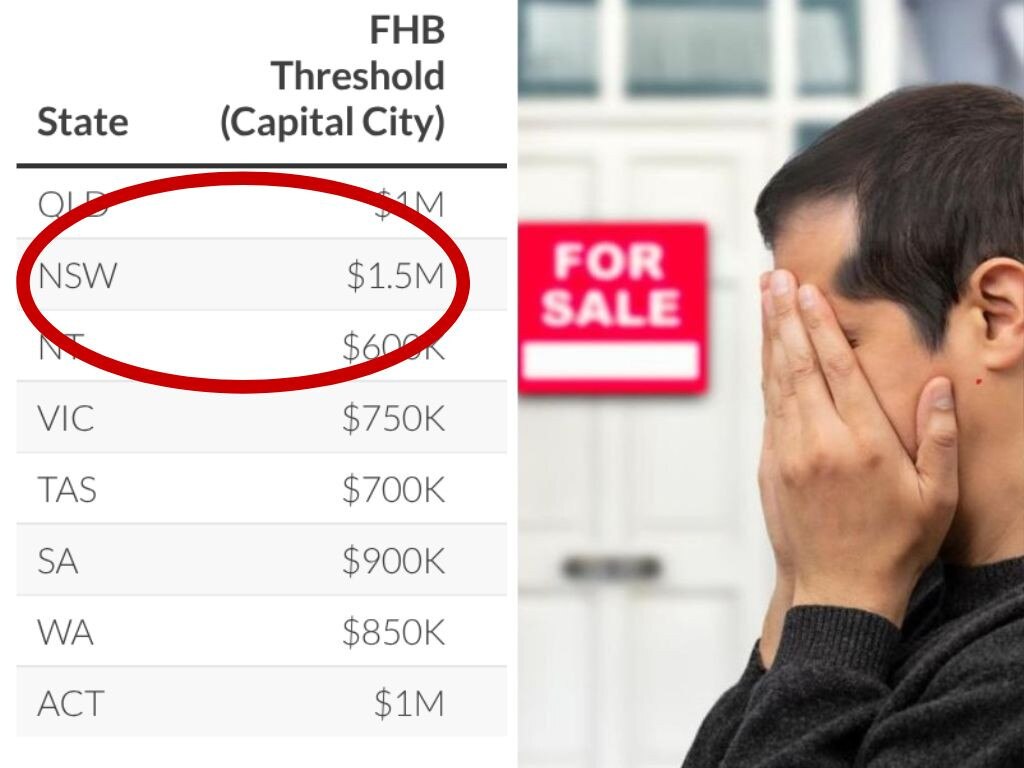
That is where first home buyer markets stand out – particularly lower-priced suburbs that sat below the scheme thresholds.
Since the 5 per cent deposit scheme was expanded, lower-priced markets have had direct policy support. The scheme itself has been operating in some form since 2020, allowing eligible first home buyers to purchase with a deposit as low as 5 per cent without paying lenders mortgage insurance. But on 1 October 2025 it became much broader. Income caps were removed, property price caps were lifted and places became uncapped.
MORE NEWS: RBA warns: Aussies to be hit ‘like a hammer’
‘Significant’: New rental crisis engulfs Aus
Radical Aus WFH laws to change everything

Australia’s housing downturn will hit hardest in first home buyer markets.
Because the scheme only applies up to set property price caps, its impact has been concentrated in cheaper markets. It did not add demand evenly across the housing market. It added demand where first home buyers using the scheme were able to buy.
First home buyers also respond strongly to incentives. We have seen this before. The strongest periods of first home buyer activity have occurred when policy settings were highly supportive, including during the global financial crisis stimulus period and again during the pandemic, when ultra-low interest rates, HomeBuilder and other incentives brought buyers forward.
The latest ABS first home buyer data shows a clear lift after the scheme was expanded. Comparing the December and March quarters with the same period a year earlier, owner-occupier first home buyer lending was up 7.2 per cent nationally. In NSW, it was up 15.8 per cent.
That extra demand has flowed through to prices. Since the scheme was expanded, suburbs below the first home buyer price thresholds have outperformed those above the thresholds across every state. In NSW, suburbs under the threshold rose 2.0 per cent, while suburbs above the threshold fell 1.7 per cent. In Victoria, the under-threshold market rose 6.0 per cent, compared with 2.8 per cent above the threshold. In Queensland, the gap was wider again, with under-threshold suburbs up 7.9 per cent compared with 4.1 per cent above.
First home buyer markets were not outperforming by accident. They had direct policy support.
The problem is that the next policy shift will work in the opposite direction. The government helped push first home buyers into the cheaper end of the market. Now, through the budget changes, it will push investors out of that same part of the market.
This is important because investors are also concentrated in cheaper markets. They are more likely to buy apartments, townhouses and lower-priced houses where entry costs are lower. These are often the same markets where first home buyers are active.
This is why the market is likely to switch. The cheaper end has been outperforming because first home buyer demand was supported. But with investor demand weakening following the budget, that support will not be enough. Higher-priced markets, which are less directly exposed to both the first home buyer scheme and the investor changes, are likely to start outperforming.
The market we are seeing now is being shaped by several forces at once: interest rates, the federal budget, weaker sentiment and global uncertainty linked to the Middle East conflict. That makes the current downturn difficult to read. Softer clearance rates are not being driven by one factor.
Once conditions settle, the impact is unlikely to be evenly spread. The weakest markets are likely to be hit hardest. Areas that have had the strongest policy-supported lift, high first home buyer activity, stretched affordability and weakening investor demand are likely to be most exposed.
Ray White chief economist Nerida Conisbee
For first home buyers who entered with a 5 per cent deposit, this creates a particular risk. Their equity buffer is small. If prices fall even modestly in the markets where they bought, some could move into negative equity. That is not necessarily a problem if they can keep paying the mortgage and do not need to sell, but it does increase their exposure.
This is why the price crash narrative is too simplistic. A national crash still looks unlikely given Australia’s housing shortage, strong population growth and constrained construction pipeline. But that does not mean the market will be protected evenly.
The downturn is likely to be concentrated in the parts of the market where demand was most policy-supported and where buyers have the smallest equity buffers. In other words, the lower-priced markets that were pushed up by first home buyer incentives are now the same markets most exposed to the investor pullback.
The risk is not a uniform national crash. It is a more uneven market, where the areas government policy helped lift are the areas most vulnerable to being pulled back down.